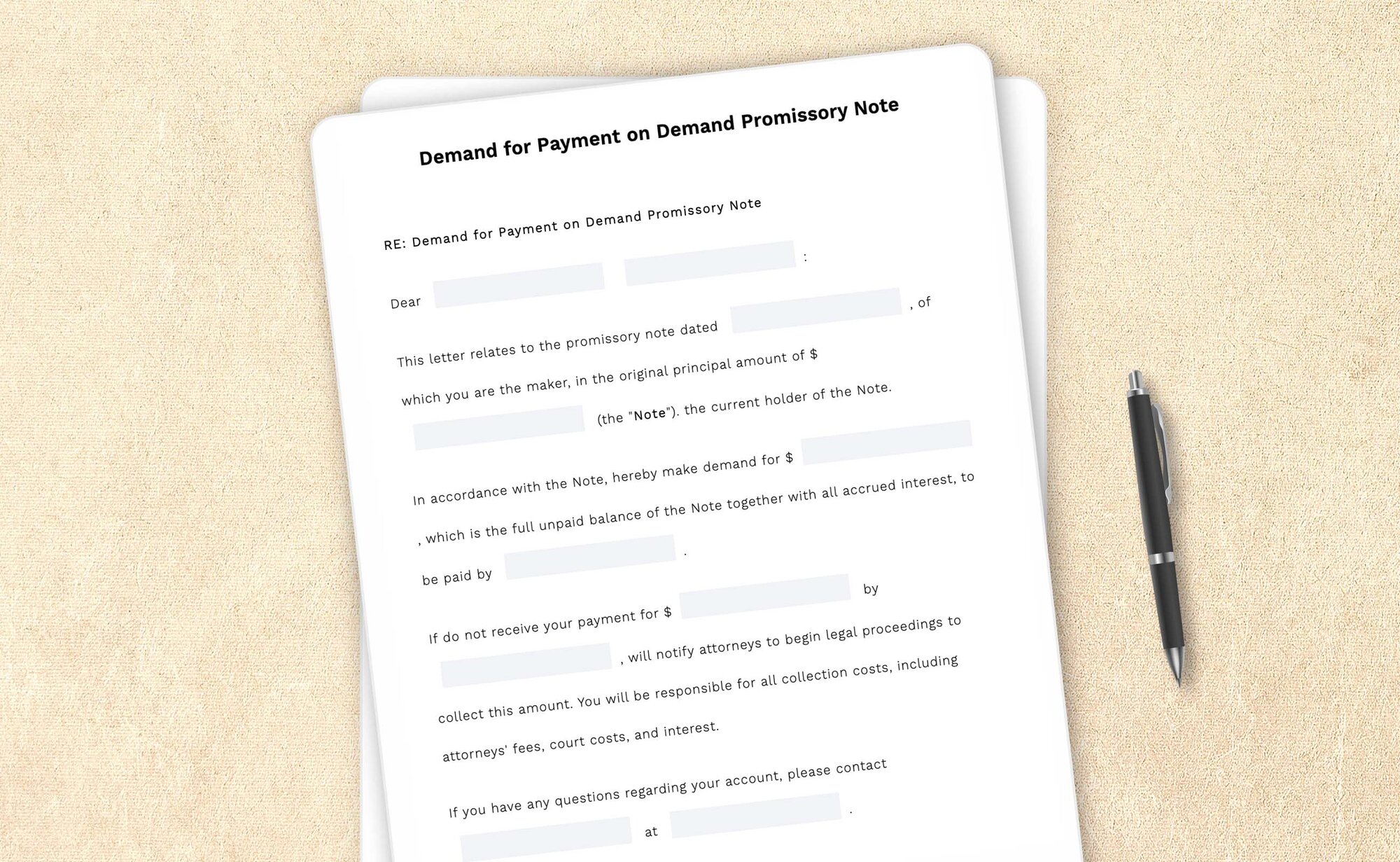
RE: Demand for Payment on Demand Promissory Note
Dear
This letter relates to the promissory note dated
In accordance with the Note,
If
If you have any questions regarding your account, please contact
How-to guides, articles, and any other content appearing on this page are for informational purposes only, do not constitute legal advice, and are no substitute for the advice of an attorney.
Demand for payment on demand promissory note: How-to guide
In a demand promissory note, the borrower is only obligated to pay the amounts due once the lender sends a notice to request payment.
A demand promissory note is a type of loan in which the borrower doesn't have a specific timeline to repay the debt. Instead, they repay the loan only when the lender demands it. This differs from a standard promissory note, which sets a specific repayment timeline for the borrower. It helps you claim what you're entitled to with a professional and assertive tone.
Key aspects in a demand for payment on demand promissory note form
1. Understanding demand notes and borrower's obligations
Under a demand note, the borrower must make payment when the lender requests it. If the borrower fails to make the payment after the demand is made, the lender can take legal action after reviewing the terms of the promissory note. The note should include details about the steps a lender may take to demand payment and the consequences for the borrower if they fail to pay. If there are specific procedures the lender must follow before requesting the total amount, the lender should follow them.
2. Maintaining records of additional expenses and recoverable costs
It is vital to keep a detailed record of all expenses and any additional expenses incurred while demanding repayment, including attorneys' fees or registered mail costs, as they may be recoverable from the borrower in case of delayed or defaulted payments.
3. Specifying a deadline for payment
When creating a demand, it's important to specify a deadline by which the borrower must make full payment with the accrued interest to date. Choose a date that works for both parties. Generally, a week or two should provide enough time for the borrower to pay the amount due. It will help ensure the loan is paid back on time and without issues.
4. Sending demands via registered mail
It is recommended that you send the demand via registered mail, as it provides a record of your actions in case a court action is required.
5. Seeking legal advice in case of non-payment
If a borrower refuses to make a payment, it is recommended that you seek the advice of a legal expert, like an attorney or lawyer, to assist you in recovering the amount payable by the borrower. By seeking their assistance, you can receive the necessary guidance to navigate the legal process and protect your rights.
Frequently asked questions
What's a “demand for payment” note?
If you lent money under a demand promissory note, the borrower only needs to pay it back once you ask for it in a written notice. That notice is a demand promissory note for payment. As a lender, you want to ensure the payment demand is drafted correctly and helps you collect the full amount of money you lent.
What information is needed to complete a demand for payment on demand promissory note?
Here's the information you'll need to complete it:
- Who it's going to (borrower): Ensure you have the name and contact information of the recipient (borrower) ready
- Date: Get the date on which the original promissory note was issued
- Payment due: Keep the figure of the due loan amount ready

Demand for Payment on Demand Promissory Note Template

Related templates

Secured Demand Promissory Note
Make sure your demand for payment for collateral-backed loans is worded right when it's time for the borrower to pay you back. Ensure timely repayment of a loan with a secured demand promissory note.
.webp "Secured Promissory Note (Installment with Balloon Final Payment)")
Secured Promissory Note (Installment with Balloon Final Payment)
Looking to secure a non-bank loan to be paid back in installments? A secured promissory note helps to protect your financial interests and officiate lending agreements.
.webp "Secured Promissory Note (Interest-Only with Balloon Final Payment)")
Secured Promissory Note (Interest-Only with Balloon Final Payment)
Need a secure non-bank loan from a friend or family member? Use our template and get the funding you need.
.webp "Secured Promissory Note (Lump-Sum Payment)")
Secured Promissory Note (Lump-Sum Payment)
Safeguard your financial arrangement with a secured promissory note. Define loan terms clearly for borrowers and lenders.

Unsecured Demand Promissory Note
Safeguard your financial arrangement with an unsecured demand promissory note. Define loan terms clearly for borrowers and lenders.
.webp "Unsecured Promissory Note (Interest-Only with Balloon Final Payment)")
Unsecured Promissory Note (Interest-Only with Balloon Final Payment)
Secure loans with a promissory note. Protect your investments by laying out transparent repayment terms.