How-to guides, articles, and any other content appearing on this page are for informational purposes only, do not constitute legal advice, and are no substitute for the advice of an attorney.
Commercial photography contract: How-to guide
In an era where first impressions are often made online, investing in professional or commercial photography is not just a luxury—it's a strategic necessity for businesses seeking to make a lasting impact. High-quality images are crucial for everything from advertising campaigns and corporate brochures to product promotions and editorial content. The power of these images extends beyond mere aesthetics; they’re essential in connecting with target audiences, conveying brand messages, and standing out in a competitive market.
Given the vital role of commercial photography, having a well-crafted contract is essential.
Read on to learn more about the different types of commercial photography, and the importance of having a commercial photography contract to set the right expectations between the involved parties.
Understanding the different types of commercial photography
Commercial photography covers a wide range of genres, each tailored to specific business needs. Understanding these types can help clients choose the right style and approach for their projects, and photographers can better prepare for their assignments. Here are some of the most common types of commercial photography:
1. Product photography
Product photography focuses on creating high-quality images of products for commercial purposes. These visually appealing images are essential for both online and offline retail, as they can significantly influence consumer purchasing decisions. Product images are often used in advertisements, e-commerce websites (such as Amazon, eBay, Walmart, and Costco), catalogs, and social media sites. Commercial photographers specializing in product photography must pay attention to lighting, angles, and backgrounds to highlight the product's best attributes.
2. Fashion photography
Fashion photography showcases clothing, accessories, and beauty products, often involving models and stylized settings. This type of photography often requires a deep understanding of fashion trends and the ability to create visually appealing compositions that highlight the designs and convey a brand’s style and aesthetics. Fashion photographers work with commercial clients in the fashion industry, including designers, stylists, makeup artists, and models, to create visually stunning images. The commercial photography contract for fashion photography outlines the specifics of the shoot, including the location, models, styling, and any additional expenses such as travel or accommodation.
3. Food photography
Food photography is a specialized field that focuses on capturing appetizing images of food and beverages. This type of commercial photography is essential for restaurants, cafes, food blogs, cookbooks, and other food-related brands. Food photographers work with stylists and chefs to create visually appealing compositions that highlight the texture, color, and presentation of the dishes.
4. Architectural photography
This type captures the design and aesthetics of buildings and interiors. It is commonly used by real estate agents, construction companies, architects, and interior designers to showcase properties and projects. For instance, real estate agents can use such photographs to sell or rent out a property. They can seek the help of a skilled photographer to take the interior shots, exterior views, and special features of the property. Good-quality real estate photographs are essential for listings, promotional materials, and online property platforms, as they help potential buyers or renters visualize themselves in the space.
5. Advertising photography
This type involves creating compelling visuals that support marketing campaigns, including print ads, billboards, and online advertisements. The images are designed to convey a message or promote a specific brand, product, or service.
6. Industrial photography
Industrial photography is dedicated to capturing the operations and facilities of industrial companies. It includes images of machinery, manufacturing processes, and workers in action.
7. Corporate photography
Corporate photography focuses on capturing images that represent a company’s brand and corporate identity. This includes headshots of executives, team photos, office interiors, and events. It is often used for marketing materials, websites, and social media platforms to portray a professional and polished image of the company.
8. Event photography
Event photography covers a wide range of events, including weddings, conferences, trade shows, product launches, and private parties. The purpose is to document the event, capturing key moments and interactions.
Each type of commercial photography has its own unique requirements and expectations, which is where a commercial photography contract becomes invaluable.
What is a commercial photography contract?
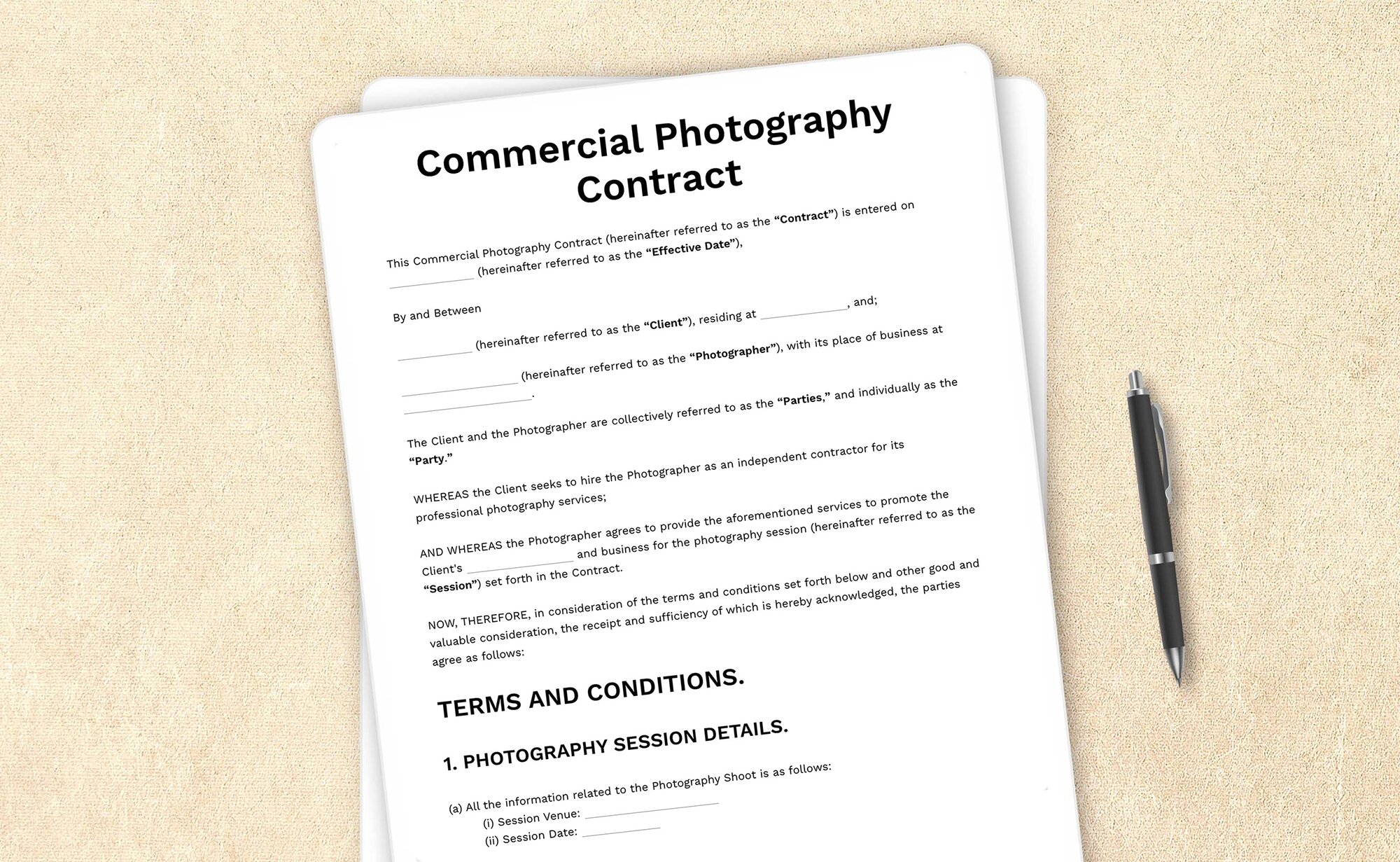
A commercial photography contract is a formal agreement between a commercial photographer and a client outlining the terms and conditions of the photography services to be provided. Also known as a commercial photography agreement, this document serves as a crucial tool in ensuring that both parties understand their responsibilities, the scope of work, and the expectations for the final deliverables.
- Commercial photography contracts include details such as:
- The type of photography being commissioned
- The date and location of the shoot
- Number of final photographs to be delivered
- Details about copyright ownership and licensing rights
- Payment terms and any additional costs
By clearly defining these elements, the commercial photography contract helps prevent misunderstandings and disputes, providing protection for both the photographer and the client.
Why are contracts important for commercial photographers?
Contracts are crucial for commercial photographers for several reasons:
1. Protects the photographer
A well-drafted commercial photography contract offers protection by clearly outlining the terms of the agreement. This helps prevent disputes over the scope of work, payment, and usage rights of the final photographs. If the commercial photography contract is signed by the parties involved, then it can also provide legal protection to both the photographer and the commercial photography client, as they could be submitted as proof in court.
2. Sets expectations clearly
Contracts provide a written list of the services to be provided, ensuring that both parties have a clear understanding of what is expected. This helps in communicating expectations and reducing the risk of miscommunication.
3. Ensures payments are rightly paid
The contract specifies the payment terms, including the amount, due dates, and other expenses. This ensures that the photographer is compensated fairly for their work and helps avoid any payment-related issues.
Commercial photography projects often involve additional expenses such as travel, equipment rental, and post-production costs. The contract outlines how these expenses will be handled, ensuring transparency and avoiding any surprises.
4. Defines copyright and licensing rights
Commercial photography contracts often include provisions that define the ownership of the images and the extent to which the client can use them. This is crucial for protecting the photographer's intellectual property and preventing unauthorized use of their work.
5. Provides guidance for handling cancellations and rescheduling
A comprehensive commercial photography contract outlines the terms for cancellations and rescheduling, including any associated fees. This provides clarity and protects the photographer from potential losses due to last-minute changes.
Components of a commercial photography contract
An excellent commercial photography contract sets clear boundaries and protects the client and the photographer. Here are the important components that every commercial photography contract should include:
1. Introduction
The introduction section provides an overview of the contract, including the names of the parties involved, the date of the agreement, and a brief description of the project.
2. Photography session details
This section provides details of the photography shoot, including the date, time, and location.
3. Payment
This part of the commercial photography contract details the agreed-upon payment terms, including the total fee, deposit amount, final payment due date, and any additional fees. It also includes information on payment methods and any penalties for late payments.
4. Additional expenses
Use this section to include possible additional costs, such as travel, parking fees, extended photoshoot time payments, or other miscellaneous fees.
5. Term
The term section defines the duration of the contract, including the start and end dates. This implies that all the contract terms are effective during this period.
6. Deliverables
This section should clearly outline what the client can expect to receive upon the completion of the project. Here’s what should be included:
- The formats and resolutions of the final photos
- How the images will be delivered
- The minimum number of photos the client will receive
- Timeline of the final deliverables
7. Post-production and editing
Define the scope of editing included in the contract, who’ll do the edits and any extra charges for additional edits.
8. Archive and storage
This section specifies how long and how many maximum photos can be archived in the storage. It also specifies what the photographer will do to those digital files after that period—whether they should extend the archival time for extra payment or permanently delete the files from their storage.
9. Model releases
If any models are used in the photography shoot, have them sign all the necessary releases. This part details the consent required for the shoot and the party responsible for obtaining such consent.
10. Copyrights and licensing
This section clarifies the ownership and licensing rights of the photographs produced.
11. Relationship of parties
This section establishes that the photographer is hired as an independent contractor and doesn’t work in the capacity of an employee, partner, or agent with the client.
12. Postponement and rescheduling
There will be instances where clients want to reschedule the photography session. However, in that case, the client agrees to inform the photographers in advance to avoid any financial loss. The photographers are even expected to do the same if they must reschedule the session. This section outlines the terms for postponing or rescheduling the shoot, including any associated fees. It provides clarity on how changes to the schedule will be handled.
13. Limitation of liability
This clause covers what happens if either party suffers losses or damages during the contract's term. By mutual agreement, both parties must set limits on how much one party can recover from the other party when they suffer a loss.
14. Indemnification
This clause details the terms, if harm, failure, or penalties occur during the project. The parties may decide mutually who will take responsibility for these instances or agree to hold each other harmless.
15. Termination
This section outlines the conditions under which the contract can be terminated by either party. It includes information on notice periods and any associated fees for early termination.
16. Confidentiality
This section includes clauses to protect any confidential information shared during the project. It ensures that both parties agree to keep sensitive information private.
17. Arbitration
Here, discuss how to handle demands and disagreements from either party by outlining the arbitration process.
18. Assignability
This clause explains whether the parties can assign or transfer the contract's rights and responsibilities to a third party. Such transfers are usually made when the parties provide their consent in writing, if prior approvals are not taken, parties can even be considered for breaching the contract. For instance, if a photographer is not able to cover an event for a client and wishes to assign their duties to another photographer, then the photographer can do so only with the client’s written approval.
19. Notice
In this part of the photography contract, you need to add details of the official communication channels of the people involved in the contract. This helps in sending or receiving important documents or notices regarding the project. You can provide information such as:
- Certified business address, email, and phone number of the photographer
- Contact information for the client or company hiring the photographer
- Details of third parties like attorneys, and notary public (if they’re relevant parties to your photography contracts)
20. Amendments
This section explains the conditions when the commercial photographer or the client wishes to add or modify any of the terms of the contract.
21. Governing law
In this section, state the country or jurisdiction whose laws will be used to govern this agreement.
22. Severability
This section states that, in situations when one clause is deemed unenforceable, the rest of the contract's provisions won’t be affected and will stay enforceable.
23. Acceptance and signatures
This final section includes the signatures of the parties involved. When both parties agree to the terms mentioned in the contract, they can provide their acknowledgment by signing the contract.
Try a commercial photography contract template to win new commercial clients
With LegalZoom’s sample contract templates, you can create agreements with ease. Simply use the commercial photography contract template provided at the beginning of this page, add the required details, and prepare your contract for business transactions. By subscribing to LegalZoom’s subscription plans, you can use the following features:
- A rich editor that helps you in customizing the contract. You can add new information or modify existing details with a simple drag-and-drop movement.
- A fast and secure eSignature service to speed up the deal closure with your client. This service allows you to send the contracts to the parties and get the signatures electronically.
- An Activity feature that enables you to monitor the real-time status of your document.
Conclusion
As businesses increasingly rely on striking visuals to capture attention and drive engagement, having a comprehensive commercial photography contract becomes essential. This contract provides the security and structure necessary to navigate the complexities of commercial photography projects.
A well-drafted contract brings clarity to all parties by aligning them on deliverables, rights, and responsibilities. This reduces the risk of disputes and promotes smooth collaboration. With clear agreements in place, photographers and clients can kickstart their creative projects, knowing that their interests are protected and their professional interactions are well-defined.

Commercial Photography Contract Template

Related subcategories
Related templates

Entertainment Contract
Ensure your entertainment events go smoothly with a well-drafted entertainment contract. Protect performers and organizers by specifying terms, fees, and expectations.

Event Contract
Plan and organize your events smoothly with an event contract. Use the contract to explain event details, pricing, and other relevant terms.

Performance Agreement
Set the stage for a successful performance with a performance agreement. Define responsibilities, costs, tech requirements, and other essential details for smooth collaboration between performers and organizers.

Photography Services Agreement
Manage various photography projects with ease with a photography services agreement. Set clear service terms and guidelines between a photographer and a client.

Videography Services Agreement
Outline the terms and expectations for your videography project with a videography services agreement. Ensure a smooth and successful collaboration with your clients from start to finish.