- All projects undertaken by you and the finished products by you during the term of your employment with the Company are exclusive proprietary property of the Company.
- All copyright, property rights, and other proprietary interest therein shall belong to the Company.
- You shall not disclose, divulge, or exploit the Confidential Information of the Company to any third party.
- You shall not make any statements, complaints, or write-ups or publicize or post anything regarding the Company on any platform, media, or government department.
How-to guides, articles, and any other content appearing on this page are for informational purposes only, do not constitute legal advice, and are no substitute for the advice of an attorney.
Relieving letter: How-to guide
As an employer, managing employee resignations in a professional manner is important. Providing a relieving letter to help departing employees transition smoothly is a significant aspect of accepting their resignation letter.
A well-written and proper relieving letter serves as a crucial document in giving closure to the employee-employer relationship.
It helps employees to:
- Bridge their past experiences with future job opportunities.
- Establish credibility for potential job opportunities.
- Have a smooth transition into the next phase of their professional lives.
In this guide, we will delve into the world of relieving letters. We'll explore the purpose and significance of relieving letters, followed by understanding the difference between relieving letters and experience letters. We will also examine the key components that constitute a standard relieving letter format followed by the industry-wide best practices to create it.
What is a relieving letter?
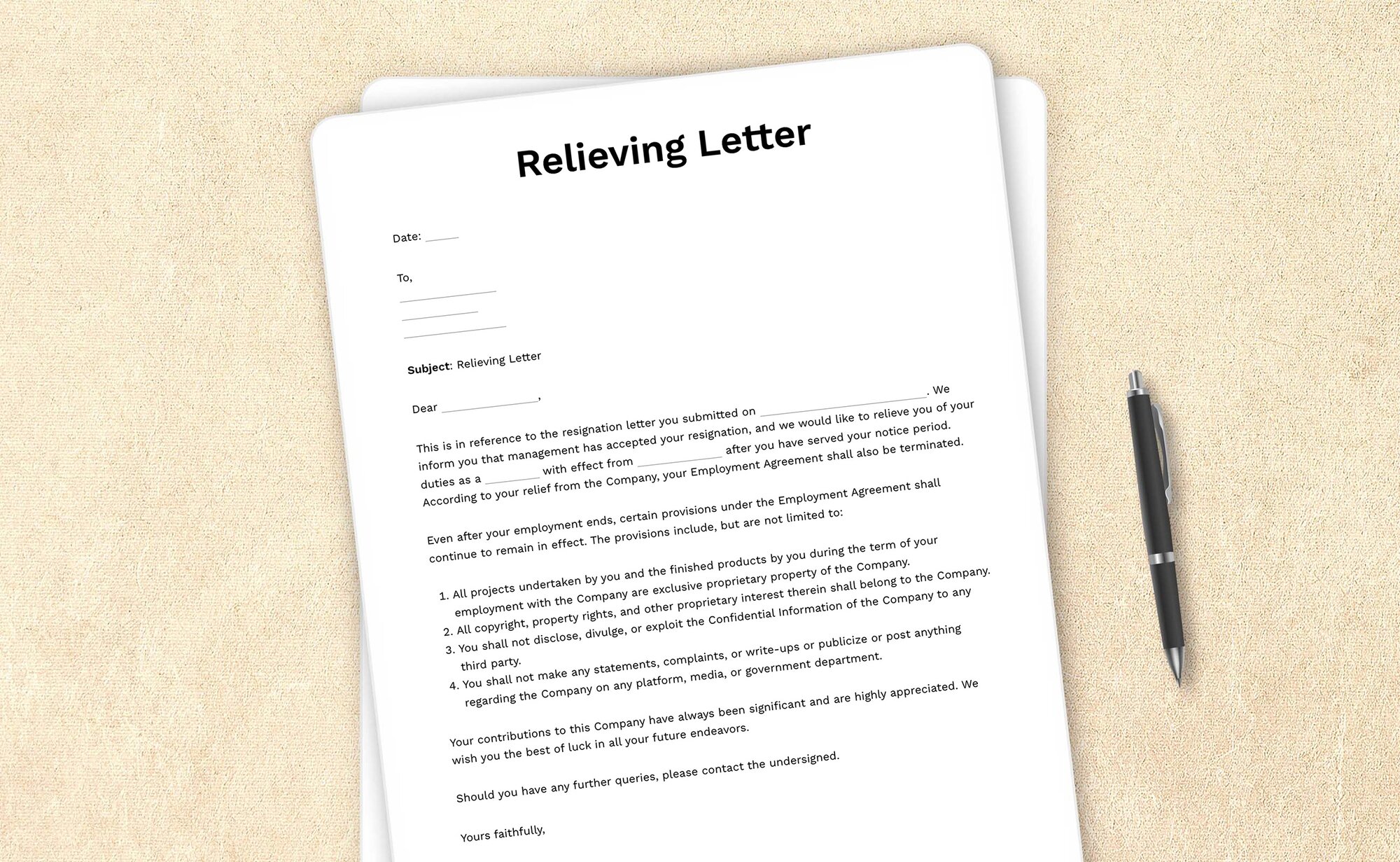
A relieving letter is a formal document confirming that the organization has accepted an employee's resignation. It is a formal way of communicating to the employee that they’re being relieved from their duties and responsibilities within the company. Generally, it's issued by the HR department of an organization and often signed by the HR manager on behalf of the organization. Commonly, it includes:
- The employee's name, position, and the date of their last working day
- Details about their final settlement, return of company property, and any other relevant information about their departure
- The relieving process between the employee and the organization
Why are relieving letters important?
A relieving letter is required when employees join a new company. Companies need a relieving letter to ensure their newly recruited employee is no longer associated with their previous employer.
How is a relieving letter different from an experience letter?
An experience letter details the length of an employee's service with the company and summarizes their experience. On the other hand, a relieving letter confirms that the employee has satisfactorily fulfilled their obligations towards the company. Usually, companies issue a relieving letter to the employee on their last day with the organization.
How to write a relieving letter? What are the key elements?
When crafting a relieving letter, it is crucial to include precise and detailed information to ensure that it provides all necessary details to the recipient and is comprehensive in every aspect. An ideal relieving letter format should include the following information:
1. Company letterhead
It is vital to write a relieving letter on the company's official letterhead with the name, company address, and other relevant details.
- This practice identifies the employer and helps establish the authenticity of the relieving letter. It’s recognized as an official document representing the company.
- It gives a professional touch to the letter.
2. Date of issue
The date of issuance in a relieving letter is a crucial piece of information. It is a definitive reference point for the employer and the departing employee. This formal document signifies the conclusion of the employee's association with the company and holds significant value for future employment prospects and legal compliance.
3. Employee information
a. Name
When writing a relieving letter, it's crucial to accurately state the employee's full name, including their first, middle, and last names. This practice ensures clarity regarding the employee's identity.
b. Employee ID
Companies sometimes include employee ID in the relieving letter for further identification.
c. Employee address
It's a good practice to include the employee's address and contact details in a relieving letter if it has to be mailed to their residential mailing address. Since a copy of this letter will be retained for the company's official records, having the employee's contact details will always be helpful if there's a need to contact them after their employment tenure at the organization.
d. Job title
It's imperative to mention the employee's job title or designation in the relieving letter. This approach provides a clear understanding of their position within the organization.
e. Department
Additionally, it's advisable to specify the department or division where the employee was employed. This information provides context regarding the employee's work and responsibilities within the organization.
4. Subject line
Write a clear and brief subject line, like "Relieving Letter," when writing this letter. This practice will help the recipient understand the letter's purpose at the very beginning.
5. Salutation or greetings
When crafting a relieving letter, it's important to address the recipient by name, typically the employee's name, with a formal salutation such as "Dear John." This personal touch adds a sense of respect and consideration to the communication.
6. Employee resignation letter details
A relieving letter documents an employee's resignation and confirms that they are no longer responsible for their duties within the organization. For employers, these letters help protect against potential legal issues by mentioning the reason for the employee's departure and outlining any outstanding obligations. A relieving letter must include the employee's resignation details, such as:
- The date on which the employee submitted their resignation letter
- Confirmation of acceptance of the employee's resignation
- The duration of the mandatory notice period and the notice period they have served
- The last working date of the resigning employee
7. Termination of the employee's employment
In the relieving letter, it is essential to explicitly state that the employee's employment agreement ends with issuing this letter. This approach helps to ensure clarity and transparency regarding the conclusion of the employment relationship and establishes the letter's purpose.
8. Post-employment agreement terms
After an employee's tenure with the company ends, some aspects of the employment agreement may remain effective. Include these aspects in the relieving letter. For instance, any deliverables created by the employee during their employment are considered the company's proprietary property. Also, employees must keep confidential information private as per the non-disclosure agreement. Furthermore, they must refrain from making public statements or sharing content about the company with third parties.
9. Employee's financial obligations
Ensuring the employee's financial obligations, such as pending salaries, reimbursements, and loans, have been settled is important.
- Verify that all outstanding liabilities have been cleared.
- Mention this in the relieving letter to prevent future disputes or potential legal consequences.
10. Return of assets
Once the employee has returned all company assets, such as laptops, access cards, keys, and any other property entrusted to them during their employment tenure, mention them in the relieving letter. It’s crucial to account for and retrieve the organization's assets carefully.
11. The full and final settlement details for employee dues
After ensuring the above pointers are achieved, mention the full and final settlement of the employee's dues, including:
- The details of the employee's last paycheck, payout, or settlement
- The timeline for receiving the funds
- How they can expect to receive the funds
The above practice helps the employee plan for their reimbursement and confirms your intent to fulfill the terms of their settlement.
12. Employee benefits and entitlements
Relieving letters often acknowledge that the employee has received all their statutory benefits and entitlements, such as gratuity, provident fund, and leave encashment.
13. Gratitude and appreciation
Express gratitude to the employee for their outstanding service to the company. Acknowledge and appreciate how their contributions have positively impacted the team, projects, and overall success of the company.
14. Wishing success in future endeavors
Extend best wishes for the employee's future endeavors. This approach shows support and positivity towards their career development.
15. Contact details
Include the contact details such as the phone number and email address of the HR manager or other authority to whom the employee can contact for further assistance or clarification of queries if required. This practice ensures that the relieving letter is comprehensive and leaves no room for ambiguity or misinterpretation. It's essential to review and verify the provided information to uphold the integrity of the relieving letter and ensure its effectiveness.
16. Closing
Conclude the relieving letter with a professional closing, such as "Best regards" or "Sincerely." This practice adds a final touch of formality and respect. Include the name and designation of the authorized person.
14. Signature
Get the relieving letter signed by the HR manager or the HR head. Their signature adds credibility and authority to the document, ensuring its validity. Sometimes, based on the position of the outgoing employee, the relieving letter may be signed by the CEO or the MD.
Every company has its particular rules and criteria for writing a relieving letter. The components above can help you incorporate essential details to produce a thorough, relieving letter.
Best practices to write a relieving letter
A relieving letter serves as the final correspondence between employers and employees, outlining their work history and marking the end of their employment at the organization. It's essential to write a relieving letter while ensuring a professional rapport with the departing employee.
1. Address pending matters
The HR department must address any issues related to the employee's departure before writing the relieving letter. This process may involve settling pending dues, obtaining clearances, or resolving any other outstanding matters, avoiding potential legal consequences and disputes. The employer and the employee must resolve all outstanding issues to ensure a smooth relieving process.
2. Maintain a formal and polite tone
Maintaining a formal and polite tone when writing a relieving letter is always a good practice. This approach is essential for professionalism when addressing departing employees. A formal tone conveys respect for the outgoing employee and leaves a positive final impression on them. Using polite language shows consideration and respect for the individual's contributions to the organization, reflecting well on the company and upholding a positive and professional image.
3. Provide offboarding information
Clearly mention the employee's final working day, tasks, and responsibilities. Include all necessary details and ensure that the content of the letter is clear, concise, and easy to understand.
4. Maintain the departure protocol
If the reason behind the employee leaving the company is a resignation, mention the acceptance of the resignation by the company in the relieving letter. In cases of termination, address the critical points according to company policies to ensure no legal obligations.
5. Follow legal and contractual obligations
Relieving letters must comply with legal obligations and regulations. Employers must fulfill legal requirements by providing appropriate documentation, certificates, and information. Diligently meeting these responsibilities helps to avoid legal repercussions and preserves the organization's reputation. If required, seek advice from legal experts to ensure that all legal compliances related to employee offboarding are met.
6. Adhere to protocols
The employer must adhere to the specific protocols set by the company when issuing relieving letters. By following these protocols, the employer plays a crucial role in maintaining the company's high standard of quality and accuracy.
7. Proofread the letter thoroughly
It's vital to thoroughly review the document for typos, grammatical errors, or inconsistencies. An ideal relieving letter reflects positively on the sender and the organization and ensures that the recipient receives a professional, error-free document.
8. Conclude the process on a positive note
In most organizations, it's the HR manager's responsibility to hand over the relieving letter to the departing employee. Doing so with a warm smile and a few words of encouragement is considered a best practice, creating a positive and respectful closure to the employment relationship.
By implementing the recommended practices above, employers can improve the impact of their relieving letters and foster a favorable professional rapport with departing employees.
Why choose LegalZoom’s relieving letter template?
Relieving letters are crucial for employees transitioning between organizations, marking a significant milestone in their professional journey. Employers can enhance this process by providing timely and personalized relieving letters upon receiving resignation requests.
LegalZoom offers a pre-vetted relieving letter template, empowering organizations to streamline the employee offboarding process. Utilize the relieving letter sample template on this page and customize it with your information by answering a few simple questions. Customize further with our drag-and-drop customization options and our user-friendly rich editor. Download the .pdf file, print a hard copy, or save it wherever you like.
With LegalZoom's eSignature feature, always keep moving!
A delayed or incomplete relieving letter can sometimes hinder an employee's future job prospects. With LegalZoom's eSignature service, get e-signatures from all parties, regardless of location, ensuring the process keeps moving.
Frequently asked questions
What is the difference between a relieving letter and a resignation letter?
An employer issues a relieving letter to confirm an employee's resignation and specify the date of relief. Conversely, a resignation letter is a formal document through which an employee informs the employer about their intent to resign from their current position.
Why is it important to get relieving letters from employers?
A relieving letter from a previous company provides formal documentation of the conclusion of an employment relationship. It can help individuals secure a smooth and professional transition from one job to another and easily prove their work experience.
Can an employer deny relieving letters based on some circumstances?
An employment contract typically outlines the job description and the expected behavior of employees. If employees fail to follow these guidelines, an employer may deny relieving letters based on the employee's conduct.