Support for Women Entrepreneurs Pays Dividends Across the Economy
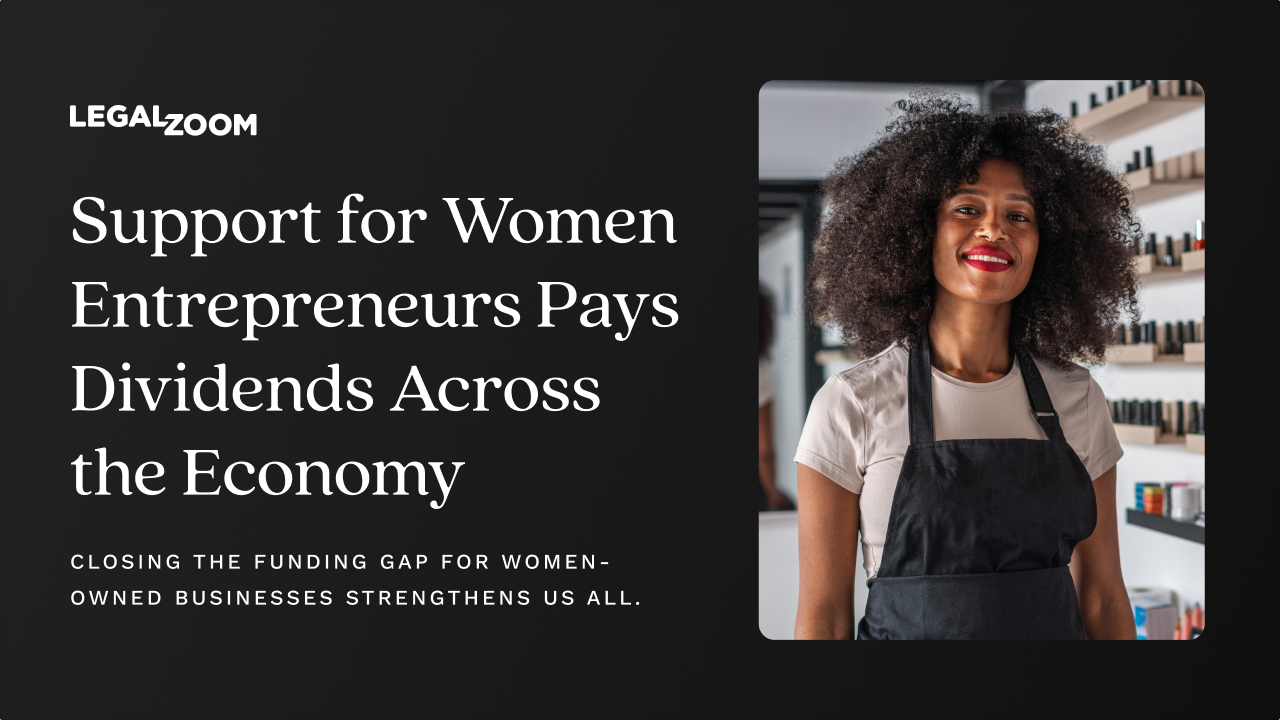

Women have proved their entrepreneurial mettle. They now own around 40% of all U.S. businesses. But women entrepreneurs continue to get far less support than their male counterparts.
In 2024, woman-owned businesses took in just 21% of all SBA-approved small-business loans. To be exact, they received a total of 14,609 loans, compared to a whopping 48,884 for male-owned operations.
And it’s not just the number of loans—or lack thereof—that’s a problem. It’s also the size of those loans. The average SBA loan to female entrepreneurs was $332,739 in 2024. The average SBA loan to male-owned businesses was $469,856. That’s a stark difference, of about $137,000.
That’s not just a gap—it’s a yawning chasm.
So what’s behind this disparity? Is it because women tend to start businesses in cottage industries? Is it that they face unconscious bias from lenders? Or is it simply that they don’t have the same old-boys’ networks as their male counterparts? Whatever the reason, one thing is clear: access to capital isn’t exactly equal.
Women entrepreneurs are undaunted
So, women get less funding. But when you dig deeper into the latest U.S. Census and SBA data, you see that, despite this funding gap, women are continuing to launch companies that are creating jobs and driving growth.
They’re having a major economic impact, especially in places that prioritize inclusive growth. Some states and cities are clearly getting it right, with much higher concentrations of woman-owned small businesses. In particular, Florida and Georgia stand out, thanks to their booming metro areas and business-friendly policies that encourage entrepreneurship.
Colorado’s presence in the top three reflects that state’s consistent focus on small-business development and support services. But even a smaller state like Vermont, which ranks fifth overall, is proving that woman-owned businesses can prosper wherever they have support.
When it comes to cities, Miami is leading the charge, with the most female business owners per 100 residents, followed by Atlanta, Orlando, Memphis and New Orleans. Miami’s success isn’t accidental—it’s the result of intentional efforts, like the Greater Miami Chamber of Commerce’s Diverse Business Empowerment Program, which supports the growth and sustainability of small, minority-owned, woman-owned, veteran-owned and LGBTQ-owned businesses.
Meanwhile, cities like Atlanta and Orlando are perfect examples of how the Southeast’s economic boom is creating new opportunities for female entrepreneurs. Memphis and New Orleans, for their part, highlight how cultural heritage can fuel business growth in historically overlooked areas.
Memphis is of particular interest because it’s the only major U.S. city where women actually outnumber men in small-business ownership. This milestone is a reflection of local programs that focus on minority-owned and woman-owned business development. For instance, Woman-Owned Passport is an initiative that brings together woman-owned stores in Memphis, offering unique deals and cool incentives to shoppers.
These regions prove that when women entrepreneurs get the right support and funding, nothing can hold them back.
Entrepreneurship needs support
While some states and cities have become thriving hubs for woman-owned businesses, others lag significantly behind. West Virginia has the lowest concentration of woman-owned small businesses in the nation, with just 2.39 per 100 residents—less than half the rate of leading states like Florida. It’s followed closely by Wisconsin (2.9), Pennsylvania (3.04), Kentucky (3.05) and Iowa (3.1).
In places like West Virginia and Kentucky, broader economic problems—including population decline and limited industry diversification—create additional barriers to business formation, disproportionately affecting women entrepreneurs.
The story is similar at the city level. Stockton, California, has the nation’s lowest rate of woman-owned businesses, at just 2.69 per 100 residents, with nearby Central Valley cities like Bakersfield (2.7) and Fresno (2.71) close behind. Despite their location in a high-opportunity state, these communities face economic conditions more typical of struggling regions—lower median incomes, fewer financial institutions and scarce business-development resources compared to coastal metros like Los Angeles and San Francisco.
Meanwhile, eastern cities like Buffalo, New York (2.72) and Harrisburg, Pennsylvania (2.82) show how post-industrial economies and slower job growth can suppress entrepreneurial activity, particularly for women.
These geographic disparities reveal a critical truth: Entrepreneurship doesn’t flourish in a vacuum. Where woman-owned businesses struggle, it’s often a symptom of deeper structural gaps—limited access to banking, sparse professional networks and economic environments that discourage risk-taking.
Backing women in business has many benefits
Supporting women entrepreneurs just makes sense. Indeed, the data demonstrates that woman-owned businesses have a positive impact on local economies in a number of ways. In Hawaii, woman-led small businesses boast the highest average payroll in the nation, at $481,836. Hawaii is followed closely by New Hampshire ($469,888) and Tennessee ($439,056), with Maryland ($409,126) and Massachusetts ($399,007) rounding out the top five.
Payroll numbers also reveal important regional trends. Tennessee’s strong showing, for instance, is likely driven by success stories in cities like Memphis, proving that woman-owned businesses can thrive in diverse markets.
The city-level data paints an even more compelling picture. San Jose leads all metro areas, with an average payroll of $546,288 among woman-owned businesses, followed by San Francisco ($510,584). Of course, these are both hubs for the high-paying tech industry. Washington, DC ($497,116) shows the strength of women in professional services and consulting, while surprising appearances by Albuquerque, NM ($488,417) and Greenville, SC ($479,261) demonstrate that strong compensation isn’t limited to coastal tech centers.
What emerges from these numbers is strong evidence that women entrepreneurs are creating quality jobs and driving real economic value. From tech startups in Silicon Valley to consulting firms in the nation’s capital to manufacturing businesses in the Southeast, woman-owned businesses are proving they can compete at the highest levels while providing meaningful employment opportunities.
The bottom line is that when women entrepreneurs gain traction, the benefits ripple through entire communities and, indeed, through the entire country, positively influencing job creation, wages and innovative business models.
'%20/%3e%3c/svg%3e)

'%3e%3cpath%20fill-rule='evenodd'%20clip-rule='evenodd'%20d='M9.31239%2025.5316H13.0679V14.1032H9.31239V25.5316ZM11.1913%208.46875C9.93945%208.46875%209%209.25086%209%2010.505C9%2011.5995%209.78211%2012.5389%2011.1913%2012.5389C12.6005%2012.5389%2013.3826%2011.5995%2013.3826%2010.505C13.3826%209.4082%2012.6005%208.46875%2011.1913%208.46875ZM27%2018.9577V25.5316H23.2445V19.4275C23.2445%2017.8609%2022.6174%2016.7664%2021.3679%2016.7664C20.2711%2016.7664%2019.644%2017.5463%2019.3316%2018.1756C19.1743%2018.488%2019.1743%2018.8004%2019.1743%2019.1128V25.5316H15.4165V13.9458H19.1743V15.5123C19.644%2014.7302%2020.5835%2013.6357%2022.6174%2013.6357C25.1234%2013.7908%2027%2015.3573%2027%2018.9577Z'%20fill='white'/%3e%3c/g%3e%3cdefs%3e%3cclipPath%20id='clip0_952_9489'%3e%3crect%20width='18'%20height='18'%20fill='white'%20transform='translate(9%208)'/%3e%3c/clipPath%3e%3c/defs%3e%3c/svg%3e)

Related Content

A Search to Improve Her Own Health Leads to a Thriving Beverage Business: Mamma Chia
January 14, 2026



Contact us
For media inquiries, call us at (213) 371-6260 or email at press@legalzoom.com.
