




Starting a corporation in Washington, D.C. provides business owners with liability protection, potential tax advantages, and the ability to raise capital through investors. This comprehensive guide walks you through the specific requirements, forms, and procedures for incorporating in the District of Columbia.

What is a corporation?
A corporation is a legal business entity formed by filing articles of incorporation with the D.C. Department of Licensing and Consumer Protection (DLCP), Corporations Division. Under D.C. law, corporations are separate legal entities from their owners, providing liability protection and unique tax treatment opportunities.
In Washington, D.C., corporations are governed by the District of Columbia Business Corporation Act, which establishes the framework for corporate formation, governance, and ongoing compliance requirements.
Benefits of forming a corporation in D.C.
Forming a corporation helps protect its owners' personal assets. If a corporation is sued or cannot meet its financial obligations, the corporation's shareholders only risk the amount of money they invested in the business. Their homes, cars, personal bank accounts, and other assets are protected from the corporation's creditors.
There may also be tax benefits to forming a corporation in D.C., including:
- Potential deduction of business expenses
- Ability to retain earnings at potentially lower corporate tax rates
- Option to elect S corporation status for pass-through taxation
D.C. corporations also often enjoy enhanced credibility with customers, vendors, and financial institutions, and can more easily raise capital through the sale of stock to investors.
How to form a corporation in Washington, D.C.: Step-by-step process
Step 1: Check your business name availability in D.C.
Before filing articles of incorporation, you must ensure your proposed corporation name is available in the District of Columbia. You can search existing business names on the Washington D.C. Secretary of State’s website.
You must also ensure your proposed name adheres to the business naming requirements in the district. To be in compliance, your name must:
- Be distinguishable from existing entities authorized to do business in D.C.
- Contain one of these words or abbreviations: "corporation," "incorporated," "company," "limited," "corp.," "inc.," "co.," or "ltd."
If you’re not ready to file your articles of incorporation just yet, you can also reserve your business name for 120 days for a fee of $50.
Step 2: Appoint a registered agent
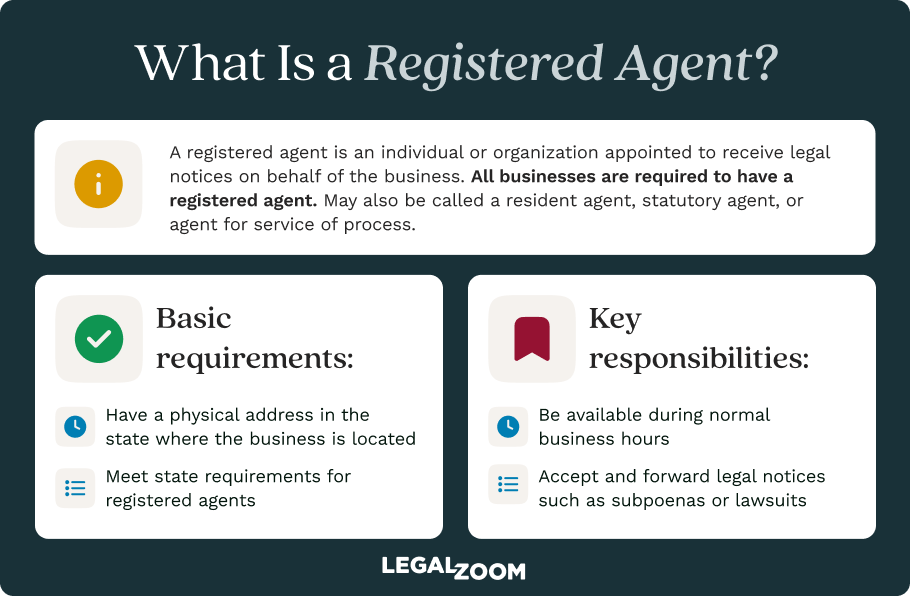
All corporations must have a registered agent available to receive service of process—such as lawsuits, notices, and other legal correspondence—during regular business hours. In the District of Columbia, All corporations must have a registered agent available to receive service of process—such as lawsuits, notices, and other legal correspondence—during regular business hours. In the District of Columbia, a registered agent may be either a Commercial Registered Agent or a Noncommercial Registered Agent.
A Commercial Registered Agent must be registered with the DCLP. A Noncommercial Registered Agent must:
- Have a physical street address within the District of Columbia (P.O. boxes are not acceptable)
- Be available during normal business hours
- Be either an individual resident of D.C. or a business entity authorized to do business in D.C.
Step 3: Prepare and file articles of Incorporation
The articles of incorporation must contain specific information required by D.C. law:
- Your corporation name
- A description of your business purpose
- The number of authorized shares and value of each share
- Your registered agent’s name and D.C. address
- The names and addresses of incorporators
- The names and addresses of any directors, shareholders, or officers who have a controlling interest in the corporation
The cost to file your DBU-1 form will depend upon the authorized capital of your corporation, but can range from $99 up to $1,650.
Step 4: Hold an organizational meeting
Once your corporation has been formed, you should hold an organizational meeting to appoint your corporation’s directors (if none were named in your initial filing) and adopt your corporation’s bylaws. Bylaws include provisions for managing the corporation's business and affairs, typically including things like the number and terms of directors, voting procedures, and methods for making reports to shareholders.
You’ll also use your organizational meeting to authorize the issuance of stock to shareholders and can address any other initial business matters.
Step 5: Obtain a federal tax ID
You’ll need to apply for an employer identification number (EIN) from the IRS before you can file taxes or hire employees. You’ll also need to register with the D.C. Office of Tax and Revenue to pay your franchise tax, income tax (if applicable), and to collect sales tax if your corporation sells goods or services.
Step 6: Open a business bank account
You may also wish to open a corporate bank account for your business to maintain even more separation between your personal and business assets. The exact process will vary by financial institution, but you typically will need to present your articles of incorporation, EIN confirmation letter, or another form of identification for your corporate entity.
Ongoing compliance for D.C. corporations
In the District of Columbia, all corporations file a biennial report. The first report is due by April 1 of the year following incorporation, then every 2 years thereafter. The cost to file your biennial report is $300.
All businesses operating in Washington D.C. are also required to obtain a basic business license (BBL), which can be renewed every two or four years, depending on the term length selected by the business owner at the time of their initial application. Depending on what industry you operate in, you may also need to obtain and renew other licenses issued on the state, federal, or industry level.
How LegalZoom can help with your D.C. incorporation
Forming a corporation involves multiple steps, legal requirements, and ongoing compliance obligations. LegalZoom's incorporation services can help streamline the process by preparing and filing your articles of incorporation, ensuring your corporation is formed correctly. We can also serve as your registered agent, ensuring you receive important legal documents and notices, and can help you stay current with biennial report filings and other D.C. requirements so that your corporation remains in good standing.
FAQs
How long does it take to form a corporation in D.C.?
Standard processing takes 10-15 business days. Expedited processing is also available for $50 (2-3 days) or $100 (same day processing).
What is the cost to form a corporation in D.C.?
The cost to form your D.C. corporation will depend on a few factors, such as whether you choose to pay to reserve your desired name, whether you serve as your own registered agent or hire a professional service, and if you choose to consult an attorney to help you with incorporation.
The most predictable cost is the cost to file your articles of incorporation, but this can also vary since the fees are determined by how much authorized capital you have. Factoring in this fee alone, your incorporation costs will be between $99 and $1,650.
Can I form a corporation myself without a lawyer?
Yes, you can file the articles of incorporation yourself. However, consulting with an attorney is recommended for complex business structures or specific legal questions.
How do I change my registered agent in D.C.?
File a change of registered agent form (RA-3) with DLCP and submit it with a Listing of Commercial Agent form (RA-1) for the new agent. The change becomes effective when filed.
Jane Haskins, Esq. contributed to this article.
'%20/%3e%3c/svg%3e)

'%3e%3cpath%20fill-rule='evenodd'%20clip-rule='evenodd'%20d='M9.31239%2025.5316H13.0679V14.1032H9.31239V25.5316ZM11.1913%208.46875C9.93945%208.46875%209%209.25086%209%2010.505C9%2011.5995%209.78211%2012.5389%2011.1913%2012.5389C12.6005%2012.5389%2013.3826%2011.5995%2013.3826%2010.505C13.3826%209.4082%2012.6005%208.46875%2011.1913%208.46875ZM27%2018.9577V25.5316H23.2445V19.4275C23.2445%2017.8609%2022.6174%2016.7664%2021.3679%2016.7664C20.2711%2016.7664%2019.644%2017.5463%2019.3316%2018.1756C19.1743%2018.488%2019.1743%2018.8004%2019.1743%2019.1128V25.5316H15.4165V13.9458H19.1743V15.5123C19.644%2014.7302%2020.5835%2013.6357%2022.6174%2013.6357C25.1234%2013.7908%2027%2015.3573%2027%2018.9577Z'%20fill='white'/%3e%3c/g%3e%3cdefs%3e%3cclipPath%20id='clip0_952_9489'%3e%3crect%20width='18'%20height='18'%20fill='white'%20transform='translate(9%208)'/%3e%3c/clipPath%3e%3c/defs%3e%3c/svg%3e)


