




You need a registered agent if you have an active company, such as an LLC, C corp, or any other entity type.
Registered agents play a vital role in managing legal documents, important paperwork, and government correspondence on behalf of your business. When choosing how you'll satisfy that requirement, you've got some options.
Let’s explore the world of registered agents and learn how to choose the best one for your company.
Key takeaways
- A registered agent is responsible for managing legal documents and government correspondence to ensure compliance with state regulations.
- A registered agent must have a physical address in the state of registration, full availability during regular business hours, and be a legal adult (usually 18 years old).
- When selecting a reliable and trustworthy registered agent, consider factors such as customer reviews, expertise and reliability, professionalism, and reputation. Updating information regularly is also important.

What is a registered agent?
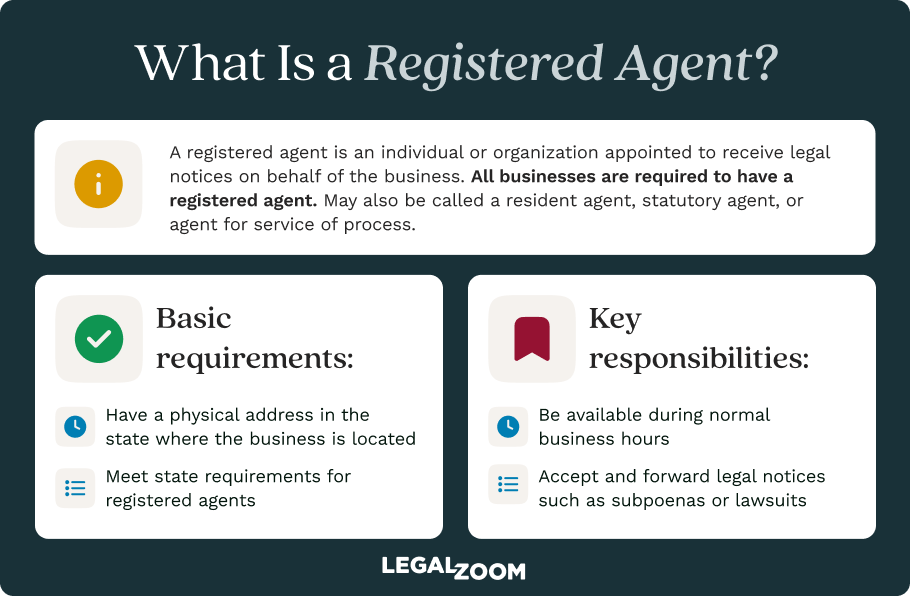
A registered agent is a person or company designated to receive legal documents, government correspondence, and official notices on behalf of your business. Also called a resident agent or statutory agent, they act as your company's official point of contact with the state. When someone files a lawsuit against your business or the state sends compliance notices, your registered agent receives and forwards those documents to you.
A registered agent will assist you in many ways.
- Receiving legal documents: Accepting service of process, lawsuits, and official government correspondence
- Ensuring compliance: Alerting you to upcoming deadlines and required filings
- Protecting your time: Allowing you to take time off without worrying about missing important mail
Key takeaways
- A registered agent is also called a statutory agent.
- The primary duty of a registered agent is to manage legal documents, government correspondence, etc., for your business.
- Hiring a registered agent service can be a significant time saver for business owners.
The legal necessity of registered agents
Having a registered agent is a legal requirement for LLCs and corporations, as they serve as a point of contact with the business entity filing office and ensure compliance with state regulations. A registered agent's location ensures the prompt delivery of critical information, aiding in compliance with state regulations.
Business types that must appoint a registered agent include:
- Corporations
- LLCs
- Limited partnerships
- Limited liability partnerships
- Limited liability limited partnerships (not recognized in all states)
General partnerships and sole proprietorships, on the other hand, are not registered with the state and do not require a registered agent. However, all businesses must remain compliant with business tax obligations and respond promptly to legal documents.
What happens if you don't have a registered agent?
Generally speaking, you'll be required to designate a registered agent when registering your LLC. If your registered agent changes, you'll need to file a form indicating this change.
It might be tempting to skip maintaining a registered agent after your initial filing. However, you face serious consequences without one.
- Loss of good standing: Your company will no longer be in good standing with the state.
- Financial penalties: You may face fines and other penalties.
- Legal limitations: Your company could lose its ability to enter into contracts or file lawsuits.
There's also the risk of missing important legal documents. If you don't receive service of process for a lawsuit, you won't know you're being sued, and a default judgment could be entered against you.
Similarly, missing compliance-related government correspondence could result in fines and sanctions.
Key requirements for registered agent services
To serve as a registered agent, an individual or organization must meet these criteria:
- Must be 18 years or older
- Must have a street address (not a P.O. box) in the state of registration
- Must be available during regular business hours to accept documents
Generally, an LLC or corporation cannot serve as its own registered agent.
Requirements for registered agents can differ based on the state. In Virginia, individuals who can be registered agents are restricted. Only licensed attorneys, officers, or members of the business are eligible for registration. Arizona does not need registered agents to be available during everyday business hours. This is different from other states in the U.S. To learn more about the requirements in your state, contact your state’s business filing agency.
Key takeaways
- Your registered agent must be 18 or older and have a physical address in the state your business is registered in.
- Your registered agent must be available during regular business hours.
- In some states, only licensed attorneys or a member of the business can be a registered agent.
- Always check with your local Secretary of State for more specific guidelines on who can be a registered agent.
Appointing a registered agent: Options and considerations
You have several options for appointing a registered agent, including yourself, a hired registered agent service, or a member of your company. Whoever you choose must meet the state requirements and have their name and address filed in your business' public records.
The most economical option is appointing yourself or another member of your company. However, make sure to weigh the relatively affordable price of a registered agent service (usually around $300 annually) against the time commitment and availability requirements before making your choice.
Building a business is enough work as it is. We'll help you start your LLC with confidence.


Selecting the right registered agent for your business
Selecting the appropriate registered agent for your business is a significant decision with implications for your company’s compliance and overall achievement. Factors to consider when selecting a registered agent include:
- Reliability
- Trustworthiness
- Pricing
- Electronic document delivery
- Customer support
- Additional business services
A reliable registered agent should possess corporate expertise and demonstrate trustworthiness, accuracy, consistency, and prompt communication with the business owner. They should also offer a dependable way for the public, courts, and government to communicate with the company. When evaluating the trustworthiness of a corporation's registered agent, you may wish to consider factors such as customer reviews, expertise and reliability, professionalism, and reputation.
The cost of engaging a registered agent typically ranges from $99 to $300 annually. By carefully considering these factors and your company’s specific needs, you can select the best registered agent for your business.
Advantages of hiring a professional registered agent service
Hiring a professional registered agent service offers numerous benefits for your business. These advantages include:
- Privacy protection
- Organization
- Timely notifications
- Efficient handling of official mail
- Affordable annual fee
Employing a registered agent service helps your company preserve privacy, as the agent’s business address replaces your personal or business address for official documents and correspondence. This can help protect your personal information from being publicly accessible.
The provision of electronic document delivery by professional registered agent services is another benefit. Time-sensitive materials can be sent via email and postal mail, avoiding delays caused by physical mail forwarding. This ensures that your company receives important information in a timely manner, allowing you to focus on other aspects of your business.
Professional law service companies such as LegalZoom can help you find a registered agent.
Potential drawbacks of being your own registered agent
Being your own registered agent is an option, but there are potential disadvantages to consider. One disadvantage is the exposure of personal information, as the registered agent’s address is listed on public records. This could result in a lack of privacy and an increased risk of compromising your personal information.
Another drawback is the risk of missing important documents due to being unavailable during normal business hours. As a registered agent, you must be physically present at the listed location during standard business hours to accept legal documents and other official correspondence. This may create potential conflicts with your availability and could result in missed deadlines or legal ramifications.
Given these potential problems, business owners need to carefully balance the advantages and disadvantages of being their own registered agent and consider employing a professional registered agent service if necessary.
Key takeaways
- Being your own registered agent can leave your personal information open to exposure.
- Becoming your registered agent risks you missing important documents and notices.
- Being your own registered agent may create conflicts in your schedule if you can't always be available during business hours.
Expanding your business: Registered agent requirements for multiple states
If you’re expanding your business to other states, a registered agent with a physical address in each state is necessary. This may necessitate hiring a national registered agent service, which is a group of registered agents, one in each state.
A corporation or LLC that is operating in multiple states must appoint a registered agent for each of them. This person must reside in the state where the operations are taking place. By ensuring that you have a registered agent in each state where you conduct business, your company can maintain compliance with state regulations and avoid potential legal issues.
Updating your registered agent information
It’s necessary to regularly update registered agent information to stay compliant with state regulations. Changing a registered agent typically involves filing a form and paying a fee with the state’s business filing agency.
The fees associated with changing an appointed registered agent's name are generally quite low, ranging from $25 to $50 in most states. By keeping your registered agent information up-to-date, your business can avoid potential legal issues and maintain its certificate of good standing.
In conclusion, understanding the role of a registered agent and its importance for business compliance is crucial for entrepreneurs and business owners. By carefully considering the options for appointing a registered agent, weighing the advantages and disadvantages of professional registered agents, and selecting the best registered agent for your company’s specific needs, you can ensure your business stays compliant with state regulations and avoids potential legal issues. Remember, the success of your business depends on maintaining compliance and staying informed.

FAQs
What does a U.S. registered agent do?
A US registered agent serves as an LLC or corporation's official point of contact with the state, receiving and forwarding service of process, other legal documents, and official communications.
Do I need a registered agent for my LLC in Delaware?
Yes, you need to have a registered agent for your LLC in Delaware.
Do you need a registered agent for an LLC in Colorado?
Yes, in order to do business in Colorado, an LLC must appoint a registered agent. This ensures the Secretary of State and state courts have a public record and a reliable way to contact the LLC.
Can I be my own registered agent in Maryland?
Yes, you may be your own registered agent in Maryland if you have a business office in the state; however, someone must always be present at the registered office or address to sign for important documents.
What types of businesses require a registered agent?
Businesses that require a registered agent include corporations, limited liability companies, limited partnerships, limited liability partnerships, and limited liability limited partnerships. These entities need to have a registered agent to receive important legal notices.
'%20/%3e%3c/svg%3e)

'%3e%3cpath%20fill-rule='evenodd'%20clip-rule='evenodd'%20d='M9.31239%2025.5316H13.0679V14.1032H9.31239V25.5316ZM11.1913%208.46875C9.93945%208.46875%209%209.25086%209%2010.505C9%2011.5995%209.78211%2012.5389%2011.1913%2012.5389C12.6005%2012.5389%2013.3826%2011.5995%2013.3826%2010.505C13.3826%209.4082%2012.6005%208.46875%2011.1913%208.46875ZM27%2018.9577V25.5316H23.2445V19.4275C23.2445%2017.8609%2022.6174%2016.7664%2021.3679%2016.7664C20.2711%2016.7664%2019.644%2017.5463%2019.3316%2018.1756C19.1743%2018.488%2019.1743%2018.8004%2019.1743%2019.1128V25.5316H15.4165V13.9458H19.1743V15.5123C19.644%2014.7302%2020.5835%2013.6357%2022.6174%2013.6357C25.1234%2013.7908%2027%2015.3573%2027%2018.9577Z'%20fill='white'/%3e%3c/g%3e%3cdefs%3e%3cclipPath%20id='clip0_952_9489'%3e%3crect%20width='18'%20height='18'%20fill='white'%20transform='translate(9%208)'/%3e%3c/clipPath%3e%3c/defs%3e%3c/svg%3e)

