


Planning for what happens to your assets after death can feel overwhelming, and one of the biggest questions people have is how taxes might affect what their loved ones ultimately receive.
Wisconsin does not impose a state-level estate tax or inheritance tax. However, federal estate tax rules may apply to some estates. Understanding these rules can help you plan for what happens to your assets after death.

What is an estate tax?
An estate tax is a tax imposed on the value of a person's assets and property after their death, typically before those assets are distributed to beneficiaries. It's helpful to understand the difference between the estate tax and inheritance tax.
- Estate tax: A tax generally paid out of the deceased person's estate before assets are distributed to beneficiaries.
- Inheritance tax: A tax generally paid by the person who receives an inheritance.
For Wisconsin residents, the picture is fairly simple. Wisconsin does not have an estate tax or an inheritance tax. In most cases, estates and beneficiaries do not owe Wisconsin estate or inheritance tax when assets are passed down.
Federal estate tax: Key considerations for Wisconsin estates
While Wisconsin doesn't impose its own estate tax, some estates may still be subject to the federal estate tax. The IRS sets this tax, and it applies only if the estate's total value exceeds the federal exemption limit, which is updated regularly. For 2026, the federal estate tax basic exclusion amount is $15 million per individual. Estates that fall within the exclusion generally do not owe federal estate tax, although filing requirements can vary based on the estate and any applicable elections.
The IRS regularly updates estate and gift tax rules. Executors and families handling larger estates should review these updates to stay compliant with filing requirements.
Do I need an estate plan if I don’t have to worry about estate taxes?
Even without a Wisconsin estate tax, estate planning remains essential. Estate planning can help you manage your assets, designate decision-makers, and clarify how your property should be distributed after your death.
A well-structured plan can:
1. Help ensure your assets are distributed according to your wishes
2. Help reduce federal estate tax exposure for high-value estates
In short, Wisconsin residents benefit from not having a state-level estate tax, but creating an estate plan can still help protect your assets and provide clarity for your family.
What federal estate tax laws apply to Wisconsin residents?
Even though Wisconsin does not collect its own estate or inheritance tax, large estates may still be subject to the federal estate tax.
Federal exemption amounts
The federal government sets a threshold, known as the exemption amount, which determines whether an estate is subject to taxes. For 2026, the federal basic exclusion amount is $15 million per individual.
Portability allows a surviving spouse to use a deceased spouse's unused federal estate tax exclusion, provided the deceased spouse's estate makes the required portability election. With portability, a married couple may be able to combine their unused exclusions and shield up to $30 million from federal estate tax, assuming the required election is properly made.
Estate tax rates
If an estate exceeds the federal estate tax exemption, the taxable amount may be subject to federal estate tax. Federal estate tax rates are progressive, ranging from 18% to 40%, but are not implemented unless their taxable value exceeds the $15 million exclusion amount.
Gift tax and annual exclusion
Federal estate tax planning is closely tied to the federal gift tax. In 2026, individuals can give up to $19,000 per recipient per year without using any of their lifetime federal gift and estate tax exemption. Gifts above the annual exclusion may count toward the donor's lifetime exemption, although certain exclusions and deductions may apply.
For married couples, each spouse can generally make separate annual exclusion gifts, allowing them to give up to $38,000 per recipient in 2026 when gift-splitting rules are properly followed.
What are the inheritance laws in Wisconsin?
Inheritance in Wisconsin depends on two key factors: whether the person who died left behind a valid will, and if not, how the state's intestacy laws divide property.
If you have a will
A will allows you to decide who receives property that passes through your estate and to nominate a personal representative to administer it. If probate is required, that personal representative should submit the will to the probate court, which is the court-supervised process of validating the document, paying debts, and distributing assets.
A valid Wisconsin will should clearly state how you want your assets to be distributed after your death. Wisconsin does not impose an inheritance tax on property inherited through a will. However, some inherited assets may have federal tax implications, depending on the type of asset and how it is transferred or later sold.
If you do not have a will (intestate succession)
If someone dies without a will, Wisconsin's intestate succession laws decide who inherits. Consider the following scenarios.
- Spouse + children (from the same marriage): The surviving spouse inherits everything.
- Spouse + children (from a different relationship): The surviving spouse and the children may both inherit. Their respective shares depend on the type and ownership of the property, including whether it is marital property.
- Spouse, no children: The spouse inherits everything.
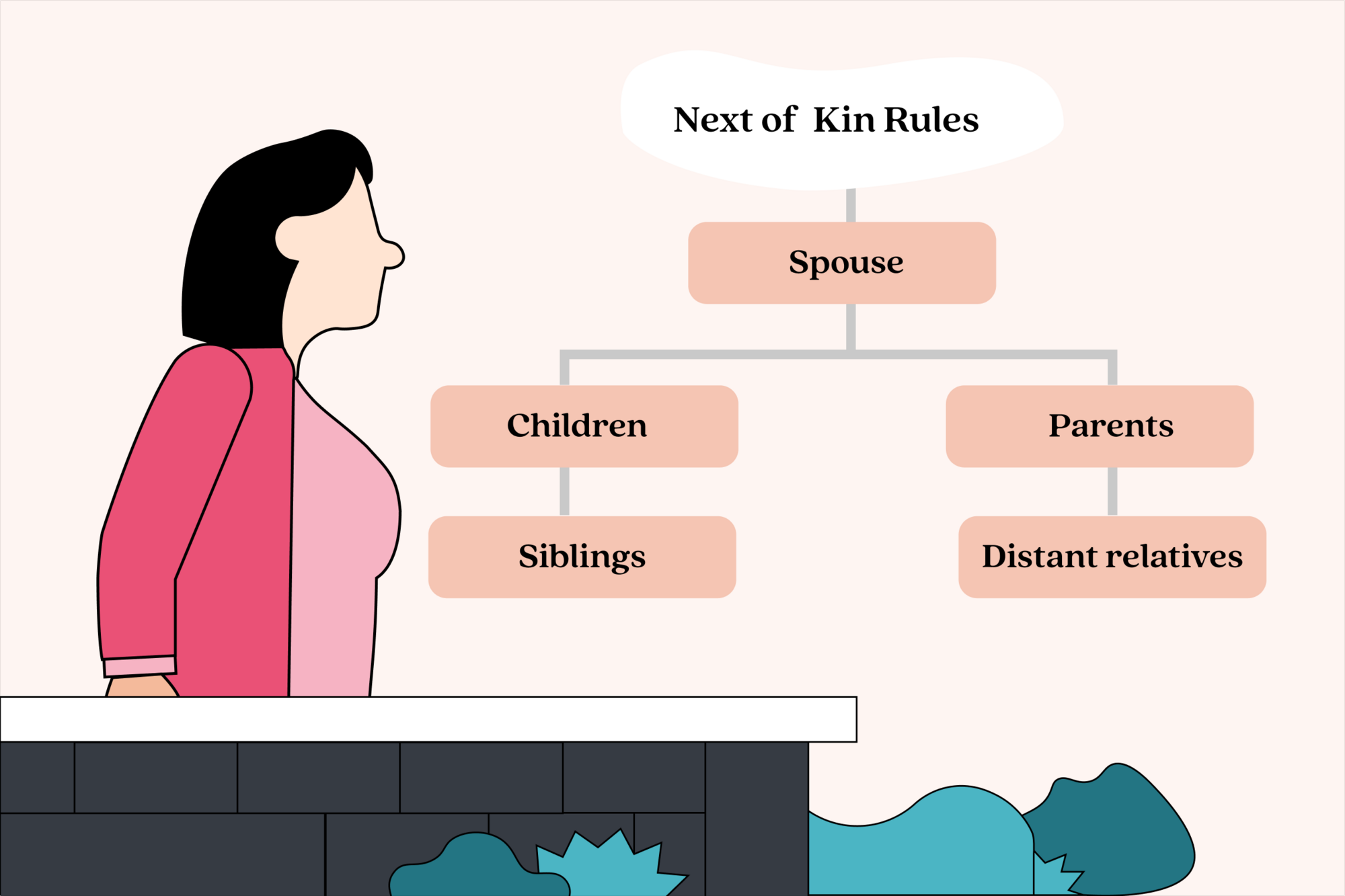
- Children, no spouse: The children generally inherit the estate, and descendants of a deceased child may receive that child's share.
- No spouse or children: Parents inherit, and if parents are not alive, siblings (or their descendants) inherit.
Intestate succession also has a few other special rules:
- Adopted children inherit from adoptive parents the same as biological children.
- Children born outside of marriage can inherit if certain conditions are met.
- Posthumous children (conceived before death but born after) are also entitled to inherit.
- Wisconsin also has a 120-hour survivorship rule, meaning an heir must survive the deceased by at least 120 hours (five days) to inherit.
Rights of next of kin in probate
The term "next of kin" refers to your closest living relatives. Being a next of kin comes with certain rights during probate.
- Notice of proceedings: Heirs and other interested persons may be entitled to notice during probate, depending on the proceeding.
- Right to inherit under intestacy: If no will exists, next of kin inherit according to the rules above.
- Ability to contest: An heir or other interested person with standing may challenge a will on recognized legal grounds, such as improper execution, lack of capacity, undue influence, or fraud.
Having a clear will helps avoid confusion and potential disputes among next of kin, ensuring your wishes—not state law—determine who inherits.
Is inheritance considered marital property in Wisconsin?
Wisconsin's marital property laws generally treat an inheritance one spouse receives from a third party as that spouse's individual property. Different rules govern whether inherited property is subject to division if the spouses later divorce.
Separate vs. marital property
Wisconsin is considered a community property state, but it distinguishes between marital property and separate property. Generally:
- Inheritance is individual property. Property inherited by one spouse from a third party is generally classified as that spouse's individual property under Wisconsin marital property law.
- Commingling can complicate matters. Mixing inherited property with marital assets may make it harder to preserve its individual status, particularly if the inherited property can no longer be traced.
Protecting inherited property
Couples can use prenuptial or postnuptial agreements to clearly define what remains separate, even if some commingling occurs.
Example: Suppose one spouse inherits $50,000 and deposits it into a joint account. Commingling inherited funds with marital assets can make it more difficult to preserve and trace the inherited property if the couple later divorces.
In a divorce, inherited property is generally excluded from property division. However, Wisconsin law allows an exception when excluding the property would create a hardship for the other spouse or the couple's children.
What is the Wisconsin transfer fee?
The Wisconsin real estate transfer fee generally applies to certain transfers of real estate ownership. While most people think of it in the context of buying or selling property, it can also apply in other scenarios.
How it works
When a taxable transfer of real estate occurs in Wisconsin, the transfer fee is generally based on the consideration for the transfer, such as the sale price. Some transfers are exempt from the fee under Wisconsin law.
Transfers upon death
Most transfers that occur because of an inheritance or as part of a probate process are exempt from the transfer fee. This means inheriting property in Wisconsin generally does not trigger this fee.
When the transfer fee may apply later
Even if the initial inheritance is exempt, the transfer fee could apply later if the heir sells or transfers the property to someone else.

How can you plan your estate in Wisconsin?
Even though Wisconsin doesn't have a state-level estate tax, proper estate planning is still essential. A solid plan ensures your assets are distributed as you intend, minimizes potential taxes, and protects your family from unnecessary stress and legal complications.
Wills
A will is a common foundation of an estate plan. It lets you specify who inherits your property and appoint a personal representative to carry out your wishes. Without a will, Wisconsin's intestacy laws determine who receives property that would otherwise pass through your estate. Assets that pass directly to a named beneficiary or through joint ownership generally are not distributed under intestacy laws.
Trusts
Trusts are flexible tools that can provide greater control over how your assets are managed and distributed.
- Revocable trusts: Can generally be changed during your lifetime and can help assets held in the trust avoid probate.
- Irrevocable trusts: Generally offer less flexibility than revocable trusts but, when properly structured, may provide estate-tax or asset-protection benefits.
- Special types of trusts: Include special needs trusts for beneficiaries with disabilities and charitable trusts, which may provide tax benefits depending on how they are structured.
Powers of attorney
- Financial power of attorney: Lets someone manage your finances if you become incapacitated.
- Healthcare power of attorney: Appoints a person to make medical decisions on your behalf.
Living will and other advance directives
A Wisconsin living will, officially called a Declaration to Health Care Professionals, lets you state certain preferences about life-sustaining treatment if you cannot communicate those decisions yourself.
Beneficiary designations
Accounts like retirement plans, life insurance, and annuities allow you to name beneficiaries directly. Always review and update these designations to reflect life changes such as marriage, divorce, or new children.
Under current federal rules, many non-spouse beneficiaries must generally withdraw the full balance of an inherited retirement account within 10 years, although exceptions and different distribution rules apply to certain eligible beneficiaries.
What should you do if you inherit property in Wisconsin?
Inheriting property can be both a blessing and a responsibility. Take the right steps to help you protect your inheritance and make the most of it.
Step 1: Take inventory and get an appraisal
Once you know what property you are receiving, gather relevant records and determine its value and tax basis. For inherited real estate or other valuable property, a professional appraisal may be helpful.
Step 2: Understand the probate process
If the estate is in probate, work with the personal representative to understand when and how your inheritance will be distributed.
Step 3: Consider tax implications
- Basis adjustment: The basis of inherited property is generally its fair market value on the date of death, although exceptions apply. This can reduce capital gains taxes if you later sell the property.
- Inherited retirement accounts: These may trigger required minimum distributions (RMDs) for non-spouse beneficiaries, so planning withdrawals carefully is essential to avoid unnecessary taxes.
Step 4: Consult professionals
A financial advisor or estate planning attorney can guide you through complex situations, such as large estates, retirement accounts, or real estate holdings. Professional guidance helps you avoid mistakes and ensure compliance with federal and state rules.
Step 5: Manage assets
- Real estate: Decide whether to keep or sell inherited property.
- Retirement accounts: Follow IRS rules for RMDs and beneficiary distributions.
- Investments: Review your inherited investment portfolio and consider tax-efficient strategies.

Why choose LegalZoom for your Wisconsin estate plan?
LegalZoom makes it convenient to create and manage your estate plan online. Depending on the plan you choose, you can create documents such as a last will and testament or living trust, healthcare directive, medical power of attorney, financial power of attorney, and HIPAA authorization. Trust plans may also include additional trust documents.
LegalZoom also offers features such as document revisions and storage. Premium plans may include attorney consultations and other attorney-supported services. These options can help Wisconsin residents organize their estate plans and document their wishes for the future.

Eden Gravina was extremely helpful in…
Eden Gravina was extremely helpful in getting me signed up with the appropriate instrument for my estate planning needs. Very impressive !!! Thank you ! ⭐️⭐️⭐️⭐️⭐️

My customer service agent named "Jay"…
My customer service agent named "Jay" did a fantastic job! More specifically, he spoke very clearly and confidently as he assisted me to tediously revise and update my POA, Last Will & Testament and Basic Living Will documents, in a step-by-step-manner, within one hour! I was extremely pleased with customer service provided by Legal Zoom.com! Respectfully, Michael D. Clark
Peace of Mind
I had a great experience with LegalZoom. The process was straightforward, professional, and gave me peace of mind knowing that I have taken important steps to protect my assets and prepare for the future. Completing my estate planning has made me feel much more secure, and I can rest easier knowing that I have a clear plan in place for my family and loved ones. I’m very pleased with my experience and feel that my future and legacy are much safer now that this is done.
Love legal zoom
Love legal zoom! They made it so easy to handle our estate planning ! It’s identical to what an estate lawyer would have done at a fraction of the cost! We are so impressed with the outcome! If you’re concerned it’s going be too hard to do it yourself don’t they have made it so absolutely simple for you to do it takes no time at all. If you’re hesitating don’t!! Just do it!!! You’ll be so thankful you did! Plus, if you have any questions or concerns, they have live support to help you around the clock!! Thank you legal zoom !!
Easy and Fast tool, plenty of online support.
It was very easy to answer the questionnaire for creating Estate Planning documents; including our Last Will and Testament. It was also easy to arrange a review by an attorney via Legal Zoom who is located just 20 minutes away. We met on a phone call and validated everything was good. Chat support was also very helpful.
LegalZoom - Trust and Estate Planning Made Easy
LegalZoom made amending my trust and estate documents extremely easy. The process took very little time and what can be, or is, an intimidating process was made simple and intuitive. The customer service team was able to assist me with a minor task that I did not understand. Overall a great experience and I highly recommend LegalZoom.
LEGAL ZOOM -Trust Planning
Legal Zoom handled my estate TRUST planning for my two daughters and I am extremely pleased with the level of competency and professionalism I received.
I researched online Estate Planning and…
I researched online Estate Planning and decided I would go with Legal Zoom. I had heard commercials and watched YouTube videos, so it seemed like the perfect choice. I decided to go with the couples Pro? Version. It’s really easy to follow the questions and I found it to be quite simple to understand. I finished completing my questions and when I got to the end, I was asked to verify the answers for the printing and mailing. I wasn’t sure if I should finish that step because I had not answered any questions regarding my husband’s Will. So I decided to ask a question in the live Chat. I had the pleasure of chatting with Quience today. I wasn’t sure if I should complete my will, print and mail it or wait until I have completed my husband’s will. Quience advised me to proceed with printing and mailing my Will, and once I have completed it then I will be able to complete my husband’s Will. Quience also waited until I answered and completed my husband’s Will in the Chat just in case I needed further assistance. I can’t say enough great things about Quience. Oftentimes you just don’t feel as though the person that you are chatting with actually cares or wants to help you. I am very happy with my entire experience with Legal Zoom. If you have been putting off important decisions for your Estate Planning, consider Legal Zoom. I am so glad that I did!!!
LegalZoom made it very easy to update…
LegalZoom made it very easy to update my will, healthcare directive, and related documents. I highly recommend LegalZoom if you need straightforward documents prepared correctly and at a low cost.
Will/Trust
It was so easy and convenient to re-accomplish my Legal Will/trust online.
Easy and cost effective
It was super easy to fill in the information as I updated my last will and testament. The money I saved by doing it with Legal zoom vs live with an attorney was significant. Thank you Legal Zoom.
We definitely recommend Legal Zoom for Estate planning.
On February 15th my husband and I ordered the Will Estate plan from Legal Zoom. The forms were easy for us to understand and since we had gathered info before hand it took us less than 2 hours to complete.
This was my first time dealing with…
This was my first time dealing with Estate Planning. Everyone I called for support was helpful and happy to assist.
I set up my Trust
I set up my Trust, Will, Health Directive, and Power of Attorney all at the same time with their estate plan. Incredibly easy. Of course I had to dig out all the info, but the input was simple and straightforward, and the free consults were priceless. Had I used an attorney alone, it would easily have cost me 3k+. Thanks Legal Zoom!
Legal Zoom is affordable legal guidance.
Legal Zoom has been a lesson in estate planning, living trusts, and wills. I'm glad for the service, it made taking on an essential procedure less daunting than imagined. Along with the help I received from my dear sister, and the legal advice provided by one of your attorneys, we were able to complete my living trust, will, and end of life instructions will little stress. I'm glad I took my friend's advice to look you up. All in all, yours is the choice for those of us on a budget.
User-Friendly Will & Estate Plan Process
The process to create a personal Will & Estate Plan, including a power of attorney and advanced medical directive was very user friendly and fast. The signing directions and explanatory documentation was also very helpful. The cost was reasonable and the on-line assistance chat feature allowed for quick resolution of a special request.
First pass at Estate Plan, prior to receiving Documents
Preparation of documents for an estate plan was quick and easy. Meeting with the attorney went well. He had reviewed my very straight forward documents and found no problems.
LegalZoom.com…a company you can trust
It’s just a great company to deal with. I am so glad I chose them to help me with my living will/estate plan!
Legal Zoom is very easy estate planning.
This was very easy to do, and Beth was very patient and so helpful with the process. I appreciate the time she took to make sure I had everything covered. It is very reassuring to know I have my final wishes on paper.
I spoke to the representative today about a Trust...
I spoke to the representative today regarding a question about an existing Living Trust. She was very helpful - told me exactly what I needed to know and how to accomplish it. As a representative in the Financial field I guide clients all the time on where to get documents done right - and its always LegalZoom - easy and effecient!

Showing selected reviews
FAQs about Wisconsin estate tax
What is probate, and how can you avoid it in Wisconsin?
Probate is the court-supervised process of settling a deceased person's estate. It validates the will, pays debts, and distributes assets to heirs.
You can avoid or minimize probate in Wisconsin by using:
- A properly funded revocable living trust
- Joint tenancy ownership with rights of survivorship
- Payable-on-death (POD) or transfer-on-death (TOD) designations for bank accounts and securities
These strategies can allow particular assets to pass outside probate, although the appropriate method depends on the asset and your circumstances.
Does Wisconsin have a simplified process for small estates?
Yes. Wisconsin offers a simplified procedure called "Transfer by Affidavit" for estates valued at $50,000 or less. This process allows heirs to collect property without full probate.
The person using the affidavit must follow Wisconsin's applicable notice and transfer requirements. Additional steps apply when the estate includes real estate or when notice to the state's Estate Recovery Program is required.
What happens to debt after death in Wisconsin?
A decedent's valid debts are generally handled through the estate before beneficiaries receive distributions. Heirs do not automatically become personally liable simply because they inherit property, although a surviving spouse, co-borrower, guarantor, or another person may have liability under applicable law.
Do you need a lawyer to create a will in Wisconsin?
No, Wisconsin law does not require you to hire a lawyer to create a will. However, an attorney may be helpful for complex estates or situations involving significant assets, blended families, or other special circumstances. A Wisconsin will generally must be in writing, signed by the testator, and signed by at least two witnesses in accordance with Wisconsin law.
LegalZoom offers online will estate plans that include a last will and testament and other estate-planning documents, with attorney support available depending on the plan selected. If you decide to make a DIY will, consider having a licensed Wisconsin attorney review it.
'%20/%3e%3c/svg%3e)

'%3e%3cpath%20fill-rule='evenodd'%20clip-rule='evenodd'%20d='M9.31239%2025.5316H13.0679V14.1032H9.31239V25.5316ZM11.1913%208.46875C9.93945%208.46875%209%209.25086%209%2010.505C9%2011.5995%209.78211%2012.5389%2011.1913%2012.5389C12.6005%2012.5389%2013.3826%2011.5995%2013.3826%2010.505C13.3826%209.4082%2012.6005%208.46875%2011.1913%208.46875ZM27%2018.9577V25.5316H23.2445V19.4275C23.2445%2017.8609%2022.6174%2016.7664%2021.3679%2016.7664C20.2711%2016.7664%2019.644%2017.5463%2019.3316%2018.1756C19.1743%2018.488%2019.1743%2018.8004%2019.1743%2019.1128V25.5316H15.4165V13.9458H19.1743V15.5123C19.644%2014.7302%2020.5835%2013.6357%2022.6174%2013.6357C25.1234%2013.7908%2027%2015.3573%2027%2018.9577Z'%20fill='white'/%3e%3c/g%3e%3cdefs%3e%3cclipPath%20id='clip0_952_9489'%3e%3crect%20width='18'%20height='18'%20fill='white'%20transform='translate(9%208)'/%3e%3c/clipPath%3e%3c/defs%3e%3c/svg%3e)
