



Maryland corporations file articles of incorporation with the State Department of Assessments and Taxation (SDAT). This guide covers forming a domestic, for-profit Maryland stock corporation, including the state filing, resident agent, stock structure, initial directors, fees, and post-formation requirements. Nonstock, tax-exempt, professional, close, and foreign corporations may use different forms or have additional requirements.
Read on to learn more about what to expect from Maryland, including state-specific guidelines and federal requirements.
Key takeaways
- Maryland stock corporations file articles of incorporation with the State Department of Assessments and Taxation (SDAT).
- The articles of incorporation identify the corporation’s initial directors, authorized shares, and par value, so those decisions must be made before filing.
- The standard filing cost is $120 when the corporation’s aggregate par value does not exceed $100,000 and it does not authorize more than 5,000 no-par-value shares.
- Every Maryland corporation needs a Maryland principal office and a qualifying resident agent with a physical address in the state.
- Domestic stock corporations file Form 1 each year by April 15 and pay a $300 annual report fee.

How to form a Maryland corporation in 5 steps
Forming a Maryland corporation requires several decisions before you submit the articles of incorporation.
Step 1: Choose and check your Maryland corporate name
Your corporate name needs to be distinguishable from every other business already registered in Maryland, and it must carry a corporate designator: "Incorporated," "Corporation," "Limited," or "Company," or an accepted abbreviation of one of these.
Check availability by running a name search through Maryland Business Express, SDAT's online platform, or by using LegalZoom’s free name check tool below. For a deeper dive, refer to our comprehensive guide to Maryland business names.
Free Maryland Business Name Check
Starting a business? Use our free tool to check your business name against the Maryland Department of Assessments & Taxation records.
By clicking "Check Availability," I agree to LegalZoom's Terms of Use. This search is a preliminary check of state databases and does not include variations or trademarks. Results do not guarantee name availability or compliance with legal requirements.
You can also lock in your chosen name for 30 days by filing a corporate name reservation form with SDAT for a $25 fee. You’re not required to reserve a name, but it's cheap insurance while you finish your paperwork.
Step 2: Appoint a Maryland resident agent and choose initial directors
A resident agent is a person or entity authorized to receive legal communications on behalf of your business. In other states this role may be called “statutory agent” or “registered agent.” Be sure to use the correct state-specific term in your articles.
A resident agent may be an individual who resides in Maryland or a Maryland corporation, LLC, or limited partnership. The agent must have a physical Maryland street address, and the articles must include the agent’s written consent. LegalZoom can serve as your resident agent if you’d rather not handle the role yourself.
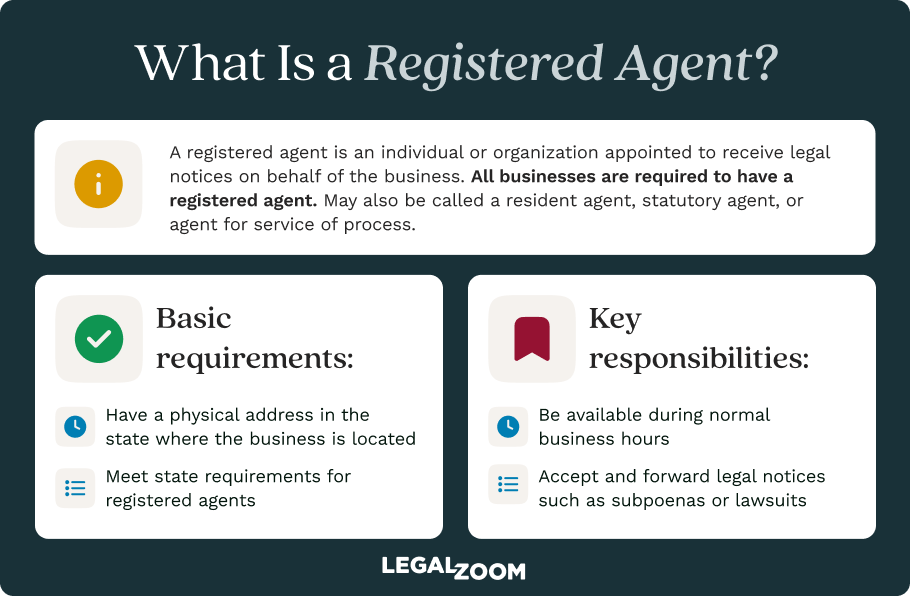
In addition to your resident agent, you also need to choose the initial directors and list their names in the articles. These initial directors will help in setting up the business and making its earliest decision.
Step 3: Decide on the corporation’s stock structure
Domestic for-profit stock corporations issue shares to shareholders. Before filing, decide how many shares the corporation may issue and whether those shares will have par value, because those choices affect the articles and may affect the filing fee.
Maryland allows stock corporations to authorize shares with or without par value. The base $120 filing cost applies when aggregate par value does not exceed $100,000 and the corporation does not authorize more than 5,000 no-par-value shares.
More complex share structures may require a higher organization and capitalization fee.
Step 4: Prepare your Maryland articles of incorporation
The articles of incorporation is the document that legally creates your Maryland corporation. For a stock corporation, you'll need:
- The corporation's name, including a required corporate designator, distinguishable from anything already on file in Maryland
- The name and address of each incorporator, plus a statement confirming each incorporator is 18 or older
- The corporation's purpose, though a general statement works.
- The street address of the principal office in Maryland.
- The name and physical Maryland street address of the resident agent (remember: no P.O. boxes)
- The number of authorized shares and their par value, if any
- The number and names of the initial directors
The filing fee may increase if the corporation’s aggregate par value exceeds $100,000 or it authorizes more than 5,000 shares without par value. Confirm the applicable organization and capitalization fee with SDAT before filing. You may use SDAT’s stock corporation form or prepare another document that includes every required provision.
Step 5: File your articles with SDAT, online or by mail
Online filing tends to move faster and gives you instant confirmation. You may also send your forms by mail directly to SDAT.
Here’s how to file online through Maryland Business Express:
- Log in (or create an account) with Maryland Business Express
- Click "Create a New Business" and pick the corporation entity type
- Fill in all the required articles of incorporation fields on the online form
- Pay by credit or debit card (card payments through the platform carry a 3% convenience fee) and get confirmation right away
Here’s how to file by mail:
- Download SDAT's articles of incorporation form, available on the forms page, or type up your own document with all required fields
- Make the check or money order payable to the State Department of Assessments and Taxation or SDAT.
- Mail everything to SDAT's Baltimore office
State Department of Assessments and Taxation
Charter Division
700 East Pratt Street, Suite 2700
Baltimore, Maryland 21202
Standard processing runs 6–8 weeks without expedited service. If that's too slow for your launch timeline, SDAT offers faster options, explained below.
Maryland corporation filing fees, processing times, and expedited options
The fees and timelines below reflect what SDAT had published at the time this was published, but states change fee schedules without much notice. Double-check current numbers on SDAT's official website (click the link “List of Fees for Charter Services and Document Filings”) or through Maryland Business Express before you submit anything.
Filing fees
A Maryland stock corporation’s base filing cost is $120: a $100 articles of incorporation fee plus a $20 organization and capitalization fee. The base amount applies when aggregate par value does not exceed $100,000 and the corporation does not authorize more than 5,000 no-par-value shares. More complex stock structures may require a higher fee.
| Filing type | Fee |
|---|---|
| Stock corporation, base filing (up to $100,000 aggregate par value) | $120 |
| Additional organization and capitalization fee, when applicable | Varies by stock structure |
| More than 5,000 no-par-value shares | Contact SDAT for the applicable fee |
| Name reservation (optional) | $25 |
| Online payment convenience fee | 3% of total |
Processing times
| Processing speed | Turnaround | Additional fee |
|---|---|---|
| Standard | 6–8 weeks | $0 |
| Expedited | 7–10 business days | +$50 |
| Same-day (online) | Same day | +$325 |
| Same-day (in-person) | Same day | +$425 |
Want same-day in-person service? Drop your documents off at SDAT's dropbox by 10 AM and pick up your approved filing by 3:45 PM. If you're planning ahead, standard processing works fine.
What to do after Maryland approves your articles of incorporation
Getting SDAT's approval is progress, not the finish line. But, if you skip a post-formation step, you'll run into trouble, whether that's a rejected bank account application, a gap in your tax registration, or loss of good standing with SDAT. Work through these in order since each one builds on the last.
Get an EIN from the IRS
An employer identification number (EIN) is your business' federal tax ID assigned by the IRS. You'll need one before opening a business bank account, hiring employees, or registering for state taxes with the Comptroller.
You can apply directly on the IRS website for free or use LegalZoom’s EIN service if you want to keep this administrative task off of your plate.
Register with the Maryland Comptroller for state taxes
Once you have your EIN, register your corporation with the Maryland Comptroller’s online portal, Maryland Tax Connect, to open the tax accounts your corporation needs, including income tax and, if you sell taxable goods or services, a sales and use tax account.
If you’re not sure exactly what taxes your corporation may need, reach out to the Maryland Comptroller’s office or consult a tax professional.
File your Maryland annual report and business personal property return with SDAT
Maryland domestic stock corporations file Form 1, the Business Entity Annual Report, each year by April 15. The filing fee is $300. The personal property return portion is required only when the corporation owns, leases, or uses qualifying Maryland personal property or maintains a trader’s license. SDAT allows a requested 60-day filing extension.
Miss this deadline, and you risk losing your corporation's good standing, which can hurt your ability to get financing, licenses, or legal recognition down the road. File through Maryland Business Express, and SDAT marks your annual report as filed the same day you submit online.
Get Maryland business licenses through your local Clerk of the Circuit Court
Not every Maryland corporation needs a business license, but plenty do, and the process runs through an agency most owners don't expect: the Clerk of the Circuit Court in the jurisdiction where your business operates.
Whether you need a license, and which kind, comes down to your industry and county. LegalZoom's business license management service gives you a personalized report on exactly which licenses, permits, and registrations your business needs, along with direct links to the applications. For a full walkthrough, see how to get a Maryland business license.
Hold your organizational meeting and issue stock
With your external filings squared away, turn your attention inward. The organizational meeting is your board's first formal gathering, and it covers the foundational decisions that shape how your business runs.
At this meeting, the board typically adopts bylaws, elects officers, authorizes stock issuance to initial shareholders, and opens the corporate bank account. None of this is optional. Courts and lenders look at this record when they need proof that you’re running your corporation as a separate and legitimate legal entity. Keep written minutes and store them in your corporate records book.
Note: Maryland law requires you to keep certain documents on file in your place of business or digitally. This includes minutes of all meetings, bylaws, annual statements, stock ledgers, records of stock ownership, and voting agreements
Elect S corporation tax status (if applicable)
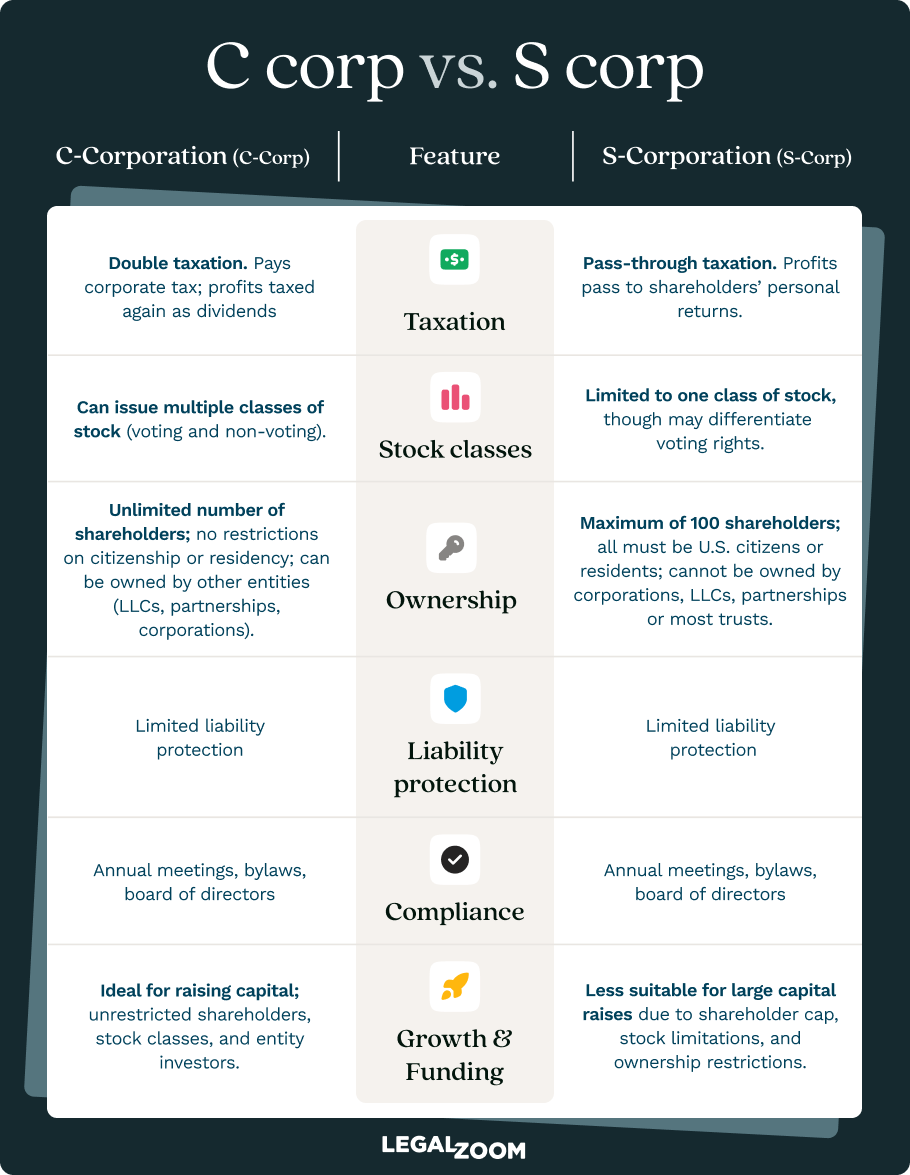
Want your Maryland corporation taxed as an S corp instead of a C corp? File IRS Form 2553 with the IRS, not SDAT. The S corp election lives entirely at the federal level; it's not a state filing.
To apply the election to a tax year, file Form 2553 no more than two months and 15 days after the beginning of that tax year, or during the preceding tax year. An S corporation may have different Maryland income tax and withholding obligations, but the election does not replace the corporation’s SDAT filings or annual Form 1 requirement.
Common mistakes that delay Maryland corporation filings
Rejected articles of incorporation can be corrected and resubmitted within 60 days at no extra cost. But, given SDAT's standard 6-8 week processing window, a rejection can push your launch back by months.
Here are some of the most common reasons articles would be rejected:
- Name is missing a corporate designator. Your name needs "Incorporated," "Corporation," "Limited," "Company," or an accepted abbreviation.
- Name isn't distinguishable from an existing Maryland entity. Run a thorough name search before filing.
- Resident agent information is incomplete or the agent has not consented. The articles must identify a qualifying resident agent, provide a physical Maryland address, and include the agent’s consent.
- Resident agent address is a P.O. box. The articles must list a physical Maryland street address for the resident agent.
- Wrong fee or payment. Checks may be payable to the State Department of Assessments and Taxation or SDAT.
How to form your Maryland corporation with LegalZoom
You can absolutely form a Maryland corporation on your own, but it takes time, close attention to SDAT's exact requirements, and follow-through on the post-formation steps that keep you in good standing. If you'd rather hand the paperwork off and focus on planning for your business, LegalZoom’s corporation formation service can handle formation for you.
- Articles of incorporation filing: LegalZoom prepares and submits your articles to SDAT, applying the right fee structure and formatting for a Maryland stock corporation.
- Resident agent service: LegalZoom can serve as your Maryland resident agent, keeping a physical in-state address and receiving legal and government documents for you.
- EIN registration: LegalZoom obtains your federal employer identification number from the IRS once SDAT approves your filing.
- Ongoing compliance support: LegalZoom helps you track and meet Maryland's annual Form 1 deadline so your corporation stays in good standing.
If your filing is rejected or incorrect due to our error, we'll correct it with the government agency at no additional cost to you.
100% Accurate Filing Guarantee
100% Accurate Filing Guarantee
We're committed to the highest quality and accuracy. If your filing is rejected or incorrect
due to our error, we'll correct it with the government agency at no additional cost to you.
We're committed to the highest quality and accuracy. If your filing is rejected or incorrect due to our error, we'll correct it with the government agency at no additional cost to you.
Maryland corporation FAQs
How long does SDAT take to process Maryland articles of incorporation?
SDAT’s stock-corporation instructions estimate six to eight weeks for standard review. Expedited review generally takes seven to 10 business days for an additional $50. Same-day service is available for qualifying online or paper filings for an additional $325 or $425, respectively.
Can I be my own resident agent for a Maryland corporation?
Yes, as long as you're a Maryland resident with a physical Maryland address who's willing to accept the role. If you’re not a Maryland resident, you can't serve as your own resident agent and will need to appoint someone who qualifies or hire a commercial agent service. One thing to know: Your address becomes public record once it's listed as the resident agent address, which is why a lot of owners use a commercial agent to keep their home address private.
Do I need a lawyer to form a Maryland corporation?
No, Maryland law doesn't require an attorney to file articles of incorporation with SDAT. Plenty of people file on their own. That said, if you've got multiple founders, outside investors, complicated equity arrangements, or industry-specific licensing to deal with, a lawyer can help set things up right from day one and save you from expensive fixes later. For a straightforward single-founder formation, a formation service or a direct SDAT filing works fine and costs less.
How do I elect S corporation tax status for a Maryland corporation?
File IRS Form 2553 with the IRS. To apply the election to a tax year, submit the form no more than two months and 15 days after that tax year begins, or during the preceding tax year. The election may change the corporation’s Maryland income tax and withholding obligations, but it does not replace SDAT filings or the annual Form 1 requirement.
'%20/%3e%3c/svg%3e)

'%3e%3cpath%20fill-rule='evenodd'%20clip-rule='evenodd'%20d='M9.31239%2025.5316H13.0679V14.1032H9.31239V25.5316ZM11.1913%208.46875C9.93945%208.46875%209%209.25086%209%2010.505C9%2011.5995%209.78211%2012.5389%2011.1913%2012.5389C12.6005%2012.5389%2013.3826%2011.5995%2013.3826%2010.505C13.3826%209.4082%2012.6005%208.46875%2011.1913%208.46875ZM27%2018.9577V25.5316H23.2445V19.4275C23.2445%2017.8609%2022.6174%2016.7664%2021.3679%2016.7664C20.2711%2016.7664%2019.644%2017.5463%2019.3316%2018.1756C19.1743%2018.488%2019.1743%2018.8004%2019.1743%2019.1128V25.5316H15.4165V13.9458H19.1743V15.5123C19.644%2014.7302%2020.5835%2013.6357%2022.6174%2013.6357C25.1234%2013.7908%2027%2015.3573%2027%2018.9577Z'%20fill='white'/%3e%3c/g%3e%3cdefs%3e%3cclipPath%20id='clip0_952_9489'%3e%3crect%20width='18'%20height='18'%20fill='white'%20transform='translate(9%208)'/%3e%3c/clipPath%3e%3c/defs%3e%3c/svg%3e)

