




Certain types of trusts are taxable entities separate from your everyday personal finances. While they may hold an individual's assets, irrevocable trusts are typically taxed independently under their own EIN. If you own or manage a trust, it's important to know what type of trust it is and how it will be taxed.
Wondering how taxes work in a trust? Here's everything you need to know about trust tax rates and how to file taxes for your trust.
What is a trust?
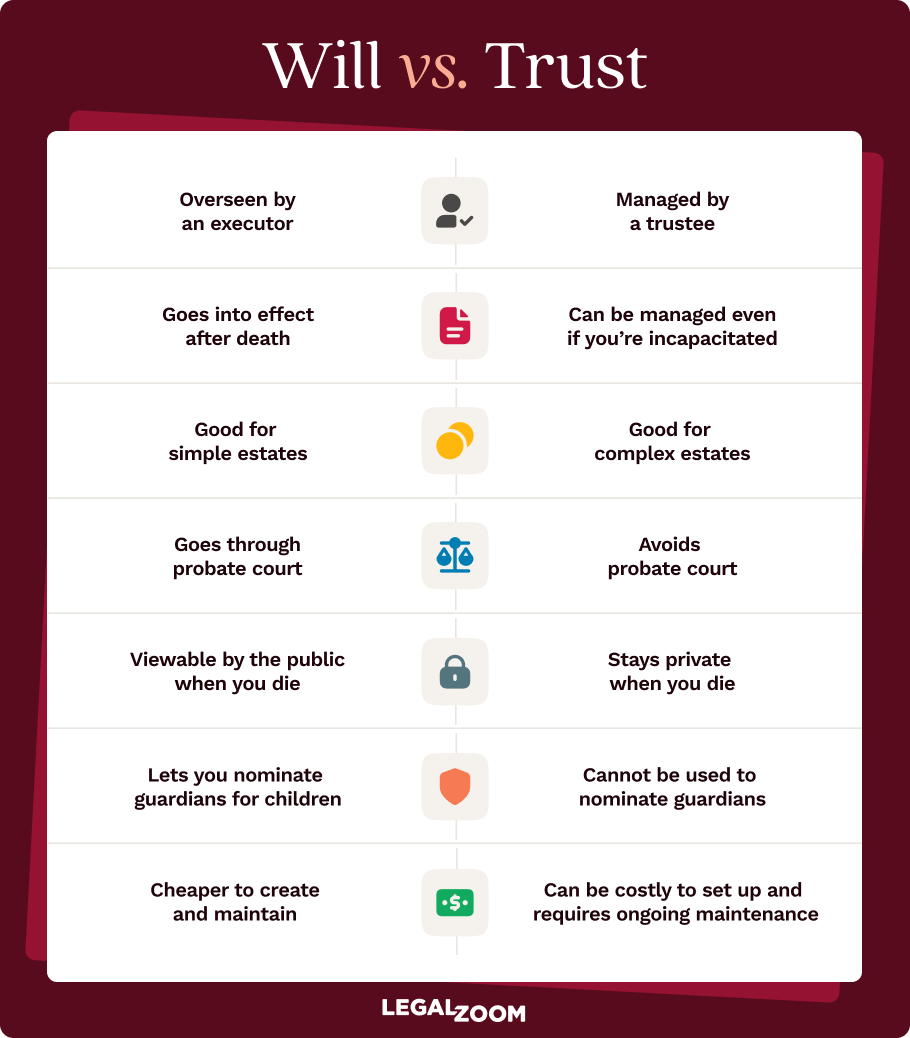
A trust is a legal arrangement that allows a third party (the trustee) to hold and manage assets on behalf of beneficiaries. Unlike a will, a trust can help families skip probate, protect assets from creditors, and gain tax advantages.
A trust involves three main parties.
- Grantor: The person who creates the trust.
- Beneficiaries: The person, people, or entity that receives the assets in the trust.
- Trustee: The person or entity who manages the trust.
For example, a grantor can put their home and any other assets into a trust and assign a trustee to make sure their beneficiaries receive the assets at the appropriate time.
How are trusts taxed?
Trusts are taxed based on the type of trust and how the income is distributed. Revocable trust income is reported on the grantor's personal tax return, but irrevocable trusts file their own tax return (Form 1041) and are taxed at compressed rates.
When deciding what kind of trust to set up, consider:
- Will your trust generate income?
- Would you like to maintain control over your trust or assign it to a trustee?
- Would you like the ability to make changes to your trust?
- When would you like your beneficiaries to receive distributions?
- Will your trust include real estate?
Because money, assets, and taxes are involved, it's wise to choose a knowledgeable attorney who can help you choose and correctly set up a trust that will meet your needs. At the very least, you should have an attorney review your trust documents—even if you’re confident in your ability to set up your trust appropriately.
Do trusts pay capital gains taxes?
Capital gains refer to the increased value of an asset over time. For example, if you purchased a house for $100,000 and sold it for $400,000 decades later, you will pay capital gains taxes on the $300,000 increase.
- Short-term gains (one year or less): Taxed at your ordinary income tax rate
- Long-term gains (over one year): Taxed at a lower rate
But what if the asset is in a trust? Is it still subject to capital gains? That depends on the type of trust you have and which assets are in it.
An experienced estate planning attorney can help you navigate all the minutia of each type of trust and help you choose the best trust for your situation.
Are trust distributions taxable?
Whenever an asset is passed from a trust to a beneficiary, it is called a distribution. Whether or not the distribution is taxable depends on the type of trust (revocable or irrevocable) and the type of distribution. If it comes from the principal amount, it is typically not taxed. If it comes from any income generated through the trust, it is taxed as income.
For example, let's say you have $1,000 in your trust. If you take out $500, you wouldn't be taxed on that because it's pulling from the principal amount. If, however, you have $1,000 in the trust, and then you earn $500 in taxable income, and then you take out $500, that would likely be taxable.
“When a trust owns an LLC or other closely held business, the tax results are driven more by the entity's reporting than by the cash moving in or out. The trust may receive a K-1 showing taxable income even if no distribution is made, which can catch trustees off guard. This can result in beneficiaries receiving cash but not the corresponding tax information, or vice versa, leading to confusion and mismatched reporting. Careful coordination between the trustee and the business is critical, so income, distributions, and tax liability stay aligned.”

There are some exceptions and special circumstances that would require different tax rules and rates, so it's always wise to have a knowledgeable tax professional to help you with filing.
How do trust tax brackets work?
Trusts are taxed based on income, just like any ordinary income taxes. The more taxable income your trust generates, the higher the tax rate.

Trust tax rates (2025 tax year)
Trust tax rates are adjusted from year to year to account for inflation, so it's important to keep track of the current year's rate. Here is what you will pay in 2026 for the 2025 tax year.
| Taxable Income | Tax Rate |
| $0–$3,150 | 10% |
| $3,150–$11,450 | 24% |
| $11,450–$15,650 | 35% |
| $15,650+ | 37% |
The tricky part is that a trust is taxed at multiple levels. So, if your trust earns $15,000 in 2025, you'll owe:
- 10% on the first $3,150 = $315
- 24% on $3,150–$11,450 = $1,992
- 35% on $11,450–$15,000 = $1,242.50
Total taxes due: $3,549.50
Long-term capital gains trust tax rates 2025
| Capital Gains | Tax Rate |
| $0–$3,250 | 0% |
| $3,250–$15,900 | 15% |
| $15,900+ | 20% |
Trust tax rates (2026 tax year)
| Taxable Income | Tax Rate |
| $0–$3,300 | 10% |
| $3,300–$11,700 | 24% |
| $11,700–$16,000 | 35% |
| $16,000+ | 37% |
If your trust generates $20,000 in taxable income, the 2026 tax is calculated progressively across each bracket:
- 10% on the first $3,300 = $330
- 24% on $3,300–$11,700 = $2,016
- 35% on $11,700–$16,000 = $1,505
- 37% on $16,000–$20,000 = $1,480
Total taxes due: $5,331
Long-term capital gains trust tax rates 2026
There are three brackets for long-term capital gains:
| Capital Gains | Tax Rate |
| $0–$3,300 | 0% |
| $3,300–$16,250 | 15% |
| $16,250+ | 20% |
LegalZoom offers estate plan packages for every stage of life, from advance directives to last wills to trusts—or, you can choose a comprehensive estate plan bundle that takes care of your legacy from every angle.

FAQs
Do all trusts pay taxes?
Income from a revocable trust is paid as part of the trust owner's individual tax return. Irrevocable trust income is typically reported on a separate tax return for the trust.
Who files the tax return for a trust?
The trustee of the trust is typically responsible for filing taxes. Only trusts producing more than $600 in gross income need to file.
Can a trust claim tax deductions?
Yes, depending on the type of trust, fees or expenses associated with the assets in the trust can be deducted for federal income tax purposes. This includes state and local taxes, trustee fees, probate fees, or repairs on real estate. Charitable donations, income distribution, and contributions can also be deducted from the taxable income.
“When a trust holds intellectual property that generates royalties, the tax treatment is only part of the challenge. What tends to create problems is weak documentation around licensing agreements, valuation, and ongoing expenses tied to maintaining or enforcing those rights. Trustees sometimes overlook deductions like legal fees for protecting a trademark or costs tied to managing licensing income, which can distort the trust’s taxable income. Keeping clear records of how the IP is used, valued, and monetized is what allows those deductions to hold up if the IRS takes a closer look.”
How are capital gains taxed in a trust?
Capital gains are taxed in brackets based on the trust’s or grantor’s income and the amount of time they held the asset. An asset held for less than a year before selling is classified as a short-term capital gain and can be taxed anywhere from 10% to 37% depending on the trust’s or grantor’s income bracket. An asset held longer than a year is classified as a long-term capital gain and can be taxed anywhere from 0% to 20% depending on the trust’s or grantor’s income bracket.
What are the tax advantages of a trust?
Trusts can significantly mitigate estate taxes and help you or your family avoid probate. The tax advantages are different for each type of trust, so it’s important to consult with an estate planning professional to figure out which type is best for your situation.
'%20/%3e%3c/svg%3e)

'%3e%3cpath%20fill-rule='evenodd'%20clip-rule='evenodd'%20d='M9.31239%2025.5316H13.0679V14.1032H9.31239V25.5316ZM11.1913%208.46875C9.93945%208.46875%209%209.25086%209%2010.505C9%2011.5995%209.78211%2012.5389%2011.1913%2012.5389C12.6005%2012.5389%2013.3826%2011.5995%2013.3826%2010.505C13.3826%209.4082%2012.6005%208.46875%2011.1913%208.46875ZM27%2018.9577V25.5316H23.2445V19.4275C23.2445%2017.8609%2022.6174%2016.7664%2021.3679%2016.7664C20.2711%2016.7664%2019.644%2017.5463%2019.3316%2018.1756C19.1743%2018.488%2019.1743%2018.8004%2019.1743%2019.1128V25.5316H15.4165V13.9458H19.1743V15.5123C19.644%2014.7302%2020.5835%2013.6357%2022.6174%2013.6357C25.1234%2013.7908%2027%2015.3573%2027%2018.9577Z'%20fill='white'/%3e%3c/g%3e%3cdefs%3e%3cclipPath%20id='clip0_952_9489'%3e%3crect%20width='18'%20height='18'%20fill='white'%20transform='translate(9%208)'/%3e%3c/clipPath%3e%3c/defs%3e%3c/svg%3e)

