



Starting a nonprofit is no different from starting any other business. You need to conduct research, write a business plan, and file formation documents with your state.
But nonprofits face one additional hurdle—they must apply to the IRS for federal 501(c)(3) tax-exempt status.

Should you start a new nonprofit, or is there a better path?
Many founders treat a new nonprofit as the default. It rarely is. Once you incorporate and apply for tax-exempt status, you're locked into governance, compliance, and a public mission you can't simply walk away from.
Four realistic paths exist:
| Path | Best when |
|---|---|
| Start a new nonprofit | You need independent governance, your own board and brand, and long-term standalone fundraising infrastructure |
| Use a fiscal sponsor | You want to launch quickly, test demand, and accept tax-deductible donations now without the overhead of a new entity |
| Partner with an existing nonprofit | The need is already being served, and collaboration beats duplicating infrastructure |
| Use a for-profit or social enterprise | Revenue comes primarily from selling products or services, and you don't need tax-deductible donations as a core funding source |
What is a fiscal sponsor?
A fiscal sponsor is an existing 501(c)(3) that accepts tax-deductible donations on your behalf, letting you fundraise immediately without waiting months for IRS approval. About 40 states require charitable nonprofits to register before soliciting donations, and most private foundations require grantees to hold tax-exempt status. A fiscal sponsor solves both problems instantly.
The cost is typically 5% to 15% of funds raised, according to Northwestern University School of Law. That fee only kicks in when money comes in, making it far easier on an unproven concept than a lump-sum filing fee.
What starting a nonprofit actually means in the U.S.
- State layer: forming a nonprofit corporation. You file articles of incorporation with your state. This creates the legal entity.
- Federal layer: obtaining IRS tax-exempt status. You apply to the IRS under Section 501(c)(3). This exempts the organization from federal income tax and lets it receive tax-deductible donations.
State incorporation does not make a nonprofit tax-exempt. A nonprofit corporation without IRS recognition is still a taxable entity.
Most founders want a 501(c)(3) public charity. To qualify, the organization must operate exclusively for exempt purposes, and no earnings may benefit any private individual.
Other 501(c) designations exist but fall outside this guide. See our overview of 501(c)(3) vs. 501(c)(4) differences for more context.
How to start a nonprofit: step-by-step process
Each step below depends on the one before it. Skipping steps or reordering them is the most common cause of delays, rejections, and unnecessary costs.
Step 1: Validate the need and define your mission
Answer one question in a single sentence: what does this organization do, for whom, and why must it exist as a new entity?
The IRS application demands a detailed description of your activities. Vague mission language triggers delays, follow-up questions, and sometimes denial.
Use this formula: "We [do what] for [who] in [where], so that [outcome]." Example: "We provide free after-school tutoring for middle school students in underserved Phoenix neighborhoods, so that students graduate ready for college or career." That's the specificity the IRS expects.
Proof-of-need checklist:
- Documented demand. Community data, surveys, or stories confirming the need
- Gap analysis. With 1.9 million registered nonprofits in the U.S., check whether other organizations are already serving this population with these services.
- Initial support. Volunteers, community validators, or potential partners who've confirmed interest
- Funding pathway. At least one realistic funding source for year one
Also draft a basic first-year program plan: one to three core services, target population, delivery model, expected costs, and how you'll measure success. This plan becomes the backbone of your IRS application narrative.
Step 2: Understand nonprofit governance before you file anything
A nonprofit has no owners. The founder doesn't own it. There are no shareholders, no equity, and no mechanism to sell the organization or distribute its assets personally.
The board of directors holds ultimate legal and fiduciary authority.
Every board member has three fiduciary duties and must comply with nonprofit board requirements.
- Duty of care: Act responsibly, stay informed, and decide thoughtfully.
- Duty of loyalty: Put the nonprofit's interests first. Disclose conflicts of interest.
- Duty of obedience: Follow the mission and comply with the law.
For compensation, you can pay yourself for real work performed. Compensation must be reasonable, benchmarked against comparable roles, documented, and approved through a conflict-management process.
Paying yourself an inflated salary or redirecting nonprofit assets for personal benefit is private inurement, and the IRS may revoke its tax-exempt status for it.
On political activity: 501(c)(3) organizations are absolutely prohibited from campaign activity: no endorsing or opposing candidates. Lobbying is permitted but limited.
On board composition: Most states require at least three directors. A board of only the founder, their spouse, and a close relative is a red flag for the IRS and institutional funders. Plan for independent voices from the start.
Understand these realities before recruiting your board. Bringing people on without explaining their legal responsibilities creates liability for everyone.
Step 3: Recruit your initial board of directors
The board must be in place before you file articles of incorporation in most states. The IRS application asks for the names and titles of all directors and officers.
Look for founding board members who bring the right qualities, with some examples below.
- Relevant expertise: Legal, financial, programmatic, or community-specific knowledge your team lacks
- Independence: People who ask hard questions, not rubber-stampers
- Mission commitment: Genuine belief in the work
- Capacity: Time to attend meetings, review materials, and fulfill fiduciary duties
Avoid recruiting only friends and family. A founder-dominated board reduces credibility with funders and draws IRS scrutiny. Limit related individuals to less than one-third of the board.
Early-stage board members typically serve without compensation, though reimbursing reasonable expenses is standard. Most states require at least three officer roles: President or Chair, Secretary, and Treasurer.
The board has real legal authority and real personal liability. Recruit people who understand that.
Step 4: Choose your state of incorporation and nonprofit name
Where to incorporate: For most founders, incorporate in the state where you'll primarily operate. While you can incorporate in another state, this adds registered agent fees in two states, foreign qualification costs, and more complexity.
Choosing your name: The name must be distinguishable from entities already on file with your state and free of restricted terms. Words like "bank," "insurance," or "university" require special authorization in most states.
Verify name availability through your state's Secretary of State search tool early. Also check domain and social media availability. Running different names for your legal entity and public presence creates confusion from day one.
Don't invest in websites or signage until the state confirms availability and registers your filing. Choose and verify the name before drafting articles, since changing it after filing requires a formal amendment.
Step 5: Appoint a registered agent
A registered agent receives official legal documents and government correspondence on behalf of your nonprofit. Every state requires one.
The agent must have a physical street address in the state of incorporation. P.O. boxes are not accepted in most states.
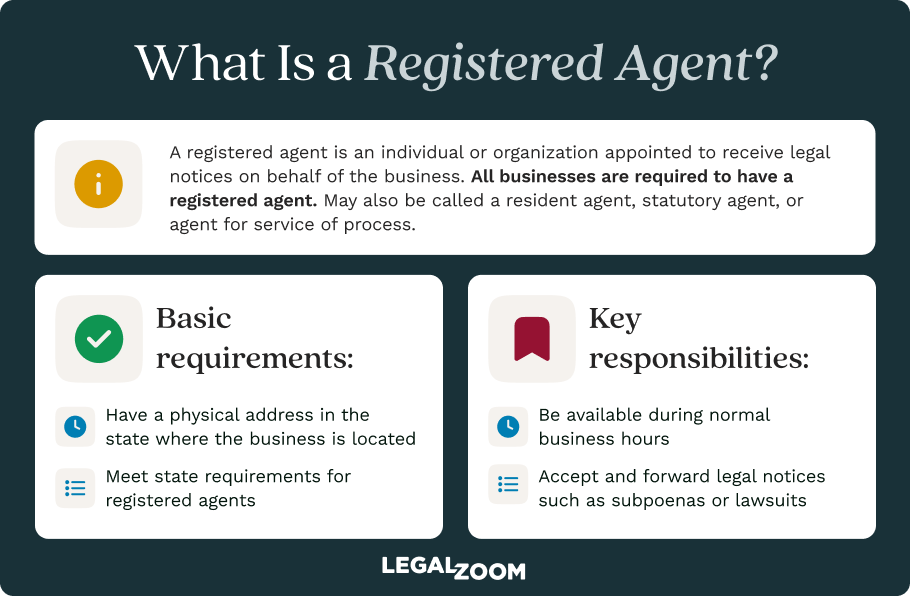
Your options:
- An individual (founder, board member, or officer) with an in-state address who is available during business hours
- A registered agent service, typically $100 to $300 per year
If you work remotely, move frequently, or want your home address off public records, a service is worth the cost.
Confirm the agent's name and address before drafting articles of incorporation, since both appear in the filing. Using a home address you plan to leave, or a P.O. box, can result in missed legal notices.
Step 6: File articles of incorporation with the state
This is when the nonprofit legally exists. Articles of incorporation are filed with the state (typically the Secretary of State), and once approved, create the corporation. Everything after this, including your EIN and IRS application, depends on this step.
Your articles must typically include:
- Legal name of the organization
- Stated purpose
- Registered agent name and physical address
- Initial director or incorporator information (varies by state)
- IRS-required purpose clause: The organization is organized exclusively for 501(c)(3) purposes (charitable, educational, religious, scientific, etc.)
- IRS-required dissolution clause: Upon dissolution, remaining assets go to another 501(c)(3) organization or qualifying governmental entity
Those last two items trip up most first-time founders. Missing or poorly worded clauses force an amendment before IRS approval, which can add weeks or months.
State filing fees range from about $30 to $300+. Processing times run from same-day (online) to several weeks (mail). Some states offer expedited processing for an added fee.
Step 7: Obtain an employer identification number from the IRS
An employer identification number (EIN) is the organization's federal tax ID. You need it to open a bank account, hire employees, file returns, and submit the IRS tax-exempt application.
Applying is free. Use the IRS EIN application portal online, and the number is typically issued immediately.
Apply only after the state approves your articles. The nonprofit must legally exist before it receives a federal tax ID. Keep personal finances entirely separate from nonprofit finances from day one.
Step 8: Draft and adopt bylaws, core policies, and hold your organizational meeting
Bylaws are the nonprofit's internal operating rules. They aren't typically filed with the state, but you need them before opening a bank account, submitting the IRS application, or making governance decisions.
Review best practices for writing nonprofit bylaws before drafting. State laws vary, and provisions that conflict with your state's nonprofit corporation act have no legal force.
Well-drafted bylaws cover:
- Board size (use a range), qualifications, terms, and removal procedures
- Officer roles, election process, and responsibilities
- Meeting procedures, including frequency, notice, quorum, and voting rules
- Committee structure and authority
- Conflict of interest procedures
- Financial management and fiscal year
- Amendment process
- Document retention and indemnification
Core policies to adopt before applying:
- Conflict of interest policy. The IRS references this directly in Form 1023. It’s not technically required, but omitting it can weaken the application.
- Document retention policy. Best practice for legal compliance and auditability.
- Whistleblower policy. Increasingly expected by funders and auditors.
Organizational meeting checklist:
- Formally adopt bylaws
- Elect officers (President/Chair, Secretary, Treasurer at minimum)
- Authorize opening a bank account
- Adopt the conflict of interest policy
- Approve the 501(c)(3) application
- Set the fiscal year
- Authorize other startup actions
- Record and retain written minutes of everything
An informal conversation without written minutes is not an organizational meeting. Banks require minutes to open accounts. Auditors and the IRS may request them.
Complete your bylaws and the organizational meeting before applying for 501(c)(3) status.
Step 9: Apply for 501(c)(3) tax-exempt status with the IRS
This makes the nonprofit tax-exempt and eligible for tax-deductible donations. File after the nonprofit is formed, has an EIN, and has adopted bylaws and elected officers.
- Form 1023-EZ (user fee: $275): Eligible if annual gross receipts haven't exceeded $50,000 in any of the past three years, aren't projected to exceed $50,000 in any of the next three, and total assets don't exceed $250,000. Always complete the eligibility worksheet first.
- Form 1023 (user fee: $600): Required for organizations that don't qualify for the EZ form. Hospitals, schools, churches, housing providers, and foundations must file Form 1023.
Processing times: The IRS issues 80% of Form 1023-EZ determinations within 22 days and 80% of Form 1023 determinations within 191 days. Real-world waits for Form 1023 can average six to 12 months. Always verify current processing times at IRS.gov.
The 27-month window: File within 27 months of the end of the month the nonprofit was formed, and the exempt status is retroactive to the formation date. Miss that window, and status typically starts from the application postmark date.
Public charity vs. private foundation: Most startup nonprofits drawing broad public support qualify as public charities. If funding comes primarily from one family, one company, or a very narrow base, the IRS may classify you as a private foundation, with different rules, higher restrictions, and additional excise taxes.
State tax exemptions are separate: The IRS determination letter does not automatically exempt you from state corporate income tax, sales tax, or property taxes. Check your state's department of revenue after receiving federal approval.
Don't apply until you have: approved articles with IRS-required purpose and dissolution clauses, an EIN, an adopted conflict of interest policy, and completed bylaws. Lack of any of these triggers delays or rejection.
And, don't file Form 1023-EZ if you don't actually qualify. The IRS will reject the application and require a new user fee to resubmit.
Step 10: Register for charitable solicitation, open a bank account, and launch
With state incorporation approved, an EIN issued, and a 501(c)(3) application filed, the nonprofit is ready to operate.
Charitable solicitation registration: Many states require charitable nonprofits to register before soliciting any donations from residents. This is entirely separate from incorporation and the IRS process.
Crowdfunding and giving days can trigger requirements in multiple states, since a donation button on your website reaches everywhere. Most states also require annual or bi-annual renewal filings, with late fees for missed deadlines.
Open a dedicated bank account: You'll likely need your EIN, articles, bylaws, and organizational meeting minutes to open one. Never commingle nonprofit funds with personal finances.
Set up bookkeeping from day one. Track income and expenses from the first dollar. The IRS requires written acknowledgment for all donations of $250 or more, and donors can't claim a deduction without one.
What you can and can't do before the IRS determination letter arrives:
| Action | Before determination letter? |
|---|---|
| Open a bank account | Yes, after EIN is issued |
| Operate programs | Yes |
| Accept donations (disclose pending status) | Yes, with disclosure |
| Promise donors a tax deduction | No |
| Apply for grants | Limited, most funders require the letter |
| Apply for state tax deductions | Some states accept pending applications |
Any public fundraising without confirming charitable solicitation registration violates state charity law. Penalties include fines, cease-and-desist orders, and reputational damage.
What does it cost to form a nonprofit, and how long does it take?
Government filing fees exist no matter how much DIY work you do, but a lean launch is achievable with careful planning.
| Item | Estimated cost | Notes |
|---|---|---|
| State incorporation | $30 to $300+ | Varies by state |
| IRS EIN | Free | Online at IRS.gov, issued immediately |
| IRS Form 1023-EZ | $275 | Projected gross receipts ≤$50,000/year, assets ≤$250,000 |
| IRS form 1023 | $600 | Required if you don't qualify for the EZ form |
| Registered agent service (optional) | $100 to $300/year | If using a service instead of a board member |
| Attorney (optional) | $1,500 to $5,000+ | For more complex structures |
| Accounting setup (optional) | $300 to $2,500+ | Depends on support level |
| Insurance (general liability, D&O) | Varies | Get quotes once operating; don't skip this |
| Banking, software, donation processing | Modest to significant | Depends on tools selected |
The hard floor is state filing plus the IRS fee: roughly $305 to $900+ in unavoidable government fees.
The no-money reality check
A fully compliant standalone nonprofit is not free. What a budget-constrained founder can do:
- Plan before you file. Mission clarity, board recruitment, and bylaws drafting cost nothing but time.
- Recruit volunteer board members.
- Get your EIN at no cost.
- Use fiscal sponsorship first. Accept tax-deductible donations while you test your model, without incurring filing fees upfront.
You cannot skip the state filing fee and the IRS application fee. Don't count on grants to fund startup costs either.
Despite $592.50 billion in U.S. charitable giving in 2024, most grantmakers require an established 501(c)(3) with a track record before they'll fund you. Consider reviewing how to maintain tax-exempt status once approved.
How long will it take?
- Planning and mission validation: Days to several weeks
- State incorporation: Same day to several weeks, depending on the state and filing method
- EIN: Same day (online)
- Bylaws and organizational meeting: Days to a few weeks
- IRS Form 1023-EZ: 80% of determinations within 22 days
- IRS Form 1023: 80% of determinations within 191 days.
- State charitable solicitation and tax exemptions: Varies; budget additional weeks to months
From first filing to determination letter: two to three months on the optimistic end (1023-EZ, fast state) and six to twelve months or more with Form 1023.
DIY, formation service, or attorney: Which path is right for you?
| Path | Best For | Founder handles | Service handles | Typical cost |
|---|---|---|---|---|
| DIY filing | Budget-conscious founder willing to research requirements independently | Everything | Nothing | Government fees only (~$305 to $900+) |
| Formation service | Founder wants filing guidance without full legal counsel | Mission, board, governance decisions, fundraising plan, ongoing compliance | Paperwork, filing logistics, EIN support, registered agent (if added) | Government fees plus service fees (LegalZoom’s nonprofit packages start at $99 plus state fees) |
| Attorney or CPA | Complex structure, multi-state plans, unusual compensation, high-stakes launch | Mission, program strategy, board selection, operations | Custom legal advice, articles and bylaws tailored to state law, IRS strategy, compliance planning | $500 to $5,000+, depending on the work’s complexity |
FAQs about starting a nonprofit
Can I start a nonprofit by myself?
You can initiate the process alone, but you can't run one solo. Most states and the IRS require a minimum of three board members. A one-person board creates legal exposure and red flags with funders.
Do I own the nonprofit if I founded it?
No. A nonprofit has no owners or shareholders. The board of directors holds legal authority.
You can serve on the board and draw a salary, but if you need sole control indefinitely, the nonprofit structure is the wrong fit.
Can I pay myself from a nonprofit?
Yes. Compensation must be reasonable, documented, and approved by independent board members. The line you can't cross is private inurement: no part of net earnings may benefit any private individual.
Pay yourself a market-rate salary for work you actually do, get board approval through a proper process, and never use nonprofit funds for personal expenses.
What is the difference between a nonprofit corporation and a 501(c)(3)?
A nonprofit corporation is a state-level legal entity. A 501(c)(3) is a federal tax-exempt designation from the IRS. One doesn't create the other.
You form the corporation first, then apply to the IRS as a separate step.
How much does it cost to start a nonprofit?
Minimum hard costs: state filing fee ($30 to $300+) plus the IRS fee ($275 for 1023-EZ, $600 for full 1023). Optional costs for agent services, legal counsel, and accounting add up.
If cost is a serious constraint, fiscal sponsorship lets you accept donations without full formation overhead. Formation service packages often start around $99 plus state fees.
How long does it take to get 501(c)(3) approval?
The IRS issues 80% of 1023-EZ determinations within 22 days and 80% of 1023 determinations within 191 days. Real-world waits for Form 1023 run six to twelve months.
Application quality is the single biggest factor. Check the IRS processing times page before filing.
What are bylaws, and do I need them before applying for 501(c)(3) status?
Bylaws govern how the board makes decisions, elects officers, calls meetings, and resolves conflicts of interest, and you need to adopt them before applying. Form 1023 requires you to submit them. Don't copy a generic template without verifying it matches your state's nonprofit corporation statute.
Can I start a nonprofit with no money?
Not a fully compliant standalone one. The state filing fee and IRS fee are non-negotiable. If cash is tight, fiscal sponsorship lets you operate programs and accept tax-deductible donations without those upfront costs.
Do I need to register before fundraising?
About forty states require registration before soliciting donations. This is separate from incorporation and your 501(c)(3) status.
A donation link on your website or a social media campaign can constitute solicitation in states beyond your home state. Check with your state Attorney General's office before the first public ask.
What can I do before the IRS approves my 501(c)(3) application?
After incorporation and EIN issuance, you can open a bank account, operate programs, hold board meetings, adopt policies, and accept donations. The key constraint: you can't guarantee tax-deductibility until the IRS issues your determination letter. If you file within 27 months of formation and the application is approved, exempt status applies retroactively to the formation date.
'%20/%3e%3c/svg%3e)

'%3e%3cpath%20fill-rule='evenodd'%20clip-rule='evenodd'%20d='M9.31239%2025.5316H13.0679V14.1032H9.31239V25.5316ZM11.1913%208.46875C9.93945%208.46875%209%209.25086%209%2010.505C9%2011.5995%209.78211%2012.5389%2011.1913%2012.5389C12.6005%2012.5389%2013.3826%2011.5995%2013.3826%2010.505C13.3826%209.4082%2012.6005%208.46875%2011.1913%208.46875ZM27%2018.9577V25.5316H23.2445V19.4275C23.2445%2017.8609%2022.6174%2016.7664%2021.3679%2016.7664C20.2711%2016.7664%2019.644%2017.5463%2019.3316%2018.1756C19.1743%2018.488%2019.1743%2018.8004%2019.1743%2019.1128V25.5316H15.4165V13.9458H19.1743V15.5123C19.644%2014.7302%2020.5835%2013.6357%2022.6174%2013.6357C25.1234%2013.7908%2027%2015.3573%2027%2018.9577Z'%20fill='white'/%3e%3c/g%3e%3cdefs%3e%3cclipPath%20id='clip0_952_9489'%3e%3crect%20width='18'%20height='18'%20fill='white'%20transform='translate(9%208)'/%3e%3c/clipPath%3e%3c/defs%3e%3c/svg%3e)


