.
.





To form a Delaware LLC, file a certificate of formation with the Delaware Division of Corporations and name a registered agent with a physical Delaware address. The current domestic LLC formation fee is $110. After formation, apply for an EIN when required, obtain the Delaware business license and other registrations that apply to your business, and plan for Delaware's $400 annual LLC tax, due June 1. Delaware LLCs do not file an annual report.
Key takeaways
- You form a Delaware LLC by filing a certificate of formation. Delaware doesn't call it "articles of organization" like most states do.
- Delaware LLCs do not file an annual report, but they owe a $400 annual LLC tax by June 1 every year to stay in good standing.
- You don't need to live in Delaware to form an LLC there. That said, you may still need to register as a foreign LLC wherever you actually run your business.
- Every Delaware LLC needs a registered agent with a physical Delaware street address. A P.O. box won't cut it.
- Delaware's Court of Chancery and business-friendly laws are why so many companies form there, but that doesn't make Delaware the right call for every small business.
- The current domestic LLC formation fee is $110, and the annual LLC tax is $400; verify fees at corp.delaware.gov before filing or paying.
Step 1: Name your Delaware LLC
The first step in forming an LLC is deciding its name. A clear name choice now can help avoid filing delays and rework later.
Your LLC's name must:
- Contain "Limited Liability Company" or the abbreviation "L.L.C." or "LLC." Delaware also permits certain words, including "Limited" and "Company," to appear elsewhere in the name in abbreviated form.
- Be distinguishable from other entity names on the Division's records. Small tweaks like punctuation, adding "the," or swapping the designator usually won't do the trick.
- Avoid using "bank" and variations of that word, subject to statutory exceptions.
If a proposed name suggests a regulated profession or activity, confirm the applicable licensing rule before filing rather than assuming a particular agency approval is required.
Free Delaware Business Name Check
Starting a business? Use our free name check tool to check your business name against the Secretary of State records.
By clicking "Check Availability," I agree to LegalZoom's Terms of Use. This search is a preliminary check of state databases and does not include variations or trademarks. Results do not guarantee name availability or compliance with legal requirements.
Just because your entity name clears Delaware’s check doesn’t necessarily mean it’s available. You may want to check state and federal trademark records to ensure your name isn’t already trademarked
If you’re planning to operate under a different name than your LLC's legal name, you'll need a separate trade name registration, registered statewide through Delaware One Stop. The fee is $25, and the process requires a Delaware business license. See filing a DBA in Delaware for details.
How do you check Delaware LLC name availability?
Use the Division's free entity search tool to check for conflicts with active, reserved, or inactive names. You can also use the Delaware business name search tool below to search the same database in an easier way. Use the search as a first check; the Division makes the final filing determination. We include a business name check with our formation services and can reserve a preferred name for you.
Should you reserve your Delaware LLC name before filing?
You do not have to reserve an LLC name. If you need time before filing, Delaware currently charges $75 for a 120-day reservation, and the same applicant may reserve the name for successive 120-day periods.
Step 2: Appoint a Delaware registered agent
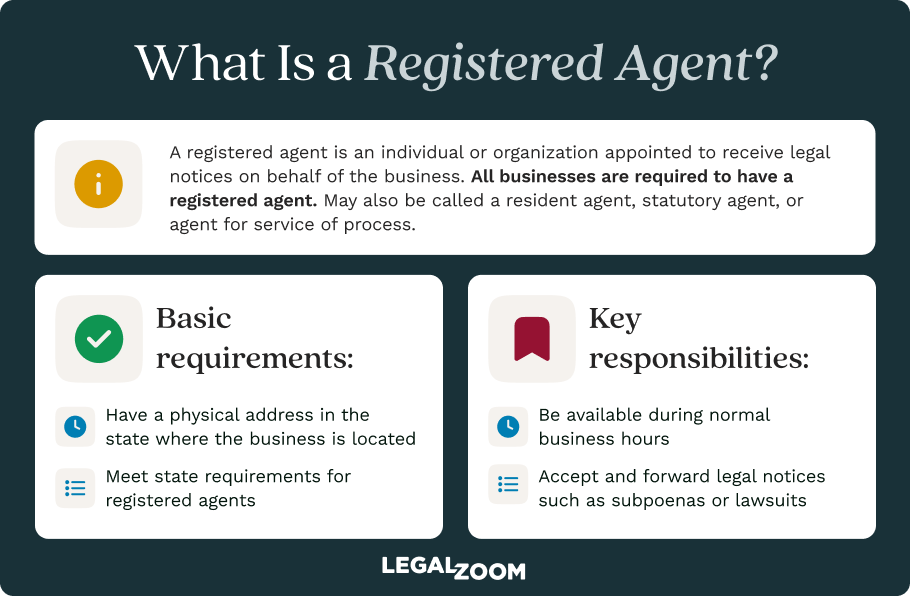
Delaware requires every LLC to keep a registered agent with a physical street address in the state, no matter where your business actually operates. The Division won't accept a certificate of formation without one named.
The agent must maintain a Delaware office open during normal business hours to accept service of process, and the agent's name and address appear on the certificate of formation.
Keep the registered agent and address current. If the agent cannot be found or the LLC fails to pay its annual tax, Delaware law provides service of process through the Secretary of State while the default continues.
Can you be your own registered agent for a Delaware LLC?
Yes, you can be your own registered agent, but only if you've got a physical Delaware address generally open during business hours; a P.O. box doesn't qualify. This is where nonresident owners get stuck, since a home address in another state, a virtual mailbox, or a P.O. box won't satisfy the statute. No qualifying Delaware address means you may need a commercial registered-agent service.
Should you hire a registered agent service instead of self-appointing?
For most owners, especially nonresidents, a commercial service makes sense.
- Privacy protection: Your personal address stays off the public entity database.
- Availability during required business hours: A commercial agent maintains a qualifying Delaware office and must meet the state's availability rules.
- Less exposure if sued: No process server showing up at your home.
- Convenience if you live elsewhere: Your LLC gets a qualifying Delaware registered office without you needing a second address or a plane ticket.
Step 3: File the certificate of formation with the Delaware Division of Corporations
The certificate of formation is what legally creates your Delaware LLC. Submit the filing using the Division's current instructions once your name and registered agent are locked in.
Every new LLC files the Certificate of Formation of a Limited Liability Company. You or an authorized person can submit it, but only once your registered agent is secured.
The certificate has to state the LLC's name (with the required designator), the Delaware registered office address, and the registered agent's name and address. An authorized person signs the certificate. It doesn't need to list members, managers, ownership percentages, or a detailed business purpose. Save that for your operating agreement. Once approved, it becomes public record, searchable at icis.corp.delaware.gov.
How to file
The Division's Document Filing and Certificate Request Service lets you submit a filing or certificate request online, but it is a submission portal, not an instant online filing or document-retrieval system. By mail, send your completed certificate to:
The Delaware Division of Corporations
John G. Townsend Building
401 Federal Street, Suite 4,
Dover, DE 19901
Include a cover memo listing your name, return address, and phone number, and confirm the current submission instructions and fees before filing.
How long does processing take?
Delaware doesn’t publish exactly how long it takes for standard document processing, and you need to call the Division of Corporations to get an estimate, which sometimes runs between 1-3 months. Delaware does publish expedited processing times and fees, which you can elect to pay on top of the base $110 filing fee. Check the current tier names, fees, and cutoffs before filing:
| Expedited tier | Additional fee |
|---|---|
| Same-day service | $100 |
| 24-hour service | $50 |
| Two-hour service | $500 |
| One-hour service | $1,000 |
Step 4: Create an operating agreement for your Delaware LLC
Delaware doesn't require you to file an operating agreement, and the Division never even sees it, but that doesn't make it optional in practice. It is the main place to document ownership, management, voting, and other internal rules.
What should you include in your operating agreement?
You’ll want to include the following information in your operating agreement:
- Ownership percentages and how they tie to profit and loss splits.
- Capital contributions each member made, and what happens if more funding is needed.
- Management structure (member-managed or manager-managed).
- Voting rights and decision-making, including how ties get broken.
- Profit and loss distribution timing and method.
- Membership changes: exits, transfers, new partners.
- Dissolution terms for winding down the LLC.
Without a written agreement, any disputes or internal issues may be decided by state law, not necessarily in the best interest of your LLC.
LegalZoom can help you create your LLC operating agreement online.
Step 5: Get an EIN and prepare for banking
Once Delaware has formed your LLC, apply for an employer identification number (EIN). An EIN is a number the IRS assigns to your LLC for tax purposes. You need one if you have a multi-member LLC, plan to hire employees, or open a business bank account.
Banks commonly request an LLC's EIN, along with personal identification and taxpayer information for owners or authorized signers. Requirements vary, especially for founders outside the U.S., so check with your preferred bank to find out what they need to open a business account.
Step 6: Get a Delaware business license and register for applicable taxes
Your certificate of formation makes your LLC exist, but most businesses also need a statewide business license from the Delaware Division of Revenue (a separate office from the Division of Corporations). The license and any tax registrations depend on your business activity, location, and whether you have employees.
Who needs a Delaware business license, and where do you apply?
Nearly any entity engaging in business, trade, or a profession in Delaware needs a State of Delaware Business License, including out-of-state LLCs doing business in Delaware. Apply through the Delaware One Stop Business Licensing and Registration Service, which can also register you with the Division of Unemployment Insurance and Office of Workers Compensation if you have employees.
Fees vary by industry and location, so confirm your category at revenue.delaware.gov. As a rough reference, a standard general business license runs around $75 for a first location; industry-specific licenses can cost more, and each distinct business activity needs its own license. After successful online registration, you can generally print a temporary license, while the permanent license is generally mailed within 10 working days.
How often must a Delaware business license be renewed?
Generally once a year, expiring December 31, though after the first year, some businesses can opt for a three-year term. Confirm renewal terms, fees, and late penalties at revenue.delaware.gov.
Do you need additional professional or local licenses?
Possibly. Some regulated fields, including real estate, cosmetology, and law, require professional licenses through Delaware's Division of Professional Regulation or its boards. Healthcare licensing can involve profession-specific boards or agencies, so check the requirements for your occupation. Local governments may require their own license too; Wilmington, for example, requires one for businesses within city limits, plus possible zoning approval. Check with your city or county.
Starting a business takes courage. LegalZoom makes sure the legal details don’t stand in your way, from the day you register until the day you retire.

Delaware LLC costs: State fees and ongoing compliance
The certificate of formation filing is $110, though you likely want to budget more, as you may choose to pay for expedited processing, a trade name registration, or you may require multiple business licenses.
Additionally, every LLC is required to pay an annual LLC tax, which is $400. It’s due June 1, and there is no annual reporting requirement aside from the tax. If you fail to pay the tax, the state can rescind your LLC’s good-standing status.
Confirm every dollar amount with the Division of Corporations or the Division of Revenue before filing. Don't lose track of the Annual LLC Tax; it's the recurring bill that keeps your LLC in good standing long after formation is done and dusted.
Risks of forming a Delaware LLC yourself
Filing your Delaware LLC yourself can be straightforward, but it still leaves you responsible for each filing and compliance decision. The most common problems come from small omissions that create delays, extra filings, or costs later.
- An incorrect or unavailable business name. Check Delaware's entity database and naming rules before filing, but remember the Division makes the final determination.
- A missing or unavailable registered agent. Maintain a qualifying Delaware street address and keep the agent's information current so service of process can be received.
- Forming in Delaware can create extra obligations when your business operates elsewhere. You may need foreign qualification, licenses, tax registrations, or annual filings in the state where you actually do business.
Start your Delaware LLC with LegalZoom
Get your Delaware business up and running with a little help from LegalZoom. We offer a variety of LLC formation services. With the Basic plan, we’ll check whether your desired business name is available and file your certificate of formation for you. Pro and Premium plans also include an operating agreement, an EIN, access to 150+ customizable legal documents for one year, and 30 days of unlimited 30-minute consultations with independent business attorneys about new legal topics related to your business.
To help keep your Delaware LLC in good standing, we also offer registered agent and compliance services. If you’re looking to protect your brand and intellectual property, we also offer trademark, copyright, and patent filing services.
Find the right state to form an LLC
Find the right state to form an LLC
Every state has different rules, costs, and considerations for LLC formation.


Delaware LLC formation FAQs
Is Delaware the right state for every small business?
Delaware's Court of Chancery and well-developed body of business case law make it especially attractive for companies expecting outside investment or complicated ownership arrangements. That reputation is well earned for those situations, but it doesn't automatically make Delaware the right choice for a smaller, single-location business down the street.
Can you form a Delaware LLC if you don't live there?
Yes. Delaware doesn't require owners to live in, work in, or ever visit the state. Just file a certificate of formation and keep a Delaware registered agent on file. But forming in Delaware won't get you out of the filing obligations wherever your business actually operates.
When does a Delaware LLC need to register as a foreign LLC in another state?
If your LLC has a physical location, employees, or regular in-person business activity in another state, that state may require foreign LLC registration on top of your Delaware formation, not instead of it. This is the biggest tradeoff nonresident founders overlook: instead of dealing with one state's requirements, you're managing two, Delaware's certificate of formation and annual LLC tax, plus your home state's foreign qualification filing, fees, and possibly its own annual report. If your business operates entirely in one non-Delaware state, forming there directly is usually simpler and cheaper.
What annual tax do Delaware LLCs have to pay?
Every domestic and foreign LLC registered in Delaware owes a $400 annual tax, due June 1 following the close of the calendar year in which the LLC is formed or registered, regardless of Delaware activity or revenue. The tax is tied to the LLC's existence, not its income.
Pay late and Delaware adds a $200 penalty plus 1.5% interest for each month or portion of a month until paid. A domestic LLC ceases to be in good standing; a foreign LLC ceases to be registered in Delaware. If the LLC has only fallen out of good standing, paying all unpaid taxes, penalties, and interest restores its status. If a domestic LLC's certificate has been canceled after three years of nonpayment, it must also file a certificate of revival and pay the applicable fee.
Do Delaware LLCs have to file an annual report?
No. Delaware LLCs do not file an annual report. The recurring Delaware requirement is the $400 annual LLC tax due June 1, although your LLC may have other obligations based on its activities, employees, licenses, or where it operates. Corporations follow a separate annual reporting and franchise tax schedule.
Does a Delaware LLC owe gross receipts tax?
Possibly. Delaware charges a gross receipts tax on the seller or provider of taxable goods or services, separate from the annual LLC tax. Rates and filing frequency depend on the business activity. Confirm the applicable rate and filing schedule with the Delaware Division of Revenue. If your LLC does not conduct business in Delaware, the gross-receipts obligation may not apply, but Delaware's annual LLC tax and the rules of the state where you operate still may.
'%20/%3e%3c/svg%3e)

'%3e%3cpath%20fill-rule='evenodd'%20clip-rule='evenodd'%20d='M9.31239%2025.5316H13.0679V14.1032H9.31239V25.5316ZM11.1913%208.46875C9.93945%208.46875%209%209.25086%209%2010.505C9%2011.5995%209.78211%2012.5389%2011.1913%2012.5389C12.6005%2012.5389%2013.3826%2011.5995%2013.3826%2010.505C13.3826%209.4082%2012.6005%208.46875%2011.1913%208.46875ZM27%2018.9577V25.5316H23.2445V19.4275C23.2445%2017.8609%2022.6174%2016.7664%2021.3679%2016.7664C20.2711%2016.7664%2019.644%2017.5463%2019.3316%2018.1756C19.1743%2018.488%2019.1743%2018.8004%2019.1743%2019.1128V25.5316H15.4165V13.9458H19.1743V15.5123C19.644%2014.7302%2020.5835%2013.6357%2022.6174%2013.6357C25.1234%2013.7908%2027%2015.3573%2027%2018.9577Z'%20fill='white'/%3e%3c/g%3e%3cdefs%3e%3cclipPath%20id='clip0_952_9489'%3e%3crect%20width='18'%20height='18'%20fill='white'%20transform='translate(9%208)'/%3e%3c/clipPath%3e%3c/defs%3e%3c/svg%3e)