.
.





Starting an LLC in Alaska is fairly straightforward, but there are a few state-specific requirements that can catch new business owners off guard. From choosing a name that meets Alaska's rules to keeping up with the state's biennial reporting requirements, getting the details right from the start can save you extra filings, fees, and headaches later.
Key takeaways
- Forming an Alaska LLC starts with filing articles of organization with the Division of Corporations, Business and Professional Licensing and paying the $250 filing fee.
- Your LLC name must be distinguishable from existing entities and include an approved designator such as “LLC” or “Limited Liability Company.”
- Alaska LLCs must continuously maintain a registered agent and registered office at a physical street address in the state.
- A domestic Alaska LLC must file a no-fee initial report within six months of formation, then file a biennial report every two years to stay in good standing.
- A state business license is separate from LLC formation; when required, it generally costs $50 for one year or $100 for two years.
Step 1: Choose a name for your Alaska LLC
Every Alaska LLC name has to be distinguishable from other names already on record, and it needs to include "limited liability company," "LLC," or "L.L.C." Pick a name that conflicts with an existing one, and your articles of organization get rejected outright. That means a second filing fee and a delay you didn't need. Clear your name before you file, not after.
Before registering, you’ll want to make sure your preferred name is available for use in Alaska. Search the Secretary of State’s database or use LegalZoom’s business name search tool. You can search for as many business names as you want, completely free.
Free Alaska Business Name Check
Starting a business? Use our free name check tool to check your business name against the Alaska Division of Corporations database.
By clicking "Check Availability," I agree to LegalZoom's Terms of Use. This search is a preliminary check of state databases and does not include variations or trademarks. Results do not guarantee name availability or compliance with legal requirements.
What naming rules apply to an Alaska LLC?
Alaska's LLC naming rules appear primarily in AS 10.50.020 and AS 10.50.025. Your name can't suggest a government affiliation, and certain regulated terms or business activities may require separate approval. Check with the relevant agency before filing.
Don't count on small tweaks to get you past a naming conflict. Alaska applies a "distinguishable on the record" standard to names already on file, including corporations and limited partnerships. Use the state's database to check the proposed name before you file.
How do I search Alaska's official business name database before filing?
Head to the Division's online Corporations Database at commerce.alaska.gov/cbp/main/search/entities before you file anything. Look for exact matches and close variations. Portal requirements can change, so verify the current access instructions before you begin. While you're at it, check the USPTO database at USPTO.gov too, since a name that's wide open at the state level might already belong to someone as a federal trademark. LegalZoom builds a business name check into our formation services and can reserve your preferred name for you.
How long can I reserve a business name in Alaska, and can I renew it?
A Business Name Reservation costs $25 and holds your name for 120 days. If you want to reserve the name longer, confirm the current renewal rules and fees with the Division before filing. Ready to file your articles of organization right away? Skip the reservation. The Division itself says it's not necessary in that case.
Can I register a trade name (DBA) for my Alaska LLC?
Yes, through a Business Name Registration, which is Alaska's version of a DBA. It costs $25, lasts five years, and renews for the same fee each time. You file this with the Alaska Division of Corporations, Business and Professional Licensing, not your county clerk. Since you generally need an Alaska business license already active under that name, this step usually comes after your formation filing, not before. See filing a DBA in Alaska for details.
Step 2: Appoint an Alaska registered agent
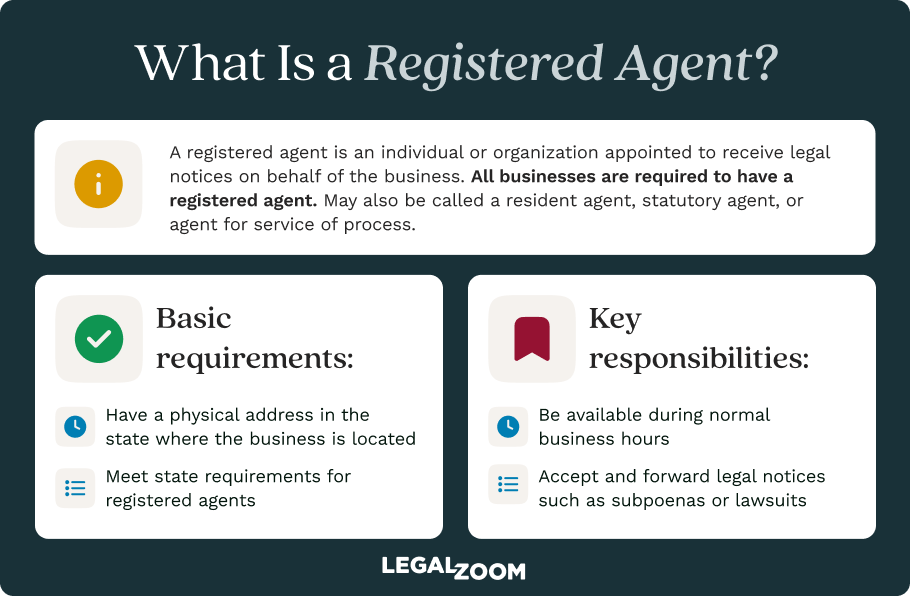
Alaska law won't let you file articles of organization until you've named a registered agent with a physical street address in the state. This person receives lawsuits, state notices, and other legal paperwork on your LLC's behalf, and you'll list them right on your formation filing. Alaska LLCs have to continuously maintain a registered agent and registered office at a physical street address in the state. A P.O. box doesn't count.
Can I be my own registered agent in Alaska?
In most cases, yes. Alaska permits an individual resident who meets the statutory requirements to serve as a registered agent. You need a physical Alaska street address and the required mailing address, and the agent must be reliably available to receive service and state notices. Your LLC can't serve as its own registered agent, though; that job has to go to a specific person or an authorized registered agent company. If you travel a lot or don't want your home address sitting on a public record, a commercial registered agent service solves that.
What are the privacy tradeoffs of serving as your own Alaska registered agent?
Name yourself as an agent, and your name and street address become part of Alaska's public business records, alongside other entity information. Run the business out of your house, and that address may remain available in a searchable government database. Switching agents later means filing a separate Statement of Change and paying another $25, so it's worth thinking this through before you file, not after.
How do I change my Alaska LLC's registered agent?
File a Statement of Change of Registered Agent or Registered Office with the Division. It costs $25. Use the current state forms and portal instructions to confirm the available submission method and whether a biennial report can update your agent during its filing window.
Step 3: File your Alaska articles of organization
Filing the articles of organization creates your LLC as a legal entity separate from you personally. Once approved, your LLC's basic details, including your registered agent's name and address, become part of the public record. Double-check everything before you hit submit.
File online, or mail it to:
Corporations Section
PO Box 110806
Juneau, AK 99811-0806.
The Division's physical office is at 333 Willoughby Avenue, 9th Floor, Juneau, AK 99801-1770.
Most people use the online portal since it's faster. If you want help, LegalZoom's filing service checks your documents for accuracy before filing with the state. Prices start at $0 plus state filing fees.
What information must be included in Alaska's articles of organization?
You’ll need to provide the following information when filing your articles of organization:
- Your LLC's name, including the required designator
- Your registered agent's name, physical street address, and mailing address in Alaska
- Whether the LLC is member-managed or manager-managed
- Your purpose or NAICS code
- The signature of at least one organizer
You can add optional provisions under AS 10.50.075, such as a specific dissolution date, though most small LLCs don't bother. Try to submit an operating agreement along with your filing, and the Corporations Section will just send it back unfiled.
Is my Alaska LLC's articles of organization filing part of the public record?
Yes. Alaska makes formation filings and entity information available as public business records. Registered agent and management information appear in the filing, and amendments may require a separate Articles of Amendment filing and fee.
Step 4: Create an Alaska LLC operating agreement
Your articles of organization get your LLC on the books with the state. Your operating agreement determines how it actually functions day to day. Alaska doesn't require you to file one, and the Division won't keep it on record, but skip it at your own risk: it's what defines ownership percentages, profit splits, decision-making authority, and exit terms. Without one, LLC statutes under AS 10.50 step in with generic default rules instead of the terms you and your co-owners actually agreed on. LegalZoom can help you put one together online in minutes.
Do you need an operating agreement for an LLC in Alaska?
No statute demands it, but attorneys recommend one anyway, and for good reason. Banks frequently ask to see one before they'll open a business account, and if a dispute ever lands in court, a written agreement gives a judge something concrete to work with.
Does a single-member Alaska LLC still need an operating agreement?
Not as a legal requirement. Alaska does not require a single-member LLC to have an operating agreement, but many owners choose to adopt one for governance, banking, recordkeeping, and clarity about how the business will operate.
Step 5: Get an EIN for your Alaska LLC
An employer identification number (EIN) is a free, nine-digit number the IRS issues for federal tax and reporting purposes. Many LLCs need one for federal tax or payroll purposes, and some banks may require one, but a single-member LLC with no employees and no excise-tax filing obligation generally does not. You can apply for an EIN through the IRS’s website or let LegalZoom file the application on your behalf. If you choose the Pro or Premium LLC formation service, your EIN application is included.
Do you need an EIN if your Alaska LLC has no employees?
Not necessarily. A single-member LLC with no employees and no excise-tax filing obligation generally does not need an EIN, although it may choose to obtain one for banking or other business purposes. Alaska's state business-license application does not make an EIN a universal prerequisite.
Step 6: Get an Alaska business license
Many businesses operating in Alaska need a state business license from the Division, but statutory exemptions apply. The license is separate from the articles of organization that create your LLC. You may also need professional licenses, local licenses, permits, or tax registrations, depending on your activities and location, so check the requirements that apply to your business before you open.
Do you need a business license to form an LLC in Alaska?
Not necessarily. Alaska's state business-license requirement generally applies when a business operates in the state, but statutory exemptions apply. Forming an LLC and obtaining a business license are separate actions. When a license is required, it costs $50 for one year or $100 for two years.
What is Alaska's NAICS code requirement for a new business license?
Apply through the Division's portal, and identify your line of business using a NAICS code (you can list up to ten if you run multiple lines). If any of your activities require a professional license, think construction contracting, medical, dental, hairdressing, nursing, or engineering; list those codes and get the professional license squared away first. No exact match for your business? Pick the closest code. The state just wants a reasonable description, not perfect precision.
How much does an Alaska business license cost, and when does it renew?
A state business license costs $50 for one year or $100 for two. It expires on December 31 of the applicable licensing period. Apply before October 1, and a one-year license generally expires that same December 31; apply on or after October 1, and it generally runs through the following December 31. A lot of owners pay for two years up front to avoid this timing quirk. Write your expiration date down and check current renewal instructions before the license lapses.
Do any Alaska cities or boroughs require additional local business licenses?
Getting your state license doesn't clear you to operate everywhere automatically. LegalZoom's service provides a personalized report of which licenses, permits, and registrations your business needs.
- Anchorage: Most businesses only need the state license; certain types, shooting galleries, nightclubs, circuses, face additional municipal licensing. Check with the Anchorage Business License office at muni.org.
- Fairbanks: The City of Fairbanks requires its own local license on top of the state license. The standard new-business license is $50, and renewal fees can vary by gross receipts, so check the city's current fee schedule.
- Juneau: The City and Borough of Juneau requires sales-tax registration and collection for taxable sales and services within the borough. Verify whether your specific activity also requires a separate local license, and contact the CBJ Finance Department at juneau.org.
Requirements vary quite a bit, so check with your specific city or borough clerk's office directly.
Step 7: File your Alaska LLC initial report
Your initial report helps ensure that your domestic LLC's contact information is up to date and accurate with the state. This one-time, no-fee filing is separate from the recurring biennial report and must be filed for all new domestic LLCs in Alaska.
What is Alaska's LLC initial report, and when is it due?
It's due within six months of your LLC's formation date (the date the Division approved your articles of organization). The report confirms your registered agent, principal office address, and member or manager details on file. Domestic Alaska LLCs have to file it; foreign LLCs don't. There's no fee, and you can knock it out online once your entity number is on file. If you need to change your registered agent, use the current state instructions for the appropriate Statement of Change rather than assuming the initial report is the correct form.
What happens if I miss Alaska's initial report deadline?
Your LLC can be placed in noncompliant status until you file. Do not state that missing the initial report alone automatically causes administrative dissolution; Alaska's dissolution provisions focus on specified grounds such as delinquent biennial reports, fees, and registered-agent failures. Since this filing is free, add it to your formation checklist and file it promptly.
Building a business is enough work as it is. We'll help you start your LLC with confidence.

Step 8: Track your Alaska biennial report deadline
You’ll also need to stay on top of filing your biennial report. This report must be filed every two years. Be sure to set a calendar reminder for upcoming deadlines so you don’t miss the report. LegalZoom’s business compliance services can also help you keep track of important deadlines.
When is Alaska's biennial report due, and how often must I file it?
It's due January 2, based on the year your LLC formed: odd-year LLCs file every subsequent odd-numbered year, even-year LLCs file every subsequent even-numbered year. The filing window opens on October 2 of the prior year. File it online through the Division's portal. See filing your Alaska biennial report for a full walkthrough.
What are the Alaska LLC filing requirements?
The report confirms your registered agent, principal office address, and member or manager information. Domestic LLCs pay $100; foreign LLCs pay $200. File on or after February 2, and a late penalty kicks in automatically: $137.50 total for domestic LLCs, $247.50 for foreign ones. Alaska doesn't have a separate "annual" LLC report requirement. If your business requires a state license, renew it by the applicable expiration date; one- and two-year licenses are available.
What happens if I file Alaska's biennial report late?
File before February 2, and you're in the clear, no penalty, which gives you roughly a 30-day cushion past the January 2 due date. Hit February 2 or later, though, and the penalty kicks in automatically with zero grace period: $137.50 for domestic LLCs, $247.50 for foreign LLCs.
What happens if my Alaska LLC falls out of good standing?
A missed biennial report does not dissolve your LLC overnight, but continued delinquency can lead to involuntary dissolution after the statutory conditions are met. If an LLC is dissolved, reinstatement generally requires delinquent filings, fees, and a reinstatement application under the current state instructions. See how to reinstate an LLC in Alaska for more.
Alaska LLC startup costs and ongoing compliance fees
If your business needs a state license and has no additional permits or local fees, plan on roughly $300 in state costs to form and license your Alaska LLC in year one: $250 for articles of organization plus $50 for a one-year state business license. After that, costs depend on the licenses, reports, and permits that apply to your business.
| Cost Type | Item | Fee |
|---|---|---|
| One-time | Articles of organization | $250 |
| One-time | Initial report | $0 |
| One-time (optional) | Name reservation (120 days) | $25 |
| One-time (optional) | Business Name Registration (DBA) | $25 |
| Recurring | State business license | $50/year or $100 for two years |
| Recurring | Biennial report (domestic LLC) | $100 ($137.50 if filed on or after February 2) |
| Recurring | Biennial report (foreign LLC) | $200 ($247.50 if filed on or after February 2) |
| Optional | Registered agent change (Statement of Change) |
$25 |
| Optional | Articles of organization amendment | $25 |
Every Alaska business license expires on December 31, no matter when you first applied. Foreign LLCs pay $200 for the biennial report; domestic LLCs pay half that.
Alaska does not impose a state personal income tax, and the state does not levy a statewide general sales tax; local governments may impose sales taxes. Federal tax treatment for LLC profits depends on the LLC's tax classification, and local taxes or other business taxes may still apply. Verify current tax obligations with the Alaska Department of Revenue and the relevant local government.
The risks of filing an Alaska LLC yourself
Filing an Alaska LLC yourself can save you the cost of professional filing help, but Alaska has a few requirements that are easy to overlook. The biggest risks are tied to the state's separate licensing system, reporting deadlines, and registered-agent rules. Forming the LLC does not replace any state, professional, local, or tax registrations that apply to your business.
- Confusing LLC formation with the state business license. Registering your LLC does not by itself authorize you to operate in Alaska. You may also need an Alaska business license, professional licenses, and local or other permits, depending on your business and location.
- Missing the six-month initial report. Alaska domestic LLCs must file a free initial report within six months of formation. Because it's a one-time filing rather than an annual requirement, it's easy to overlook after the LLC is formed.
- Overlooking Alaska's biennial report deadline. Alaska LLCs file a biennial report every two years rather than an annual report. The deadline is January 2 in the LLC's assigned odd- or even-numbered year, and late filings can trigger penalties and put the LLC into noncompliant status.
- Choosing a registered agent who can't maintain an Alaska address. Your LLC must continuously maintain a registered agent in Alaska with the required physical and mailing addresses. If that information becomes invalid, the state can place the LLC in noncompliant status, and the problem can eventually lead to involuntary dissolution.
- Misreading Alaska's business name rules. Alaska uses a statutory "distinguishable on the record" standard for LLC names. Review the state's database carefully before filing instead of relying on minor spelling or punctuation changes.
How to start your Alaska LLC with LegalZoom
Filing your own articles of organization, applying for your business license, and tracking your biennial report deadline is entirely doable on your own, and this guide gives you everything you need to do it. Prefer to hand off the paperwork instead? LegalZoom's Alaska LLC formation service includes:
- Name availability guidance and a name search before you file
- Preparation and filing of your Alaska articles of organization
- Registered agent service, so your personal address doesn't end up on Alaska's public record
- A customizable operating agreement tailored to your LLC's ownership structure
- EIN acquisition through the IRS at no extra filing hassle
- Ongoing compliance support to help you track Alaska's initial report and biennial report deadlines
LegalZoom has helped hundreds of thousands of business owners handle the paperwork side of starting a company so they can focus on actually running it.
Find the right state to form an LLC
Find the right state to form an LLC
Every state has different rules, costs, and considerations for LLC formation.


Alaska LLC FAQs
Is Alaska a good state to start an LLC?
If a low state tax burden matters to you, Alaska may be attractive: the state does not impose a personal income tax, and local governments may impose sales taxes even though there is no statewide general sales tax. Federal tax treatment for LLC profits depends on the LLC's tax classification, and local taxes or other business taxes may still apply. It's not the right fit for every business (market size and distance from major population centers are real considerations), so compare the rules that apply to your business and location.
What is the biggest disadvantage of an LLC?
Depending on the LLC's federal tax classification and the member's role, some LLC income may be subject to self-employment tax. Businesses considering an S-corporation election should compare the potential tax effects with payroll, accounting, and compliance costs. In Alaska, budget for a $50 one-year or $100 two-year state business license when required, plus the $100 domestic biennial report. Both are modest amounts, but easy to forget without tracking the dates.
At what income is an LLC worth it?
There's no universal income threshold at which an LLC or an S-corporation election becomes worthwhile. Potential savings depend on profit, reasonable compensation, payroll and accounting costs, eligibility, and the owner's broader tax situation. Compare the numbers with a qualified tax professional before making an election. Alaska's lack of a state personal income tax may affect the comparison, but it does not replace federal tax planning.
How long does it take to form an LLC in Alaska?
Depends entirely on how you file. Submit online, and it processes immediately once approved and paid. Mail it in, and you're looking at several weeks, especially during Alaska's busiest filing stretch between October and February.
'%20/%3e%3c/svg%3e)

'%3e%3cpath%20fill-rule='evenodd'%20clip-rule='evenodd'%20d='M9.31239%2025.5316H13.0679V14.1032H9.31239V25.5316ZM11.1913%208.46875C9.93945%208.46875%209%209.25086%209%2010.505C9%2011.5995%209.78211%2012.5389%2011.1913%2012.5389C12.6005%2012.5389%2013.3826%2011.5995%2013.3826%2010.505C13.3826%209.4082%2012.6005%208.46875%2011.1913%208.46875ZM27%2018.9577V25.5316H23.2445V19.4275C23.2445%2017.8609%2022.6174%2016.7664%2021.3679%2016.7664C20.2711%2016.7664%2019.644%2017.5463%2019.3316%2018.1756C19.1743%2018.488%2019.1743%2018.8004%2019.1743%2019.1128V25.5316H15.4165V13.9458H19.1743V15.5123C19.644%2014.7302%2020.5835%2013.6357%2022.6174%2013.6357C25.1234%2013.7908%2027%2015.3573%2027%2018.9577Z'%20fill='white'/%3e%3c/g%3e%3cdefs%3e%3cclipPath%20id='clip0_952_9489'%3e%3crect%20width='18'%20height='18'%20fill='white'%20transform='translate(9%208)'/%3e%3c/clipPath%3e%3c/defs%3e%3c/svg%3e)