.
.





To form an LLC in South Carolina, file articles of organization with the Secretary of State, and maintain a South Carolina registered agent and designated office. You'll also need to check which tax registrations, permits, and local licenses apply to your business. South Carolina does not require most LLCs to file a routine annual report with the Secretary of State (SOS), but tax classification and business activity can create other filing and licensing obligations.
This guide covers the seven formation steps, the filing fees listed by the state, and the tax and licensing requirements that may apply afterward. You can search business names and file articles of organization through the South Carolina Secretary of State's Business Entities Online portal at businessfilings.sc.gov.
Key takeaways
- Most South Carolina LLCs do not file a routine annual report with the Secretary of State. Tax filings are separate and depend on the LLC's federal classification and business activity.
- The Secretary of State lists a $110 fee for filing articles on paper. Confirm the total shown in the online filing portal before you pay.
- You may serve as your own registered agent if you meet the state's eligibility and address requirements. Consider what address information will appear in the state's filing records.
- The Secretary of State says online filings provide faster processing and instant filing confirmation, but the SOS does not publish a guaranteed processing time.
- A foreign LLC generally must obtain authority before transacting business in South Carolina, unless a statutory exception applies. Registration requires an in-state designated office as well as a registered agent.
Step 1: Choose and check your South Carolina LLC name
Choose a name that follows South Carolina's LLC naming rules. Then search the Secretary of State's records for similar names. Do it thoroughly, because the office makes the final availability decision when it reviews your filing.
You can search for your preferred business name directly with the state or use LegalZoom’s free South Carolina business name search tool. Be sure to search for any variations of your name that are close or could make your preferred name confusingly similar to one already registered with the SOS. Additionally, run a federal trademark search to ensure your chosen name isn’t federally protected.
Free South Carolina Business Name Check
Starting a business? Use our free name check tool to search the South Carolina Secretary of State records and see if your desired name is available.
By clicking "Check Availability," I agree to LegalZoom's Terms of Use. This search is a preliminary check of state databases and does not include variations or trademarks. Results do not guarantee name availability or compliance with legal requirements.
What are the naming requirements for a South Carolina LLC?
An LLC name must include "limited liability company," "limited company," or an allowed abbreviation, such as "LLC," "L.L.C.," "LC," or "L.C." "Limited" may be shortened to "Ltd." and "Company" to "Co."
Your LLC name must be distinguishable from names already on file. A name search can help you spot possible conflicts, but the Secretary of State makes the final decision when it reviews your filing. These changes alone may not be enough to make a name distinguishable:
- Adding an article such as "A," "An," or "The"
- Adding a suffix such as "Co." or "Partners"
- Using a close spelling or a similar-sounding version of an existing name
The law does not list industry-specific word restrictions, but before using a name that suggests a regulated activity, check with the relevant South Carolina licensing board.
Can you reserve a name for your South Carolina LLC?
Reserving a name is optional. South Carolina allows a nonrenewable 120-day reservation for $25, but if you're ready to file your articles of organization, you can skip the reservation and use the name in your filing.
If you plan to use a name different from your LLC's legal name, note that the Secretary of State does not register DBAs or trade names. Check local and industry rules to see whether another registration applies.
Step 2: Appoint a South Carolina registered agent
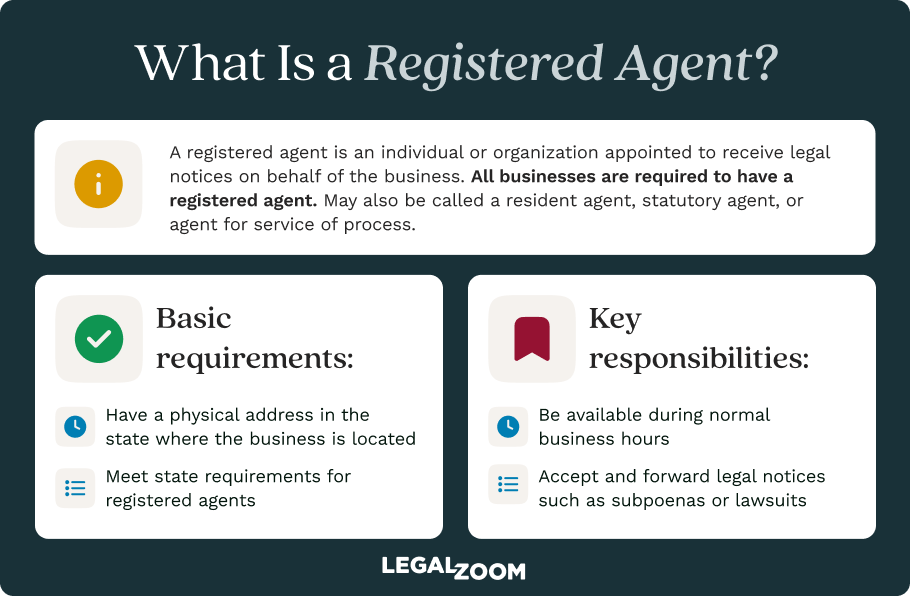
A South Carolina LLC must maintain a registered agent for service of process and an in-state designated office. The agent receives legal papers for the LLC, and the designated office may be the same location as the agent's street address. It does not have to be a place of business. Choose an agent who can reliably receive legal papers at the listed address.
What are South Carolina's registered agent requirements?
A registered agent must be a South Carolina resident individual, a domestic corporation, another LLC, or a foreign corporation or foreign company authorized to do business in the state. The agent must have a South Carolina street address. The LLC must also maintain an in-state designated office, which may be the same location and need not be a place of business.
Can you serve as your own registered agent in South Carolina?
You can serve as the agent if you:
- Are a South Carolina resident
- Have a South Carolina street address
If you serve as your own registered agent, the address you provide may appear in state filing records. Consider whether you want to use a home address or appoint a commercial registered agent service.
How do you change your registered agent in South Carolina?
To change the registered agent, designated office, or registered agent's street address, file the state's notice of change form. The state filing fee is $10.
An agent may resign by filing a written notice. The resignation takes effect on the 31st day after the notice is filed. Arrange a replacement promptly and file the required change so the LLC always has an agent in place.
Step 3: File articles of organization with the South Carolina Secretary of State
The LLC generally exists when the articles of organization are filed, unless you specify a delayed effective date. You can file online through Business Entities Online or submit the paper form.
What information and signatures are required for South Carolina articles of organization?
The filing also must include the following:
- LLC name, including the required designator.
- The LLC's initial designated office address in South Carolina.
- Registered agent's name and street address, matching Step 2.
- Name and address of at least one organizer (who need not be a member or manager).
- Managerial structure. LLCs are member-managed by default. If the articles designate it as manager-managed, include the initial managers' names and addresses.
- Signature of a manager, member, organizer, or fiduciary. The signer's name and capacity must appear next to the signature.
- Whether the LLC is a term company and, if so, its term.
- Whether any members will be liable for company obligations under S.C. Code § 33-44-303(c).
How can you file articles of organization online or by paper in South Carolina?
The Secretary of State says online filings provide faster processing and instant filing confirmation. Before paying, check the amount shown in the portal and review its filing instructions.
The paper filing fee is $110. Download and complete the articles of organization form and follow the instructions for signatures, payment, copies, and mailing. Check the mailing address and filing instructions on the SOS forms page before sending your filing.
The online filing system uses a Business Entities Online account. The portal's notice says filers must complete identity verification when logging in to access applicable online business filing services.
What should you check before filing your South Carolina articles of organization?
You’ll want to check your articles don’t have any common mistakes before you file them with the state:
- A name that does not meet the state's LLC designator or distinguishability rules
- Missing organizer name, address, or signature information
- Missing signer-capacity information or other details required by the current SOS form
- Missing management structure or initial manager information when applicable
- Missing agent name or street-address information, or other required agent details
- Incomplete initial designated-office information
- An incorrect payment amount
Step 4: Create a South Carolina LLC operating agreement
A written operating agreement documents how the LLC will be governed, including ownership, distributions, and decision-making. South Carolina law does not require an operating agreement to be written or filed with the Secretary of State, but a written agreement can still help members understand their rights and responsibilities.
An operating agreement may be written or oral, and the state’s LLC statute supplies default rules where the agreement does not address an issue. A written agreement can help document how a single-member or multi-member LLC operates, but it does not by itself guarantee liability protection. Banks set their own account requirements.
What should your operating agreement include?
A written operating agreement for a multi-member LLC typically covers:
- Ownership percentages for each member
- Profit and loss distribution, including payment timing
- Management structure (member-managed or manager-managed), matching your articles of organization declaration
- Voting rights for major decisions, such as taking on debt or admitting a new member
- Transfer rules for a member selling their stake, leaving, or passing away
- Dispute resolution procedures
Ask your bank whether it needs an operating agreement or member authorization. Requirements vary.
Step 5: Get an EIN and open a business bank account for your South Carolina LLC
After the state files your articles, you can take care of federal tax and banking tasks. The right order and documents depend on your LLC's tax classification and the bank's requirements. If you prefer to handle the application yourself, you can apply for an employer identification number (EIN) directly through the IRS at no charge, or LegalZoom’s EIN service can handle the application on your behalf. The application is included at no extra charge with LegalZoom’s Pro or Premium LLC formation packages.
Do you need an EIN?
A disregarded single-member LLC with no employees or federal excise-tax liability may not need an EIN for federal tax purposes, but it may still need one for a bank account, or if state tax law requires it. Multi-member LLCs do generally always need an EIN.
What records might a bank ask for to open an LLC account?
A bank may ask for some of these records, but requirements vary:
- Approved articles of organization
- EIN confirmation letter (such as IRS Notice CP 575)
- Operating agreement, especially for multi-member LLCs
- Internal authorization document (banking resolution) for multi-member LLCs
Call your bank first, since requirements vary, and some ask for a certificate of existence too.
Step 6: Register your South Carolina LLC for state taxes
Your LLC's tax obligations depend on its federal tax classification, whether it has employees, and what it sells. The sections below cover common South Carolina filings, but not every requirement applies to every LLC.
How are South Carolina LLCs taxed?
South Carolina tax filings depend on the LLC's federal tax classification. SCDOR says a multi-member LLC that is not taxed as a corporation is taxed as a partnership and files SC1065. Federal and member-level filing requirements also depend on the LLC's tax classification.
An LLC taxed as a corporation files SC1120 or SC1120S. It must file the CL-1 initial annual report with SCDOR and pay a one-time $25 initial corporate license fee within 60 days of commencing business in South Carolina or using capital in the state. A separate annual corporate license fee may also apply. SCDOR calculates this fee at 0.1% of capital and paid-in surplus, plus $15, with a $25 annual minimum. It is due with the return or extension and applies to the tax year following the income-tax year. Check current SCDOR instructions to confirm which returns and fees apply.
A qualifying partnership, including an LLC taxed as a partnership, or a qualifying S corporation, including an LLC taxed as an S corporation, may make an annual election to have eligible active trade or business income taxed at the entity level instead of the partner or shareholder level. This is an election, not a deduction; check current SCDOR guidance for eligibility and tax treatment.
Does your South Carolina LLC need a Retail License?
If your business makes retail sales taxed under South Carolina sales and use tax rules, it must obtain a Retail License before making those sales. The nonrefundable fee is $50 for each business location. The license does not expire, but you must update it if a location changes.
What registrations may be required if your South Carolina LLC hires employees?
If you hire employees, check current South Carolina withholding and unemployment registration requirements with SCDOR and the Department of Employment and Workforce. The accounts and filings you need depend on your business.
Starting a business takes courage. LegalZoom makes sure the legal details don’t stand in your way, from the day you register until the day you retire.

Step 7: Obtain South Carolina business licenses and permits
South Carolina has no single statewide general business license. Requirements vary by location and activity, so check with your city or county and any state licensing board that oversees your line of business.
- Local business licenses may apply, depending on where and how you operate. Contact the relevant city or county for its requirements and fees.
- Local requirements may differ in incorporated and unincorporated areas.
- Professional or occupational licenses may apply. Check with the state board that regulates your field.
- Industry-specific permits may also apply, depending on the business activity.
Ask your local government whether a business license applies, what it costs, and when it must be renewed. Requirements vary by location and activity.
South Carolina LLC costs: state fees, optional costs, and ongoing expenses
| Cost | Amount | Required? |
|---|---|---|
| Articles of organization (paper filing) | $110 | Required |
| Name reservation (120 days) | $25 | Optional |
| Registered agent, agent address, or designated office change filing | $10 | Required for any of these changes |
| Certificate of existence | $10 | Optional |
| Initial SCDOR CL-1 filing for an LLC taxed as a corporation | $25 initial fee; additional annual corporate license fee may apply | If taxed as a corporation |
| South Carolina Retail License (if required, per location) | $50 | Required if applicable |
Fees above reflect state list prices; online transactions may include additional SC.GOV service fees. Confirm the total shown in the portal before paying.
LegalZoom's guide to how much it costs to form an LLC in South Carolina provides a cost breakdown.
The risks of filing an LLC on your own in South Carolina
When you file on your own, you're responsible for completing the formation paperwork and identifying the separate tax, licensing, and registration requirements that apply to your business. A missed detail can delay formation, while a missed follow-up can leave other requirements unmet after the LLC is formed.
- A missing field in the articles can delay formation or lead to rejection. Check the articles of organization for the LLC name, registered agent, organizer, management information, term-company status, and member-liability provisions.
- Keeping track of a registered agent's resignation matters. It takes effect on the 31st day after notice is filed, so arrange a replacement and file the required change promptly to avoid a gap in registered agent coverage.
- Most South Carolina LLCs don't file a routine annual report with the Secretary of State, but that doesn't mean there are no ongoing tax filings. Your LLC's tax classification and business activity determine which SCDOR returns and fees may apply, including corporate filings if you elect corporate tax treatment.
- Filing with the Secretary of State doesn't determine whether you need a Retail License. If your business makes taxable retail sales, get the license before sales begin; the fee is $50 per applicable business location.
- An out-of-state LLC can miss a required South Carolina registration if you assume the home-state filing is enough. Before transacting business here, check whether a statutory exception applies. If registration is required, you'll need a South Carolina designated office and registered agent.
Start your South Carolina LLC with LegalZoom
You can file your own articles of organization, but LegalZoom can help simplify the process.
LegalZoom can prepare and file your South Carolina articles of organization correctly the first time, serve as your South Carolina registered agent, and keep your home address off the public record. It can also provide an operating agreement template built for South Carolina LLCs, handle your EIN filing with the IRS, and research the local and state business licenses your LLC may need.
Whether you prefer guided self-filing or a full-service handoff, LegalZoom's South Carolina LLC formation packages are built to get your business legally up and running without the back-and-forth of figuring out state requirements on your own.
Find the right state to form an LLC
Find the right state to form an LLC
Every state has different rules, costs, and considerations for LLC formation.


South Carolina LLC FAQs
Do I need an LLC to start a business in South Carolina?
The Secretary of State does not require a sole proprietor to file entity-formation paperwork with its office. That does not remove tax, permit, or local-license requirements. An LLC can separate company obligations from personal ones in many cases, but liability protections are not absolute.
How does an out-of-state LLC register to do business in South Carolina?
If an out-of-state LLC is transacting business in South Carolina and no statutory exception applies, it generally must obtain a certificate of authority using Form F0008. The Secretary of State’s forms page lists a $110 filing fee. The application must include a home-state certificate of existence dated no more than 30 days before filing, according to the Secretary of State’s FAQs page.
Some activities—such as selling through independent contractors, certain isolated transactions, and interstate commerce—are not treated as transacting business. But if your LLC does need foreign qualification, it must maintain an in-state designated office and registered agent as well.
What is a certificate of existence in South Carolina?
A certificate of existence confirms that an entity exists and is in good standing with the South Carolina Secretary of State. You can request one through the state’s Business Entities Online system, as described in the Secretary of State’s FAQs page.
Can I form a South Carolina LLC if I live in another state?
Yes. South Carolina’s LLC statute allows one or more persons to organize an LLC and does not require members to live in the state. The LLC must still maintain a South Carolina designated office and an eligible registered agent for service of process.
How do I change my South Carolina LLC’s name after filing?
File articles of amendment with the South Carolina Secretary of State. The filing must identify the LLC, give the date the original articles of organization were filed, and state the amendment. The new name still must meet South Carolina’s LLC naming and distinguishability rules.
'%20/%3e%3c/svg%3e)

'%3e%3cpath%20fill-rule='evenodd'%20clip-rule='evenodd'%20d='M9.31239%2025.5316H13.0679V14.1032H9.31239V25.5316ZM11.1913%208.46875C9.93945%208.46875%209%209.25086%209%2010.505C9%2011.5995%209.78211%2012.5389%2011.1913%2012.5389C12.6005%2012.5389%2013.3826%2011.5995%2013.3826%2010.505C13.3826%209.4082%2012.6005%208.46875%2011.1913%208.46875ZM27%2018.9577V25.5316H23.2445V19.4275C23.2445%2017.8609%2022.6174%2016.7664%2021.3679%2016.7664C20.2711%2016.7664%2019.644%2017.5463%2019.3316%2018.1756C19.1743%2018.488%2019.1743%2018.8004%2019.1743%2019.1128V25.5316H15.4165V13.9458H19.1743V15.5123C19.644%2014.7302%2020.5835%2013.6357%2022.6174%2013.6357C25.1234%2013.7908%2027%2015.3573%2027%2018.9577Z'%20fill='white'/%3e%3c/g%3e%3cdefs%3e%3cclipPath%20id='clip0_952_9489'%3e%3crect%20width='18'%20height='18'%20fill='white'%20transform='translate(9%208)'/%3e%3c/clipPath%3e%3c/defs%3e%3c/svg%3e)