.
.






An LLC in Tennessee is a great option, whether you’re a freelancer transitioning to a formal business structure or a seasoned entrepreneur wanting to form a series limited liability company (LLC). In recent years, Tennessee has consistently broken records for new business filings. This shouldn’t come as a surprise: The Volunteer State’s lack of income tax, strong labor market, and supportive business environment make it a place for many companies to thrive.
This guide covers everything you need to know about how to get your LLC in Tennessee, from what paperwork to file with the Secretary of State to post-formation steps, costs, and timelines. With these detailed steps and best practices, you’ll be prepared to start, maintain, and lead your new LLC to success.

Why form an LLC in Tennessee?
Tennessee has a lot going for it when it comes to launching a small business. Here’s why so many people form LLCs in the state:
- Liability protection. As opposed to a general partnership or sole proprietorship, an LLC provides personal liability protection from business debts.
- Management flexibility. LLCs can choose to be member-managed or manager-managed, which offers owners the ability to choose operational procedures that suit their needs.
- State tax benefits. Tennessee doesn’t impose personal income tax on residents, which is beneficial for members of LLCs that maintain their pass-through tax status. This means that income from the LLC’s profits to the members is not taxed at the state level.
- State small business resources. Getting your new company off the ground can be challenging—but Tennessee offers a suite of resources for business owners that can help. For instance, Tennessee SmartStart lists capital and grant funding sources, educational programs, mentorship opportunities, and specific business-related guides.
- Various LLC types. In addition to the standard LLC, Tennessee also recognizes series LLCs, nonprofit LLCs, and professional LLCs (PLLCs).
Tennessee LLC formation requirements at a glance
The following are requirements to launch and maintain your LLC in Tennessee:
- Minimum of one member
- File articles of organization (minimum $300)
- Obtain registered agent (cost varies)
- File annual report (minimum $300)
- Pay annual franchise and excise tax (minimum $100)
- Obtain and pay for state and local business tax license (minimum $22)
- Obtain and renew business licenses and permits (costs vary)
How to get an LLC in Tennessee in 6 steps
LLC formation in Tennessee is simple with these steps.
Step 1: Choose a name for your Tennessee LLC
The name of your Tennessee LLC sets the stage for what your business is all about, but there are some requirements. You can read a complete list of Tennessee's naming rules, but we’ve listed a few state-specific guidelines to keep in mind:
- Must have an appropriate identifier like “Limited Liability Company,” “L.L.C.,” or “LLC” (for instance, if a company is a professional limited liability company, the correct designations are “Professional Limited Liability Company” or "PLLC.")
- Shouldn’t imply affiliation with any federal or local government agency like “Treasury,” “FBI,” or “Homeland Security”
- Must be distinguishable from existing business names
- Restricted words such as "bank" or "credit union" require approval from the Tennessee Department of Financial Institutions
- Use of words like “Engineer," "Attorney," and "CPA" need prior approval from the appropriate licensing board
- Can’t imply association with a charity or religious organization without a written certification
Free Tennessee Business Name Check
Use our free name check tool to search the Tennessee Secretary of State database and see if your business name is available.
By clicking "Check Availability," I agree to LegalZoom's Terms of Use. This search is a preliminary check of state databases and does not include variations or trademarks. Results do not guarantee name availability or compliance with legal requirements.
It’s crucial that your LLC name is unique. Follow these strategies to brainstorm a few business names, and then use the Tennessee Secretary of State business name availability tool to see if they are available.
It’s also a good idea to conduct a Tennessee trademark search and a federal trademark search to make sure that your desired name doesn’t infringe on protected names. Alternatively, try LegalZoom’s trademark search service, which can save you ample time. We’ll conduct federal and state trademark searches for you—of both existing and pending trademarks—and provide ranked search results to help identify conflicts.
If you need to save your chosen business name while you get all other formation paperwork ready, simply file an Application for Name Reservation with the Secretary of State. Names may be reserved for up to 120 days by paying a filing fee of $20. Download Form SS-9425, fill it out completely, include a check or money order payable to “Tennessee Secretary of State,” then mail the form and payment to:
Tennessee Secretary of State
ATTN: Corporate Filing
312 Rosa L. Parks Ave FL 6
Nashville TN 37243
Step 2: Appoint a Tennessee registered agent
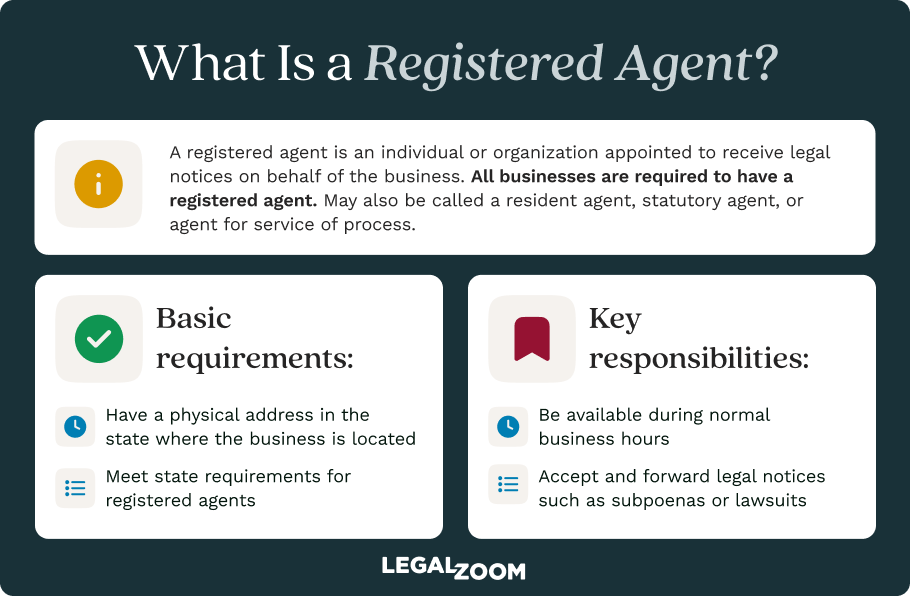
Tennessee requires you to appoint a registered agent for your business entity. A Tennessee registered agent is the person or entity authorized to receive service of process and other official legal documents and notices from the government on behalf of your Tennessee LLC.
Registered agents need to follow these eligibility requirements:
- If an individual (including yourself or an employee of your LLC), must be 18 years or older and reside in the Tennessee
- If an entity, must be or a domestic or foreign entity that is authorized to do business in the state
- Must be on-site and available to accept documents during regular business hours
- Must have a physical address in Tennessee (P.O. boxes don't count)
While you can be your own registered agent, using a service is your best bet if you work irregular hours or travel extensively. There may be privacy concerns, too, as Tennessee registered agent information becomes part of the state’s public record. So, if you work from home, your residential address will become public. LegalZoom’s registered agent service includes digital document storage and alerts on upcoming deadlines, so you can run your business stress-free and stay compliant with state law.
Step 3: File your articles of organization
The articles of organization is a document that officially establishes your LLC with the Tennessee Secretary of State. To prepare your Tennessee articles of organization, you'll need the following information:
- Your LLC name (with additional designation, if applicable)
- A name consent if the LLC's name is similar to an existing business name in Tennessee
- Name and address of registered agent
- Fiscal year close month
- LLC effective date (if different from the filing date)
- Management structure: Will managers or members manage the LLC?
- The number of LLC members on the date of filing
- The period of duration (perpetual or a specific dissolution date)
- The physical and mailing address of the LLC's principal office
You can file your state of Tennessee LLC articles of organization online, via mail, or in person:
- Online. Register through the Secretary of State’s online registration portal. Keep in mind that online submissions incur a small convenience charge.
- By mail. Print, complete, and submit Form SS-4270 by mail to the Tennessee Secretary of State’s office (address noted above).
- In person. You can access Form SS-4270, complete it, and submit it in person at the Secretary of State’s office, whose address is noted above.
LLC articles of organization submissions cost a minimum of $300. If you have more than six members, the filing fee increases by $50 per member, with a maximum fee of $3,000.
To simplify the formation process, rely on LegalZoom’s LLC service, which includes a business name check and tax consult and files your articles of organization with the Tennessee Secretary of State for only the cost of the filing fee. Just answer a few questions about your LLC, and we’ll take care of the rest. You can also select more comprehensive packages that include additional services to help your business thrive.
Once your articles are filed and state filing fees are paid, the Tennessee Secretary of State will review the filing. Online filings are generally faster than mail-in, and the process could stretch from a couple days to a week or two. If the articles of organization are approved, you will receive a certificate of formation and state business entity number that confirms the LLC formally exists.
Step 4: Create an operating agreement
Tennessee doesn’t require an operating agreement, but having a readily accessible, written document—especially for multi-member LLCs—is helpful for various reasons. An operating agreement can help settle disputes that may arise over finances as well as any other potential litigation. Without a written agreement in place, judges make decisions on disputes based on Tennessee law, not necessarily what’s in the best interest of the LLC and its members.
But even for single-member LLCs, an operating agreement helps maintain a clear separation between you and the business, which provides increased liability protection. Your Tennessee operating agreement can include, but does not need be limited to, the following:
- LLC's name and principal address
- Business structure of LLC (e.g., single-member LLC, multiple-member LLC, PLLC, or series LLC)
- Management structure (member-managed vs. manager-managed)
- Name and address of the Tennessee registered agent
- Purpose of the business
- Members’ interests, roles, and responsibilities
- Ownership percentages
- Protocol for how profits and losses will be divided
- Procedure for admitting new members and separation with outgoing members
- Buy-sell provisions
- Voting procedures
- Indemnification and liability clauses
- Succession and dissolution plans
A Tennessee operating agreement template can serve as a helpful starting point, especially if you're unsure of what to include, but they can lack the nuance required for complex ownership structures or industry-specific concerns. That’s where professional guidance makes a difference. LegalZoom’s network of experienced legal professionals can draft a customized operating agreement that sets clear rules and operating protocols for your business.
LegalZoom helps you handle every step—from choosing a business name to filing paperwork with your state.

Step 5: Get a federal tax ID and open a business bank account
The nine-digit employer identification number (EIN) is assigned by the Internal Revenue Service (IRS) to identify your LLC for state and federal taxes. This federal tax identification number can assist when you:
- File and manage taxes at the state and federal levels
- Open a business bank account
- Hire employees
Multi-member LLCs are required to have an EIN, but single-member LLCs only need one if they elect to be taxed as a corporation, plan on hiring employees, or have excise tax liabilities. In most other cases, an owner of a single-member LLC can simply use their Social Security number to file taxes or open a business bank account.
You can obtain your EIN by mail or online from the IRS or have LegalZoom handle this task so that you don’t have to worry about filling out more paperwork.
After obtaining your EIN, consider opening a business bank account for your Tennessee LLC. This establishes a clear separation of personal and business assets, which results in stronger personal asset protection. It also further improves brand image and makes tracking sales and profitability a whole lot easier.
Fortunately, opening a business bank account is a fairly straightforward process. Banks may ask you for the following documents or information:
- Business and ownership details
- Credit score information
- Articles or certificate of organization
- EIN or Social Security number
- Your DBA certificate (if applicable)
Once you have a separate bank account, you can also acquire a business credit card, which is a quick way to cover small to medium-sized startup expenses.
Step 6: Register for taxes and obtain business licenses
In Tennessee, all LLCs are required to pay franchise and excise taxes, which are taxes for the privilege of doing business in the state:
- Franchise tax. Based on the taxpayer’s net worth, at a rate of 0.25% (minimum franchise tax payment is $100)
- Excise tax. Based on the taxpayer’s net earnings or income for that year, at a rate of 6.5%
Besides these annual tax payments, your LLC may also need to file other types of taxes:
- State sales and use taxes. This is required for businesses selling taxable services or products, leasing property, and performing other taxable services. Sales tax rates vary. Businesses can use the Tennessee Department of Revenue's Lookup Local Tax Rates search to identify rates in each jurisdiction.
- State business taxes. Businesses grossing from $3,000 to $100,000 or more annually must register and pay for the state and local business tax. The Tennessee business tax consists of a state tax and city business tax. (You can secure this license directly from your county or municipality’s office for $15. If your gross receipts exceed $100,000, you will need to get a standard business license from the Tennessee Department of Revenue.)
- State industry-specific taxes. You may need to register for alcohol, beer, and tobacco tax; local occupancy tax; professional privilege tax; and other types of taxes.
- State unemployment insurance tax. This is required if you have employees.
- State corporate tax. If your LLC elects to be taxed as a corporation, you’ll need to pay state corporate income tax, at a rate of 6.5%.
- Federal income taxes. LLCs taxed as partnerships or sole proprietors will report and pay federal income tax and self-employment tax of 15.3%. Those that elect to be taxed as corporations will pay a 21% federal corporate income tax.

You can register your business for appropriate state business taxes via the Tennessee Taxpayer Access Point (TNTAP). You will need your North American Industry Classification System code for all business and sales tax registrations. The Tennessee Department of Revenue takes around 10 days to process the tax registration.
For employer-related taxes, such as the state unemployment tax, register your business with the Tennessee Department of Labor and Workforce Development.
Once you’ve registered for taxes with the relevant state agencies, it’s time to obtain permits or licenses necessary to legally operate your business. The types of licenses or permits you need depend on your LLC’s industry, location, and business activities.
Some common ones include health department permits, zoning permits, professional licenses, and more. It can be challenging to identify exactly which ones you need, so if you’d prefer to delegate, LegalZoom’s business license & report management service finds the licenses and permits your LLC needs to operate legally. This service includes permits and licenses at the federal, state, and local levels. Plus, we’ll give you a full report about where to register for each, along with renewal deadlines and more.
Next steps after forming an LLC in Tennessee
Now that your LLC is officially set up, take a few more steps to keep your company operating efficiently.
Obtain a domain name
In today’s digital economy, you'll need a small business website to reach customers and vendors. Even if you don't think you don’t need one right away, at the very least, you should reserve the option of having one in the future by buying your domain name now from domain registrars like Wix or Bluehost.
Get a certificate of existence
Commonly known as a certificate of good standing in other states, a Tennessee certificate of existence is an excellent way to establish trust and present your company in a truly professional manner. Investors, clients, or vendors often require a copy of this certificate before they engage in business with your LLC.
You can request your certificate of existence online or by mailing Form SS-4238 to the address noted above. There’s a $20 filing fee for each copy.
Consider a foreign LLC
A certificate of existence is also required in states where you wish to register as a foreign LLC. Let's say you wish to open a branch of your laundromat business in Kentucky. To register your Tennessee LLC in Kentucky, you’ll need to provide your certificate of existence from Tennessee, the state where your business was originally formed.
A foreign LLC is any LLC that does business outside their original state of formation. Foreign authorization, or qualification, is mandatory for every state outside of Tennessee that you conduct business in, giving you legal authority to operate in the new state.
Registration paperwork and costs for foreign LLCs vary by state. For help with expanding your LLC across state lines, let LegalZoom’s foreign qualification service assist you.
Purchase business insurance
Increase your Tennessee LLC’s protection from injury, workers’ compensation, and damage claims by purchasing appropriate business insurance. Common types of insurance you should consider getting include the following:
- Business liability insurance. General insurance is used to cover legal hassles due to claims of negligence.
- Workers’ compensation. Used to pay for medical expenses and lost wages of any employee injured at work. For most Tennessee employers, workers’ compensation coverage is required for employers that employ five or more persons who are not exempted.
Product liability insurance. Commonly purchased to protect any product-based LLC from injury claims that result from defective products.
Building a business is enough work as it is. We'll help you start your LLC with confidence.

How much does it cost to form an LLC in Tennessee?
The minimum cost of forming an LLC in Tennessee is $300, but costs to maintain it can be much higher depending on the number of LLC members, tax requirements, license and permit needs, and more. Here’s a detailed breakdown of fees involved with creating an LLC in Tennessee.
| Item | Cost | Required? | Frequency |
| Articles of organization | $300–$3,000 | Yes | Once |
| Registration of assumed name (DBA) | $20 | Only if doing business under a different name from the one registered | Once |
| Name reservation | $20 | No | Once per reservation |
| Registered agent | $0–$300 | Yes | Annual |
| Operating agreement | $0–$99 | No | As needed |
| EIN | $0–$79 | Depends on LLC type and activities | Once |
| Annual report | $300–$3,000 | Yes | Annual |
| State franchise and excise tax | $100 minimum | Yes | Annual |
| State and local business tax | $22 minimum + $15 license fee | Depends on amount of gross income | Tax is annual; license fee is one-time |
| Business licenses and permits | Varies by license type and issuing agency | Depends on industry, profession, business activities, and location | Annual |
| Business insurance | Varies by type of policy and company | No | Annual (or monthly) |
Tennessee LLC ongoing compliance requirements
All Tennessee LLCs must file an annual report to remain in the state’s good books. The annual report updates the Secretary of State with your business’ latest information, such as any changes in principal office address or your registered agent.
The annual report is due on the first day of the fourth month following the LLC's fiscal year closing. So, if your Tennessee LLC formation date is June 15, 2024, the LLC's fiscal year will end each year on June 14, and the annual report will be due annually on October 1.
The Tennessee Secretary of State doesn’t specify fees or penalties for late annual reports, but there could be consequences if you don’t file on time or at all.
The annual report filing fee is a minimum of $300 and increases by $50 for every member over six members. So, if you have a two-member LLC, the filing fee will be $300. But if you have a seven-member LLC, the filing fee will be $350 (base fee of $300 + additional member fee of $50). The maximum filing fee is $3,000. If you need to change your registered agent information, you'll be charged an extra $20.
You can file your annual report once you’ve registered your business on TNCab, Tennessee’s Charity and Business Filing System. But filing an annual report with LegalZoom can save you time, reduce the effort of researching the filing requirements for your state, and help you avoid the risk of filing incorrectly.
Other compliance requirements for Tennessee LLCs include:
- Filing state business taxes (deadlines vary by tax type)
- Renewing business licenses and permits
Common mistakes to avoid when forming a Tennessee LLC
As you start out on your business journey, it’s helpful to have an idea of mistakes to avoid along the way:
- Mixing personal and business finances. Open a business bank account to provide separation.
- Skipping an operating agreement. This document can help your business avoid member disputes and can provide further liability protection.
- Being your own registered agent. This is a risk if you travel frequently (you won’t be on-site to accept legal service of process) or work from home (home address privacy concerns).
- Not keeping track of compliance deadlines. There are many state compliance deadlines, from taxes to annual reports to license renewals. You can use LegalZoom’s compliance coverage to tick all the boxes related to annual filings, amendments, and applications.
- Not understanding state-specific tax requirements. While Tennessee doesn’t have personal income tax, there are several other types of taxes that your business might be on the hook for. A tax attorney can help you understand the taxes your business can be subjected to.
Special types of Tennessee LLCs
Tennessee is unique in that it recognizes three other types of LLCs in addition to the standard single- or multi-member LLC. Here’s a brief overview of each so that you can make an informed decision about how to structure your company.
Professional LLCs (PLLCs) in Tennessee
According to Tennessee law (Title 48), a PLLC can only be formed for the sole purpose of rendering specific professional services. Here’s how to qualify for a PLLC:
- The LLC must provide services under one profession only (two may be allowed in certain cases).
- The company cannot provide a professional service other than the one noted in its articles.
- Professional services can only be rendered by licensed individuals (e.g., members and employees).
- The name of the PLLC must contain the words “professional limited company,” “professional limited liability company,” “professional LLC,” or “limited liability professional company,” or the abbreviations “P.L.C.,” “P.L.L.C.,” or “L.L.P.C.”
Professions that may qualify for a PLLC include accountants, marriage and family therapists, architects, and other licensed professions.
To form a PLLC, simply check the box for “professional LLC” on your Tennessee articles of organization and note the type of licensed professional service.
Series LLCs in Tennessee
A series LLC allows one LLC to act as an umbrella company, forming individual LLCs under it. Each additional LLC is part of the series but remains separate, in terms of tax classification and liability, from the other LLCs in the series.
This type of LLC structure can be beneficial for business opening new product lines and real estate investors who want each property under its own LLC (these are just a few examples).
To form a series LLC in Tennessee, all you need to do is check the box under “Series LLC” on your articles of organization. The state doesn’t require separate articles for each LLC in the series; just be sure to identify each LLC in your operating agreement. You’ll need to register each LLC separately with the Department of Revenue and other relevant agencies.
Nonprofit LLCs in Tennessee
Tennessee is one of only a handful of states that recognizes nonprofit LLCs (as opposed to nonprofit corporations). According to Tennessee law, only nonprofit corporations can form nonprofit LLCs, which is likely required because of IRS rules stating that to qualify as a Section 501(c)(3) organization, every member of the LLC must be an organization that qualifies for this exemption. In Tennessee, the member of the nonprofit LLC will be a qualifying nonprofit corporation.
To form a nonprofit LLC in The Volunteer State, a corporation must file articles of organization specific to nonprofit organizations, Form SS-4271. You can submit this form online or by mail to the Secretary of State. The minimum filing fee is $300 (with a maximum of $3,000, based on the number of members).
Foreign LLCs operating in Tennessee
To legally operate any formal business entity in Tennessee, you need to file certain documents with the Secretary of State. This includes LLCs formed in other states that want to expand to Tennessee. Foreign registration is required for any entity transacting business in the state.
Before conducting business in Tennessee, foreign LLCs need to file an application for a certificate of authority with the Secretary of State. The application must be accompanied by a certificate of good standing/existence from the foreign LLC’s state of formation. Both can be submitted online by mail and costs a minimum of $300 (and up to $3,000, depending on the number of members).
Keep in mind that even foreign LLCs need to maintain a Tennessee registered agent who has a physical street address in the state and meets the other requirements.
How to start your Tennessee LLC with LegalZoom
While forming an LLC in Tennessee is relatively simple, it’s easy to miss a few steps or checks. That’s where an experienced business services company like LegalZoom can come in handy—we can speed things up and make this administrative process more accurate.
Our LLC formation services handle crucial tasks, such as filing the articles of organization, performing a name check, drafting an operating agreement, helping you obtain an EIN, and much more. You can file an LLC in Tennessee easily and accurately through our formation service. LegalZoom has been the trusted partner for millions of small business owners in their LLC formation journey, and we can do the same for you.
Find the right state to form an LLC
Find the right state to form an LLC
Every state has different rules, costs, and considerations for LLC formation.


Starting a business takes courage. LegalZoom makes sure the legal details don’t stand in your way, from the day you register until the day you retire.

Tennessee LLC FAQs
Do I need a business license for my LLC in Tennessee?
Tennessee has a state and local business tax license for businesses that make over a certain amount in gross income.
If you have gross sales of under $3,000, you don’t need a state business tax license. However, you need a minimum activity license if your LLC’s gross sales are between $3,000–$100,000 per year. The cost for that is $15, and this can be secured through your local county’s office. If the sales are above $100,000, you need to get a standard business license through the Tennessee Department of Revenue.
Other business licenses you may need include federal, state, and local licenses and permits for certain business activities, industries, and locations.
How long does it take to form an LLC in Tennessee?
Processing times vary based on the type of filing method used and the state’s workload. Online applications are generally processed faster than mailed-in and in-person filings.
How do I correct filing errors in TN?
To make changes to your certificate of formation, you need to file Articles of Correction and pay the $20 processing fee. You can do this online, in person, or via mail.
How do I dissolve an LLC in Tennessee?
Dissolving and terminating an LLC is a two-step process—filing a Notice of Dissolution (a $20 fee) with the Secretary of State and clearing any outstanding business taxes and debts with the Department of Revenue. After this, you will receive your Certificate of Tax Clearance. The last step is filing the Articles of Termination.
Dissolving your LLC involves a few steps, which, if not done properly, will lead the state and creditors to assume your business is still operating. You’ll be on the hook for reports and taxes. When your LLC reaches its end, you can use LegalZoom’s dissolution services to make sure the dissolution steps are done correctly and efficiently.
Can I be my own registered agent in Tennessee?
Yes, you can be your own registered agent in Tennessee if you reside in the state and are 18 years or older. While this can save on annual LLC costs, serving in the role yourself isn’t recommended if you travel or are away from the office frequently or work from home. In these cases, hiring a professional registered agent service, like the one offered by LegalZoom, can ensure that no documents are missed and protect your privacy.
Do I need an operating agreement for my Tennessee LLC?
LLCs aren’t required to have operating agreements in Tennessee, but having one is a best practice. An operating agreement is crucial for multi-member LLCs because it outlines management responsibilities, profit and loss distributions, and procedures for solving disputes. But all LLCs can benefit, including single-member LLCs, as the agreement provides further liability protection.
Do LLCs pay state income tax in Tennessee?
There is no personal income tax in Tennessee, so members of LLCs that have pass-through taxation do not pay taxes on their income. However, LLCs that elect to be taxed as corporations are subject to the state corporate income tax.
What's the difference between member-managed and manager-managed?
A member-managed LLC means that all members play an active role in the management and operations of the company. In manager-managed LLCs, members play a passive role, instead hiring another person to manage the day-to-day operations. You can learn more about member-managed vs. manager-managed LLCs with LegalZoom.
Can I form an LLC if I don't live in Tennessee?
Yes, you can form an LLC if you don’t live in Tennessee, but you’ll still need to hire a registered agent with a physical office address in the state. Your state of Tennessee LLC will also be subject to all state compliance requirements.
What happens if I miss my annual report deadline?
The Tennessee Secretary of State doesn’t specify what happens with late annual reports, but there could be penalties, such as eventual administrative dissolution, if you don’t file within a certain time frame.
Rudri Bhatt Patel and Swara Ahluwalia contributed to this article.
'%20/%3e%3c/svg%3e)

'%3e%3cpath%20fill-rule='evenodd'%20clip-rule='evenodd'%20d='M9.31239%2025.5316H13.0679V14.1032H9.31239V25.5316ZM11.1913%208.46875C9.93945%208.46875%209%209.25086%209%2010.505C9%2011.5995%209.78211%2012.5389%2011.1913%2012.5389C12.6005%2012.5389%2013.3826%2011.5995%2013.3826%2010.505C13.3826%209.4082%2012.6005%208.46875%2011.1913%208.46875ZM27%2018.9577V25.5316H23.2445V19.4275C23.2445%2017.8609%2022.6174%2016.7664%2021.3679%2016.7664C20.2711%2016.7664%2019.644%2017.5463%2019.3316%2018.1756C19.1743%2018.488%2019.1743%2018.8004%2019.1743%2019.1128V25.5316H15.4165V13.9458H19.1743V15.5123C19.644%2014.7302%2020.5835%2013.6357%2022.6174%2013.6357C25.1234%2013.7908%2027%2015.3573%2027%2018.9577Z'%20fill='white'/%3e%3c/g%3e%3cdefs%3e%3cclipPath%20id='clip0_952_9489'%3e%3crect%20width='18'%20height='18'%20fill='white'%20transform='translate(9%208)'/%3e%3c/clipPath%3e%3c/defs%3e%3c/svg%3e)