.
.





Starting a California LLC is relatively straightforward. You’ll file your articles of organization with the Secretary of State, pay the filing fee, and your LLC is officially formed. The harder part is knowing what comes next. California LLCs face an $800 annual franchise tax, a 90-day deadline for the initial statement of information, and ongoing filing requirements that can affect your business’s good standing if you miss them.
Here’s what you need to know before you form your California LLC.
Key takeaways
- You’ll file articles of organization (Form LLC-1) with the California Secretary of State and pay a $70 filing fee to form your LLC.
- California LLCs must file an initial statement of information (Form LLC-12) within 90 days of formation. The filing fee is $20. If you don't file after receiving a delinquency notice from the Secretary of State, the Franchise Tax Board can assess a $250 penalty.
- California generally charges LLCs an $800 annual franchise tax, regardless of whether the business earns a profit.
- Every California LLC must have an agent for service of process, and your choice can affect both convenience and the privacy of your personal address.
- Forming the LLC is only the beginning. You’ll also need to keep up with biennial statement of information filings, annual taxes, and any business licenses, permits, or local requirements that apply to your business.
Step 1: Choose and check your California LLC name
Your LLC name has to follow California’s naming requirements exactly, which means it must be distinguishable from every other business name on record in the state and have required designators. The Secretary of State decides what counts as "too similar," not you.
- Must be distinguishable from all other business entity names on record.
- Must include a designator. Use "Limited Liability Company," "LLC," "L.L.C.," "Ltd. Liability Co.," or "Limited Liability Co." or an accepted abbreviation.
- Cannot imply business activities the LLC isn’t permitted to do.
- Should not include specific words like "bank," "trust," "insurance," or "corporation." They can get your filing rejected or flagged for extra documentation.
Search for name availability by using LegalZoom’s California business name search tool. The tool is free and you can search as many names as you want. The search checks the names on file with the California Secretary of State.
Free California Business Name Check
Starting a business? Use our free name check tool to check your business name against the California Secretary of State records.name is available.
By clicking "Check Availability," I agree to LegalZoom's Terms of Use. This search is a preliminary check of state databases and does not include variations or trademarks. Results do not guarantee name availability or compliance with legal requirements.
Passing the search tool check doesn't guarantee approval. The Secretary of State still runs its own distinguishability review, and even a name that’s available in California could be federally trademarked. Always run a trademark search before submitting any documents.
Do I need to reserve my LLC name before filing in California?
Name reservations are optional. However, if you're not ready to file but want to lock in a name, California lets you reserve it for 60 days by filing a Name Reservation Request (Form NR-1) and pay $10. You can submit online through bizfileOnline, by mail, or in person.
Where do I file a fictitious business name in California, and how much does it cost?
If you want to operate under a name other than your registered LLC name for marketing or branding, California requires a separate fictitious business name filing (DBA), and it's handled at the county level, not through the Secretary of State. File with the county clerk's office where your LLC's main place of business sits. Fees vary by county.
Do I need to publish my fictitious business name in a California newspaper?
California Business and Professions Code § 17917 requires publishing your fictitious business name statement in a newspaper of general circulation in the county where your business is located, once a week for four straight weeks, starting within 30 days of filing with the county clerk. Then you'll need to file an affidavit of publication with the county clerk within 30 days of the last publication date. Cost depends on the county and the newspaper; your county clerk's office usually keeps a list of approved papers and rough price estimates.
Step 2: Appoint a California agent for service of process
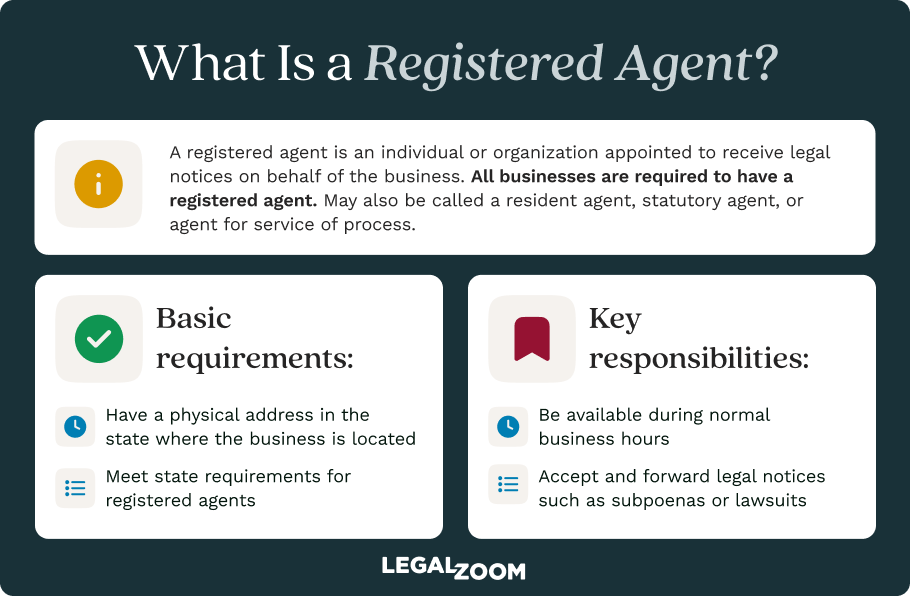
California won't accept your formation paperwork until you've named an agent for service of process. California requires every LLC to have one in place at all times. This agent accepts legal documents, lawsuits, and official state notices on your LLC's behalf.
Your registered agent can either be an individual or a professional service.
- An individual: Must be a California resident, at least 18 years old, with a physical street address in California (no P.O. boxes) who's available during normal business hours.
- A professional service: Must be a registered corporate agent authorized by the Secretary of State and listed in the state's register of corporate agents.
How do you choose a California agent for service of process?
Which one you choose is based on what your priorities are. You can act as your own agent, but your home or office address becomes public record. Many founders hire a registered agent service instead, which keeps your personal address off public documents and guarantees someone's available during business hours.
Step 3: File California articles of organization (Form LLC-1)
Once you’re ready, you can file your articles of organization with the SOS by filing Form LLC-1 with the Secretary of State is the moment your LLC officially exists. It's also where most avoidable rejections happen, usually from incomplete forms or agent information that doesn't match earlier filings.
You’ll need to enter the following information when filling out Form LLC-1.
- LLC name: Needs a designator and has to be distinguishable from names already on file.
- Business address: A California street address for the LLC's principal office (no P.O. boxes).
- Agent for service of process: Name and California street address for an individual, or the name of your registered corporate agent.
- Management structure: You can go member-managed, where owners run daily operations themselves, or manager-managed, where members appoint one or more managers.
- Organizer signature: Whoever organizes the LLC signs it; they don't have to be a member.
Check every field against your name search results and agent details before you submit. A mismatch is one of the most common reasons filings get rejected.
The fee to file is $70, and the quickest way to file is online, through bizfileOnline. If you’d prefer to file in person or by mail, provide a paper version of Form LLC-1 and a check made out to “Secretary of State” to one of the following addresses.
By mail:
California Secretary of State
Business Entities
P.O. Box 944228
Sacramento, CA 94244-2280
In person:
1500 11th Street
Sacramento, CA 95814
Processing times depend on workload and how you file. Online filings through bizfileOnline typically clear in one to two business days. Mail submissions can take several weeks. In-person drop-offs tend to move faster than mail, but they still depend on the backlog. Expedited processing is available for an extra fee.
Step 4: Create a California LLC operating agreement
Your operating agreement spells out ownership percentages, profit splits, and how you'll handle disagreements between members. It’s legally required in California and is considered the primary document governing internal affairs. While you don’t have to file it with the state, without it, you fall back on California's default rules under the Revised Uniform Limited Liability Company Act, which might not match how you actually want to run things. Courts and banks often want to see one, so not having it can complicate opening a bank account or sorting out member disputes.
A California LLC operating agreement should include:
- Ownership percentages
- Profit and loss splits
- Voting rights
- A statement on what happens if a member leaves
- Any requirements or parameters for dissolution of the LLC
It should match the management structure and agent information on your articles of organization. California LLCs should also spell out how members will cover the $800 annual franchise tax, how decisions get made about biennial statement of information filings, and what to do if the LLC falls out of good standing.
Step 5: Get an EIN for your California LLC
An employer identification number (EIN) comes from the IRS, not the state. Depending on how your LLC is taxed and whether it has employees, you may need one for federal tax purposes. A bank or state agency may also require an EIN for a particular account or registration. You can register for an EIN through the IRS’ website or let LegalZoom handle the EIN application on your behalf.
Starting a business takes courage. LegalZoom makes sure the legal details don’t stand in your way, from the day you register until the day you retire.

Is an EIN the same as a California employer account number?
No. Your EIN identifies your LLC federally. California's Employment Development Department issues a separate employer payroll tax account number for state income tax withholding, State Disability Insurance, and Unemployment Insurance. If you're hiring in California, register with the EDD through e-Services for Business at edd.ca.gov within 15 days of paying wages exceeding $100 in a calendar quarter, after you've got your EIN.
Step 6: File your California statement of information within 90 days (Form LLC-12)
Every new California LLC must file an initial statement of information within 90 days of registering. This is separate from your articles of organization, and missing the window costs money.
Form LLC-12 reports your LLC's current principal office address, agent for service of process, management structure, and the names and addresses of managers (if manager-managed) or members (if member-managed with fewer than two members). File online through bizfileOnline, by mail, or in person. It costs $20
What happens if you miss the California statement of information deadline?
If you don't file after receiving a delinquency notice from the Secretary of State, the Franchise Tax Board can assess a $250 penalty. Continued noncompliance can put your LLC's good standing at risk and can lead to suspension or forfeiture. That can interfere with the LLC's ability to conduct business and exercise its legal rights.
California LLC startup and ongoing costs
California LLC costs break into three buckets: one-time state filing fees, the recurring $800 annual franchise tax, and optional expenses.
| Filing or Obligation | Form or Agency | Fee |
|---|---|---|
| Articles of Organization | Form LLC-1 / California Secretary of State | $70 (one-time) |
| Initial Statement of Information | Form LLC-12 / California Secretary of State | $20 (one-time) |
| Annual Franchise Tax | Franchise Tax Board | $800 (every year) |
The $70 and $20 filing fees only hit once. The $800 franchise tax goes to the Franchise Tax Board every single year, regardless of income, and it's completely separate from anything you pay the Secretary of State. For a full breakdown of California LLC costs, check our cost guide.
The risks of filing an LLC in California on your own
You can form a California LLC yourself by following the steps above, but DIY filing still carries risks you may not be aware of. If you’re not careful, a mistake can cost you money, delay your launch, or cause serious problems later. Before going the DIY route, keep these risks in mind.
| Common California LLC risks | Potential consequences |
|---|---|
| Choosing the wrong entity | If you choose the wrong structure, you may need to reorganize your business, pay another formation fee, and update contracts and tax accounts. For example, if you plan to raise outside investment, you'll likely need to pause operations and reorganize as a corporation, which comes with a $100 filing fee. |
| Making a mistake in your formation filing | If your filing contains an error or omission, you may have to pay another fee to correct and resubmit it. That can cause extra stress as you must delay opening a business bank account, applying for licenses, or signing contracts as the LLC. |
| Treating the registered agent requirement as a simple address field | If you serve as your own agent, your address becomes public, and you must be available to receive lawsuits and state notices. Missed legal papers can allow a case to move forward without your input and may result in a default judgment. Resolving the problem can mean added legal costs, often in the thousands, and time away from your business. |
| Leaving gaps in your operating agreement | Without clear rules, California's default rules may fill the gaps. A dispute over control, money, or an owner's departure can stall decisions, disrupt distributions, damage member relationships, and lead to costly outside help. |
| Underbudgeting California taxes | California LLCs generally owe an $800 annual tax, even if they haven't earned a profit. Once total California income reaches $250,000, an additional LLC fee starts at $900 and can reach $11,790. Underestimating these obligations can leave you with a surprise bill, penalties, interest, extra tax work, and cash-flow pressure. |
| Missing the Statement of Information cycle | California LLCs generally must file an initial Statement of Information within 90 days and another every two years. Failing to file can result in a $250 penalty. Continued noncompliance can lead to suspension or forfeiture, requiring past-due filings, payments, and reinstatement work before the LLC can return to good standing. |
Start your California LLC with LegalZoom
For California LLCs, LegalZoom prepares and files your articles of organization, can act as your agent for service of process so your personal address stays private, and helps track your initial and biennial statement of information filings, the two deadlines that trip up more new California owners than anything else.
Ready to get started? Check out LegalZoom's LLC formation service.
Find the right state to form an LLC
Find the right state to form an LLC
Every state has different rules, costs, and considerations for LLC formation.


California LLC FAQs
What are California's biennial statement of information filing requirements?
Refile Form LLC-12 every two years, during the calendar month your original articles of organization were filed plus the five months before it. An LLC formed in June runs its biennial window January through June, every other year. Still $20 each time.
What business licenses and permits does my California LLC need?
You may need to register with other agencies depending on what you sell and whether you have employees. Selling taxable goods or certain services requires a seller's permit from the California Department of Tax and Fee Administration (apply free at cdtfa.ca.gov). Employers must register with the EDD at edd.ca.gov within 15 days of paying wages over $100 in a calendar quarter. Local business licenses vary by city and county. With our service, you get a personalized report showing exactly which licenses and permits your business needs.
How do I register a business online with the California Secretary of State?
bizfileOnline at bizfileonline.sos.ca.gov handles more than initial paperwork. Create an account, and you can file your biennial statement of information, update your agent for service of process, and manage other filings without touching a paper form. You can also use a business formation service, like LegalZoom if you want a little extra help with the paperwork.
Is an LLC worth it in California?
For most small business owners, yes. But it depends on how much liability protection matters to you against the $800 annual franchise tax you'll owe every year, regardless of earnings. An LLC separates your personal assets from business debts and lawsuits. A customer sues, or the business can't pay a debt, and your personal property generally stays protected.
'%20/%3e%3c/svg%3e)

'%3e%3cpath%20fill-rule='evenodd'%20clip-rule='evenodd'%20d='M9.31239%2025.5316H13.0679V14.1032H9.31239V25.5316ZM11.1913%208.46875C9.93945%208.46875%209%209.25086%209%2010.505C9%2011.5995%209.78211%2012.5389%2011.1913%2012.5389C12.6005%2012.5389%2013.3826%2011.5995%2013.3826%2010.505C13.3826%209.4082%2012.6005%208.46875%2011.1913%208.46875ZM27%2018.9577V25.5316H23.2445V19.4275C23.2445%2017.8609%2022.6174%2016.7664%2021.3679%2016.7664C20.2711%2016.7664%2019.644%2017.5463%2019.3316%2018.1756C19.1743%2018.488%2019.1743%2018.8004%2019.1743%2019.1128V25.5316H15.4165V13.9458H19.1743V15.5123C19.644%2014.7302%2020.5835%2013.6357%2022.6174%2013.6357C25.1234%2013.7908%2027%2015.3573%2027%2018.9577Z'%20fill='white'/%3e%3c/g%3e%3cdefs%3e%3cclipPath%20id='clip0_952_9489'%3e%3crect%20width='18'%20height='18'%20fill='white'%20transform='translate(9%208)'/%3e%3c/clipPath%3e%3c/defs%3e%3c/svg%3e)