




Starting a nonprofit in Nebraska isn’t a one-step process. First, you must incorporate your nonprofit by filing articles of incorporation with the Nebraska Secretary of State. Then, you can apply to the IRS for 501(c)(3) tax-exempt status, which allows you to accept tax-deductible donations and qualify for most charitable grants.
This guide covers how to start a nonprofit in Nebraska, including an overview of required steps such as choosing your nonprofit's name through ongoing annual compliance obligations.
Overview of how to start a nonprofit in Nebraska
- Nebraska nonprofit corporations must file articles of incorporation with the Nebraska Secretary of State and appoint a registered agent with a Nebraska street address.
- Your articles must include IRS-compliant charitable purpose and dissolution clauses before the IRS will approve your 501(c)(3) application.
- Nebraska does not require a separate state tax exemption filing. Your federal 501(c)(3) determination letter handles this automatically.
- Nebraska nonprofit corporations must file a biennial report with the Secretary of State every two years to stay in good standing.
- Total startup costs typically include a $25–$30 Nebraska state filing fee, a required newspaper publication notice, and the IRS Form 1023 ($600) or Form 1023-EZ ($275) fee.
Nonprofit corporation vs. 501(c)(3): What is the difference?
A nonprofit corporation is a legal entity created under state law. 501(c)(3) status is a federal tax designation granted by the IRS. If you want both, you will get them separately, in sequence.
| Nonprofit corporation | 501(c)(3) tax-exempt status | |
|---|---|---|
| What it is | A legal entity created under state law | A federal tax designation granted by the IRS |
| Who grants it | Nebraska Secretary of State | IRS |
| What it allows | Legal existence, contracts, bank accounts | Tax-deductible donations, grant eligibility, federal income tax exemption |
Note: Without 501(c)(3) status, donors cannot deduct their contributions and most grant funders will not consider your application.
How to start a nonprofit in Nebraska: Step by step
Step 1: Choose a name for your Nebraska nonprofit
Your organization's name must be distinguishable from every other entity on record with the Nebraska Secretary of State. Check availability through the Secretary of State's business entity search portal or with LegalZoom’s free search tool before you file anything.
Free Nebraska Business Name Check
Starting a business? Use our free name check tool to check your business name against existing records in Nebraska.
By clicking "Check Availability," I agree to LegalZoom's Terms of Use. This search is a preliminary check of state databases and does not include variations or trademarks. Results do not guarantee name availability or compliance with legal requirements.
You can reserve a name for 120 days by submitting a written application with a $30 fee. The reservation is not renewable. For a deeper dive, check out our comprehensive guide to Nebraska business names.
Step 2: Appoint a Nebraska registered agent
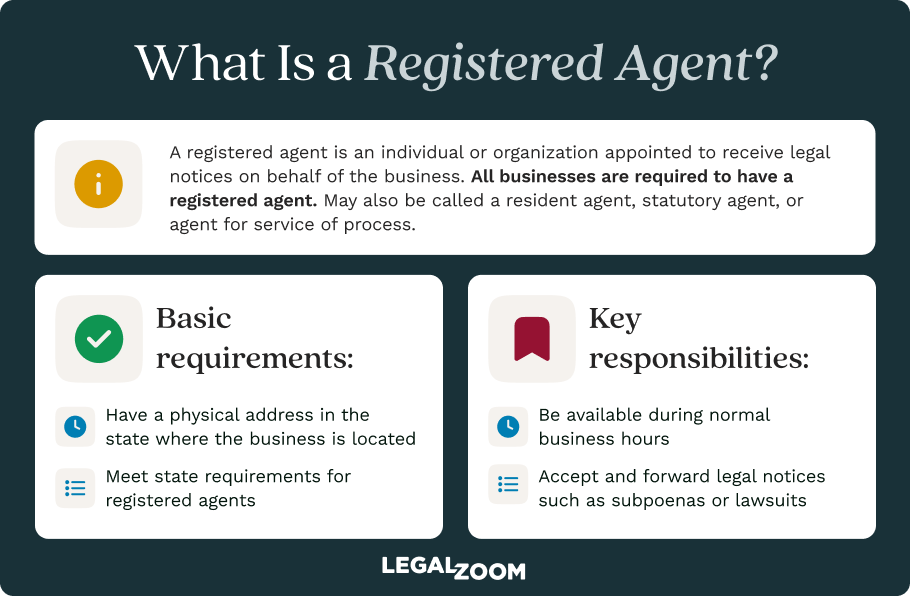
Nebraska law requires every nonprofit corporation to maintain a registered agent with a physical street address in Nebraska. The agent must be available during normal business hours to receive service of process.
Your registered agent can be an individual Nebraska resident or a business entity authorized to operate in Nebraska. You must name your registered agent in your articles of incorporation, so make this decision before you file.
Step 3: Select your incorporators, initial directors, and officers
An incorporator is the person who signs and files the articles of incorporation. Nebraska requires at least one, but that person does not have to serve as a director or officer after formation.
Your board of directors is the governing body legally responsible for overseeing the organization's mission, finances, and compliance. At least three directors are required by both Nebraska and the IRS. Directors do not need to be Nebraska residents, and the state sets no upper limit on board size.
Officers typically include a president, secretary, and treasurer. Identify who will serve in these roles before you draft your articles, since amending them later requires an additional filing.
Step 4: Draft and file your nonprofit articles of incorporation
Articles of incorporation are the founding legal document that formally creates your nonprofit. Unlike other states, there is no standardized form. You must draft the document yourself and either mail or upload it via the Secretary of State’s e-filing service. Nebraska articles must include:
- The corporation's name
- A statement that the nonprofit is a public benefit corporation (Nonprofits may also form as a mutual benefit or religious corporation, but those processes are different and may or may not be 501(c)(3) eligible)
- Registered agent name and registered office address
- The name and street address of each incorporator
- A statement on whether or not the corporation will have members
- (Optional) Names and addresses of initial directors
- Signatures of all named persons in the articles
Additionally, to be approved for 501(c)(3) status, your articles must include the following IRS-mandated clauses:
- Charitable purpose clause. This clause should limit your organization's activities to purposes recognized under Section 501(c)(3) of the Internal Revenue Code.
- Dissolution clause. This clause directs remaining assets to another tax-exempt organization if your nonprofit dissolves. It is required to be approved for tax-exempt status.
The filing fee is $25 online or $30 by mail. Online filings process in approximately 1–2 business days while mail filings typically process within 5–7 business days. If you prefer to mail in your articles, send them, with a check for $30, to:
Nebraska Secretary of State
P.O. Box 94608
Lincoln, NE 68509-4608
Step 5: Publish your notice of incorporation
After filing, Nebraska nonprofits must publish a notice of incorporation in a local legal newspaper for three consecutive weeks in the county where the principal office is located. Publication fees typically range from $40 to $250, depending on the publication. You will then need to submit proof of publication to the Secretary of State.
Step 6: Create nonprofit bylaws and hold your organizational meeting
Bylaws govern how the board meets, how decisions are made, and how officers are appointed. You do not file bylaws with any state agency, but the IRS requires them as part of your Form 1023 application.
At minimum, your Nebraska nonprofit bylaws should address the following:
- Board composition. Include the number of directors, qualifications, terms, and how vacancies are filled.
- Officer roles and responsibilities. Nebraska doesn’t specify requirements, but it’s recommended to, at minimum, have a president, secretary, and treasurer. Include their duties and appointment procedures.
- Meeting procedures. Explain how and when regular and special board meetings are called.
- Quorum requirements. State the minimum number of directors needed to take binding action.
- Amendment process. Explain the process for how the nonprofit’s bylaws can be changed.
- Conflict of interest policy. Do not skip this, as it’s an IRS requirement.
Once your bylaws are drafted, hold your first organizational meeting. During this meeting, the board should formally adopt the bylaws, install officers, and pass initial resolutions affirming the organization's purpose and intent to pursue incorporation and federal tax exemption. You can also approve the employer identification number (EIN) application and opening of a bank account. Make sure to keep signed minutes of this meeting, since the IRS may request a copy.
Step 7: Get an EIN
An EIN is your nonprofit's federal tax identification number. You need it before you can open a bank account, hire employees, or file Form 1023. You can apply for an EIN on the IRS website or use an EIN filing service if you want this task taken off your plate.
Make sure to enter your organization's legal name exactly as it appears in your articles of incorporation, since any discrepancy can create problems later.
Step 8: Apply for 501(c)(3) status
You’ll need to file one of two online-only forms to apply for tax-exempt status. The form you file depends on your nonprofit’s size and function. You can go through the eligibility worksheet to see if you qualify for the 1023-EZ form.
| Form 1023 | Form 1023-EZ | |
|---|---|---|
| Who it's for | Most charitable organizations | Smaller organizations only |
| Gross receipts | No limit | Projected under $50,000/year |
| Total assets | No limit | Under $250,000 |
| Fee | $600 | $275 |
| Typical processing time | 3–6 months or more | 2–4 weeks |
Form 1023-EZ is faster and cheaper, but if your nonprofit expects to grow quickly, consider filing Form 1023 even if you currently meet the EZ thresholds. The full application gives the IRS more information upfront and can prevent follow-up questions that delay your determination.
When the IRS approves your application, it sends a determination letter confirming your 501(c)(3) status. Keep this letter permanently since you will need it for grant applications, tax-deductible donations, and state exemptions.
Step 9: Request Nebraska state tax exemptions
Once the IRS issues your determination letter, Nebraska's state income tax exemption applies automatically. No separate filing with the Nebraska Department of Revenue is required.
Sales and use tax works differently. Submit a Nebraska Exemption Application for Sales and Use Tax (Form 4) to the Nebraska Department of Revenue. Simply being a nonprofit does not automatically qualify your organization. Nebraska's sales tax exemption applies only to specific organization types defined by state regulation, so review eligibility criteria carefully before filing. The application is free.
Approved organizations receive a certificate of exemption with an exemption number (05-XXXXXXX) to present to vendors when making qualifying tax-exempt purchases.
Ongoing compliance for Nebraska nonprofits
Once your articles of incorporation are filed and your 501(c)(3) determination letter is in hand, two recurring compliance obligations need to be followed: a state biennial report filed with the Nebraska Secretary of State and an annual information return filed with the IRS. Missing either long enough puts your good standing or tax-exempt status at risk.
Nebraska biennial report
Nebraska requires nonprofit corporations to submit a biennial report every two years. Your first report must be delivered between January 1 and April 1 of the odd-numbered year following the calendar year of incorporation. Subsequent reports follow the same window every two years.
Your biennial report filing needs to include your corporation's name, the street address of your registered office, the name of your current registered agent, and your corporation type. It costs $25 to file online or $30 by mail, but always check current fees directly with the Secretary of State.
Missing the deadline and failing to file within the delinquency period can result in administrative dissolution, which is formal cancellation of your nonprofit's legal existence. Reinstatement requires filing all overdue reports, paying outstanding fees, and potentially reapplying for state exemptions.
IRS Form 990
Every 501(c)(3) organization must file an annual information return with the IRS. The version you file depends on annual revenue and total assets.
| Form | Gross receipts threshold | Total assets threshold |
|---|---|---|
| Form 990-N (e-Postcard) |
Normally $50,000 or less | No separate limit |
| Form 990-EZ | Under $200,000 | Under $500,000 |
| Form 990 (full form) | $200,000 or more | $500,000 or more |
No matter which version you use, the annual filing is due the 15th day of the 5th month after the close of your tax year, which is May 15 for calendar-year organizations. A six-month extension is available if requested before the original due date.
Note: An organization that fails to file for three consecutive tax years automatically loses its tax-exempt status. Reinstatement requires a new exemption application, the full fee, and waiting for IRS processing.
Form 990 is also a public document. Donors, funders, and watchdog organizations can review your filing online, so it functions as a transparency tool as well as a legal requirement. To understand what maintaining tax-exempt status requires on an ongoing basis, review the IRS rules carefully after receiving your determination letter.
How much does it cost to start a nonprofit in Nebraska?
| Item | Fee |
|---|---|
| Articles of incorporation (online) | $25 |
| Articles of incorporation (by mail) | $30 |
| Newspaper publication notice | Varies |
| IRS Form 1023 | $600 |
| IRS Form 1023-EZ | $275 |
Check with all direct sources before filing, as state and IRS fees are subject to change. Budget additional amounts for legal review, accounting setup, and professional formation assistance, if needed.
Start your Nebraska nonprofit with LegalZoom
LegalZoom has helped over 100,000 nonprofits launch their mission. Our nonprofit formation services can help you prepare and file articles of incorporation. When you’re ready to apply for tax-exempt status, we can help you work through the 501(c)(3) application process and file your Form 1023-EZ. For everything in between, our attorney plans and network of Nebraska attorneys are ready to answer your legal questions.
Nebraska nonprofit FAQs
Do Nebraska nonprofits need to register for charitable solicitations?
Nebraska does not require state-level charitable solicitation registration before fundraising. You can solicit donations as soon as your nonprofit is legally formed.
Some Nebraska counties and municipalities may require charities that solicit in person to register locally. If you plan in-person fundraising in a specific community, check local ordinances.
Can I start a Nebraska nonprofit by myself?
It depends on what your purpose is. One person can file the articles of incorporation, but for the IRS to approve 501(c)(3) tax-exempt status, the ongoing board must have at least three unrelated directors, so you will need to have at least two additional board members before or at your organizational meeting.
Is it better to have an LLC or a nonprofit in Nebraska?
A nonprofit corporation is the right structure if your goal is charitable fundraising. Only a nonprofit corporation can apply for 501(c)(3) status, receive tax-deductible donations, and qualify for most charitable grants. For a detailed structural comparison, see our article on the differences between a nonprofit corporation and an LLC.
Can Nebraska nonprofit directors be paid?
Nebraska law does not prohibit compensating directors, but IRS rules require compensation to be reasonable, which generally means compensation reflecting fair market value for actual services rendered. Document all compensation decisions in board minutes and support figures with independent salary data. The IRS can impose significant excise taxes on excessive payments to insiders under the private inurement prohibition.
Does a Nebraska nonprofit need to register with the Attorney General?
Nebraska does not require nonprofits to register with the Attorney General before soliciting donations. Organizations that hold charitable assets as a trust may have separate reporting obligations. Confirm current requirements directly with the Nebraska Attorney General's office.
If you plan to solicit donations outside of Nebraska, you may be subject to the rules of other states. Consult an attorney for advice on your situation and what your legal obligations may be.
What happens to a Nebraska nonprofit's assets if it dissolves?
Assets must be distributed to another 501(c)(3) organization or a government entity for a public purpose, meaning they cannot go to founders, directors, or members. This requirement must be stated explicitly in your articles of incorporation as the dissolution clause. The IRS will not approve a 501(c)(3) application without it, and Nebraska's nonprofit corporation statute independently requires a dissolution provision.
How does a Nebraska nonprofit apply for sales tax exemption?
Submit the Nebraska Exemption Application for Sales and Use Tax (Form 4) to the Nebraska Department of Revenue. The application is free, but being a nonprofit does not automatically qualify your organization for the sales tax exemption. Nebraska's exemption applies only to specific organization types defined by state regulation. Approved organizations receive an exemption certificate with a number to present to vendors.
'%20/%3e%3c/svg%3e)

'%3e%3cpath%20fill-rule='evenodd'%20clip-rule='evenodd'%20d='M9.31239%2025.5316H13.0679V14.1032H9.31239V25.5316ZM11.1913%208.46875C9.93945%208.46875%209%209.25086%209%2010.505C9%2011.5995%209.78211%2012.5389%2011.1913%2012.5389C12.6005%2012.5389%2013.3826%2011.5995%2013.3826%2010.505C13.3826%209.4082%2012.6005%208.46875%2011.1913%208.46875ZM27%2018.9577V25.5316H23.2445V19.4275C23.2445%2017.8609%2022.6174%2016.7664%2021.3679%2016.7664C20.2711%2016.7664%2019.644%2017.5463%2019.3316%2018.1756C19.1743%2018.488%2019.1743%2018.8004%2019.1743%2019.1128V25.5316H15.4165V13.9458H19.1743V15.5123C19.644%2014.7302%2020.5835%2013.6357%2022.6174%2013.6357C25.1234%2013.7908%2027%2015.3573%2027%2018.9577Z'%20fill='white'/%3e%3c/g%3e%3cdefs%3e%3cclipPath%20id='clip0_952_9489'%3e%3crect%20width='18'%20height='18'%20fill='white'%20transform='translate(9%208)'/%3e%3c/clipPath%3e%3c/defs%3e%3c/svg%3e)

