




Looking to launch a mission-driven nonprofit in North Carolina? Before you can start serving your community, you’ll need to learn the ins and outs of setting up your organization. Starting a nonprofit in North Carolina means completing two separate legal processes: incorporating under state law and obtaining federal tax-exempt status from the Internal Revenue Service (IRS). Most founders don't realize these are distinct steps with different agencies, forms, and fees.
This guide walks through all required steps for how to start a nonprofit in North Carolina, from how to file articles of incorporation for a nonprofit in North Carolina and obtain federal 501(c)(3) status to registering to solicit donations with the North Carolina Department of Revenue. Understanding the exact sequence, the specific forms and fees at each stage, and the drafting mistakes that most commonly trigger IRS rejections will help you build a legally sound organization from the start.
How to start a nonprofit in North Carolina at a glance
- Forming a nonprofit corporation in North Carolina and obtaining federal 501(c)(3) tax-exempt status are two separate legal steps with different agencies. You must complete both to unlock grant eligibility and donor tax deductions.
- Nonprofits file North Carolina nonprofit formation documents with the Secretary of State. The nonprofit filing fee in North Carolina is $60.
- Before soliciting donations, most nonprofits must register with the North Carolina Secretary of State’s Charitable Solicitation Licensing division—a separate requirement from incorporation.
- Applying for 501(c)(3) status requires filing IRS Form 1023 or the streamlined Form 1023-EZ, with fees of $600 or $275, respectively.
- North Carolina nonprofits may need to separately apply to the North Carolina Department of Revenue for state income tax and sales tax exemption.
- The entire process can take anywhere from a few months to six or more months, depending on IRS processing times and application completeness.
What's the difference between a nonprofit and a 501(c)(3)?
A nonprofit corporation is a legal entity formed under state law that operates for a purpose other than generating profit for owners or shareholders. 501(c)(3) is a federal tax designation granted by the IRS that exempts an organization from federal income tax and makes donations tax-deductible for contributors. The 501(c)(3) designation is granted to organizations that serve a charitable, religious, educational, literary, or scientific purpose, among others.
In short, all 501(c)(3) organizations are nonprofits, but not all nonprofits hold 501(c)(3) status. There are several different IRS tax designations (for example, 501(c)(3) vs. 501(c)(4) designations) that nonprofits may obtain, depending on their purpose.
Incorporating as a nonprofit in North Carolina gives your organization a legal structure: It can legally operate in the state, open bank accounts, sign contracts, and hire staff. It does not automatically exempt you from federal income tax or allow donors to deduct their contributions. That requires a separate IRS application.
How to start a nonprofit in North Carolina in 8 steps
Step 1: Choose a name for your North Carolina nonprofit
Your nonprofit's name must be distinguishable from every other entity already registered with the North Carolina Secretary of State. Before you settle on a name, conduct a North Carolina business name lookup to confirm it is available. Filing articles of incorporation with a name that’s already reserved or registered in the state will result in rejection.
To learn more, read our comprehensive guide to North Carolina business names.
Free North Carolina Business Name Check
Starting a business? Use our free name check tool to check your business name against North Carolina’s official state records.
By clicking "Check Availability," I agree to LegalZoom's Terms of Use. This search is a preliminary check of state databases and does not include variations or trademarks. Results do not guarantee name availability or compliance with legal requirements.
Step 2: Appoint an incorporator, initial directors, and a registered agent
At least two roles must be filled before you file articles of incorporation.
- Incorporator: This is the person who signs the articles of incorporation. You need at least one incorporator, and they do not need to be a director or officer.
- Initial directors (optional). North Carolina nonprofit law requires at least one director. Directors set policy, oversee finances, and bear legal responsibility for the organization's operations. You can name initial directors in your articles, but North Carolina does not require it on this document—they can be appointed at the organizational meeting instead.
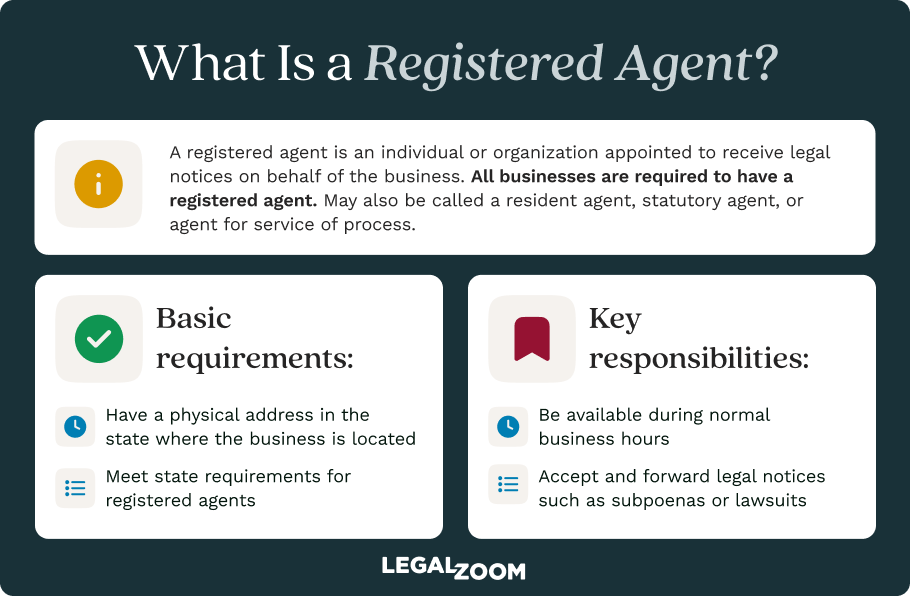
- Registered agent: All formal business entities in North Carolina must designate a registered agent who receives legal notices on behalf of the organization. A registered agent in North Carolina can be any individual who resides in the state (including nonprofit director or officer) or a professional registered agent service.
Step 3: File nonprofit articles of incorporation
Next, you’ll fill out and submit your articles of incorporation to the North Carolina Secretary of State. The formation document must include the following information:
- The nonprofit's name
- Whether it’s a charitable or religious organization
- The registered agent's name and North Carolina street and mailing address
- The name and address of each incorporator
- Whether the corporation will have members
- A purpose clause stating the corporation is organized exclusively for one or more exempt purposes under IRC Section 501(c)(3)
- A dissolution clause stating that upon dissolution, remaining assets will be distributed to another 501(c)(3) or to a federal, state, or local government for a public purpose
Items 6 and 7 are required by the IRS, not just the state. Missing or poorly worded versions are one of the most common reasons the IRS rejects a 501(c)(3) application. Use the IRS’s suggested language, which is designed to satisfy both requirements.
Here are the submission details for articles of incorporation.
- Form: Form N-01
- Filing agency: North Carolina Secretary of State
- Filing fee: $60
- Filing methods: Online through the North Carolina Secretary of State's website, or by mail
- Processing time: Approximately 15–20 business days (online submissions may take less time); 24-hour expedited processing is available for $100, or same-day service is available for $200 if submitted by noon
Once the Secretary of State approves your articles, your nonprofit can officially start operating in the state.
Step 4: Draft bylaws and hold your organizational meeting
Your articles establish that your nonprofit exists, while your bylaws establish how it operates: who makes decisions, how meetings are called, and what happens when a conflict of interest arises. You do not file nonprofit bylaws in North Carolina, but they are not optional—the IRS requires them as part of the 501(c)(3) application, and many banks may ask for them to open a business bank account.
When determining how to write nonprofit bylaws, make sure that they cover the following.
- Organizational purpose. This should be consistent with your articles of incorporation.
- Board composition. Number of directors, terms of service, and election procedures.
- Officer roles. President, secretary, treasurer, and any other officers, with defined responsibilities.
- Meeting requirements. Frequency, how meetings are called, and quorum requirements (the number of members who must be present and voting power).
- Conflict of interest policy. The IRS specifically looks for this when reviewing 501(c)(3) applications.
- Amendment procedures. How and when the bylaws can be changed.
After drafting bylaws, hold your organizational meeting. Once the initial board is designated, they can then adopt the bylaws, elect officers, and pass initial resolutions. Record all actions in written minutes and keep them, along with your articles and bylaws, in a corporate records binder.
Step 5: Obtain an EIN for your North Carolina nonprofit
Starting a nonprofit in North Carolina through state agencies is just the beginning—you’ll also need to continue the process federally.
An employer identification number (EIN) is your nonprofit's federal tax ID issued by the IRS. You need it before filing Form 1023, hiring employees, and opening a business bank account.
You can apply for an EIN online through the IRS website at no cost, or you can use LegalZoom’s EIN service, where we fill out and submit your application for you, making the entire process effortless.
Step 6: Apply for federal 501(c)(3) tax-exempt status
With your EIN and governing documents finalized, you are ready to apply for federal tax-exempt status. This is the most document-intensive step and the one with the longest potential wait. You will use Form 1023 or Form 1023-EZ to apply for 501(c)(3) tax-exempt status, and both are filed electronically through Pay.gov.
- Which form do you file? Form 1023-EZ is available to organizations projecting annual gross receipts under $50,000 for each of the next three years, with total assets under $250,000, and meeting other eligibility requirements. If your organization does not meet all those thresholds, you must file the full Form 1023. Complete the IRS eligibility worksheet in the Form 1023-EZ instructions document before deciding which form to submit. Filing the wrong form results in denial, and you won’t be able to recoup the filing fee.
- What are the filing fees? Form 1023-EZ costs $275; Form 1023 (full application) costs $600
- What does the IRS review? The IRS examines your organizational purpose, planned activities, governance documents, conflict of interest policy, and financial projections. For the full Form 1023, you submit those documents directly. For Form 1023-EZ, you attest under penalty of perjury that your organizing documents contain the required provisions—no document attachments but the same legal weight.
- What is the processing time? Form 1023-EZ is typically processed within 22 days. The full Form 1023 can take up to six months to process. Both timelines depend on IRS volume and application completeness. You can check current IRS processing times for both forms.
When your tax-exempt application is approved, the IRS issues a determination letter confirming your 501(c)(3) status. Keep this letter in your organization’s records permanently—you will need it for state tax exemption, grant applications, and many business bank accounts.
Step 7: Apply for North Carolina nonprofit tax exemption
In North Carolina, an IRS tax-exemption determination letter automatically qualifies your organization as exempt from state corporate income and franchise taxes. Applying for a letter of exemption from the North Carolina Department of Revenue (DOR) confirms your exemption, and can be beneficial for record-keeping purposes, as it serves as further proof that your nonprofit is tax exempt.
The following are some tax exemptions or refunds that North Carolina nonprofits may claim:
- State corporate income and franchise tax. Submit a written request to the North Carolina DOR with a copy of your articles of incorporation, bylaws, and IRS determination letter to North Carolina Department of Revenue, Corporate Tax Division, Nonprofit Corporate Tax, Post Office Box 871, Raleigh, NC 27602-0871. The DOR issues its own exemption letter for state corporate income tax and franchise tax.
- Sales and use tax. Nonprofits are still required to pay sales and use tax, but they may be able to claim a refund for some sales and use taxes. Complete Form E-585 to determine eligibility—not every nonprofit qualifies automatically. Refer to the Department of Revenue guide on how to submit a claim for a refund semiannually.
Step 8: Register for charitable solicitation in North Carolina
Finally, to receive charitable contributions, your organization must apply for nonprofit charitable solicitation registration in North Carolina. This occurs through the Secretary of State, Charitable Solicitation Licensing section.
- Who must register: Generally, any nonprofit receiving $50,000 or more per year in private grants and contributions must register for a license. Organizations raising less than $50,000 annually and that do not compensate anyone for fundraising may qualify for an exemption.
- What registration requires: A completed registration form plus copies of your articles of incorporation, bylaws, IRS determination letter (if received), and financial statements. If your determination letter has not yet arrived, you can begin registration and provide the letter once issued.
- Where to register: License applications can be filed online or by mail, but all applications require a notarized signature page, which must be mailed. Mail your notarized page and payment to North Carolina Department of the Secretary of State, ATTN: CSL, PO Box 29622, Raleigh, NC 27626-0622.
- Fees and renewal: Fees range from $0 to $200 on a sliding scale based on gross contributions. Registration must be renewed annually.
- Processing time: The Charitable Solicitation Licensing section will approve, deny, or ask for more information within 10 days of receiving your application.
Note: Soliciting donations without registering for a state license violates the North Carolina Solicitation of Charitable Funds Act.
North Carolina nonprofit board requirements
North Carolina law requires a minimum of one director. But in practice, one is rarely sufficient. The following are some best practices when designating your nonprofit board of directors in North Carolina:
- Name at least three directors. The IRS generally prefers at least three directors who are unrelated by blood, marriage, or outside business relationships for 501(c)(3) applicants. Additionally, many grant-making organizations impose similar minimums. A single-director board can satisfy state law while limiting your funding options.
- Appoint an odd number of directors to help prevent voting ties.
- Consider director compensation. Although North Carolina law allows director compensation, most nonprofits limit board member payments to reimbursement of necessary expenses such as travel and lodging.
Each director carries three core legal duties per NC guidance: duty of care (acting with reasonable diligence), duty of loyalty (putting the organization's interests ahead of personal interests), and duty of obedience (staying true to the nonprofit's stated mission).
How much does it cost to start a nonprofit in North Carolina?
| Step | Agency | Fee |
|---|---|---|
| Articles of incorporation (Form N-01) | North Carolina Secretary of State | $60 |
| Form 1023-EZ (if eligible) | IRS | $275 |
| Form 1023 (full application) | IRS | $600 |
| Charitable solicitation license | North Carolina Secretary of State, Charitable Solicitation Licensing section | $0–$200 (sliding scale) |
Organizations filing Form 1023-EZ should budget a minimum of $335. Those filing the full Form 1023 should budget at least $660. Verify the articles of incorporation fee directly with the Secretary of State before filing, as government fees change periodically.
How long does it take to start a nonprofit in North Carolina?
Your estimated formal launch date depends on agency processing times, which may vary. The biggest variable is typically the IRS, not the state.
- State incorporation: 15–20 business days (standard); same-day and 24-hour processing options are available for an additional fee
- EIN: May be issued immediately when applying online
- Form 1023-EZ: 22 days
- Full Form 1023: Up to 6 months
- State tax exemption and charitable solicitation registration: A few additional weeks after your IRS determination letter arrives
If you qualify for Form 1023-EZ, you can realistically complete the entire process in two to three months. Organizations filing the full Form 1023 should plan for 6 to 12 months. The more complete and accurate your application, the less likely the IRS will send follow-up questions that extend your wait.
Checklist for nonprofit compliance in North Carolina
Officially launching your nonprofit in North Carolina is an exciting step, but it’s not the end of your organization’s compliance responsibilities. You will need to manage recurring obligations to maintain your tax-exempt status and stay in good standing with the state.
Unlike most states, North Carolina does not require most nonprofits to file an annual report with the Secretary of State. The following state and federal obligations still apply, however, and carry real consequences if missed:
- IRS annual information return (Form 990 series). Nonprofits with gross receipts of $50,000 or less file Form 990-N, those with gross receipts under $200,000 and total assets under $500,000 file Form 990-EZ, and all others file the full Form 990. All versions are due by the 15th day of the fifth month after the close of your taxable year. Organizations that fail to file by the due date incur a fee of $20 per day until the form is submitted. Failure to file for three consecutive years means an automatic loss of tax-exempt status.
- State charitable solicitation license renewal. Renew annually with the North Carolina Secretary of State, Charitable Solicitation Licensing section. Check your license to see when renewal is due.
- State tax filing for unrelated business income. If your nonprofit earns income from activities unrelated to its exempt purpose, file Form CD-405 with the North Carolina DOR and pay state corporate income tax on those earnings.
- Registered agent maintenance. Keep your registered agent information current with the North Carolina Secretary of State. A lapsed agent or address means legal notices may not reach your organization.
How LegalZoom can help
LegalZoom has helped more than 4 million businesses get started, including over 100,000 nonprofits. Our proven nonprofit formation process guides you as you complete your articles of incorporation to help ensure that nothing is missed. And when it’s time to apply for 501(c)(3) tax-exempt status, we can help you fill out your 1023-EZ.
After formation, our suite of compliance services can help keep your business running smoothly so you can focus on your mission.
100% Accurate Filing Guarantee
100% Accurate Filing Guarantee
We're committed to the highest quality and accuracy. If your filing is rejected or incorrect
due to our error, we'll correct it with the government agency at no additional cost to you.
We're committed to the highest quality and accuracy. If your filing is rejected or incorrect due to our error, we'll correct it with the government agency at no additional cost to you.
FAQs about North Carolina nonprofits
Can I pay myself if I run a nonprofit?
Yes. Nonprofit founders and executives can receive reasonable compensation for work performed. The board must approve any compensation arrangement, and the amount must be reasonable relative to the services performed and what comparable organizations pay for similar roles. Excessive compensation can trigger IRS penalties and jeopardize 501(c)(3) status.
What is the 33% rule for nonprofits?
The 33% rule is a public support test the IRS uses to distinguish public charities from private foundations. To qualify as a public charity, a 501(c)(3) must generally receive at least one-third of its total financial support from a broad base of sources—including government grants and public contributions—over a five-year testing period. Organizations that fall short may be reclassified as private foundations, which face stricter regulations and excise taxes.
Does a North Carolina nonprofit need to register in other states if it fundraises online?
Possibly. Most states that require charitable solicitation registration apply those rules to online fundraising targeting their residents. Specific triggers vary—some states base requirements on donor count, others on total contributions received. A legal or compliance professional can assess which states require registration based on your actual fundraising activities.
Can a North Carolina nonprofit apply for grants before receiving 501(c)(3) status?
Most private foundations and government grant programs require a current IRS determination letter from nonprofits, which can significantly limit funding options while your application is pending. A common bridge is fiscal sponsorship: An established 501(c)(3) accepts and administers grant funds on your behalf until your own status is approved, typically for an administrative fee.
What clauses must North Carolina nonprofit articles of incorporation include to qualify for 501(c)(3) status?
When submitting your North Carolina Secretary of State nonprofit filing, there are two IRS-required clauses that must appear in your articles. The first is a purpose clause stating the corporation is organized exclusively for exempt purposes under Internal Revenue Code, Section 501(c)(3). Vague language like "to benefit the community" is insufficient.
The second is a dissolution clause stating that upon dissolution, all remaining assets will be distributed to another 501(c)(3) or to a government entity for a public purpose. The IRS will deny a 501(c)(3) application if either clause is absent or too broadly worded. The IRS’s suggested language page provides language designed to satisfy both requirements.
What is unrelated business income, and how does it affect a North Carolina nonprofit's tax status?
Unrelated business income (UBI) is revenue from activities not substantially related to your organization's exempt purpose (for example, a nonprofit running a for-profit retail operation). UBI is taxable at both the federal and state levels, even with 501(c)(3) status. Federally, file IRS Form 990-T and pay tax on net UBI. In North Carolina, file Form CD-405 with the North Carolina DOR. Occasional or insubstantial UBI generally does not threaten exempt status, but a pattern of substantial UBI can prompt IRS scrutiny.
'%20/%3e%3c/svg%3e)

'%3e%3cpath%20fill-rule='evenodd'%20clip-rule='evenodd'%20d='M9.31239%2025.5316H13.0679V14.1032H9.31239V25.5316ZM11.1913%208.46875C9.93945%208.46875%209%209.25086%209%2010.505C9%2011.5995%209.78211%2012.5389%2011.1913%2012.5389C12.6005%2012.5389%2013.3826%2011.5995%2013.3826%2010.505C13.3826%209.4082%2012.6005%208.46875%2011.1913%208.46875ZM27%2018.9577V25.5316H23.2445V19.4275C23.2445%2017.8609%2022.6174%2016.7664%2021.3679%2016.7664C20.2711%2016.7664%2019.644%2017.5463%2019.3316%2018.1756C19.1743%2018.488%2019.1743%2018.8004%2019.1743%2019.1128V25.5316H15.4165V13.9458H19.1743V15.5123C19.644%2014.7302%2020.5835%2013.6357%2022.6174%2013.6357C25.1234%2013.7908%2027%2015.3573%2027%2018.9577Z'%20fill='white'/%3e%3c/g%3e%3cdefs%3e%3cclipPath%20id='clip0_952_9489'%3e%3crect%20width='18'%20height='18'%20fill='white'%20transform='translate(9%208)'/%3e%3c/clipPath%3e%3c/defs%3e%3c/svg%3e)

