




Starting a nonprofit in Wisconsin means working through three distinct processes: incorporating with the state, applying for federal 501(c)(3) tax-exempt status through the IRS, and filing for state tax exemption. These steps formally establish your nonprofit as a tax-exempt entity, but you’ll also need to meet Wisconsin's ongoing compliance requirements.
This guide walks through every required stage, from choosing a name to registering for charitable solicitation before you begin fundraising. You'll find current filing fees, realistic timelines, and a post-formation compliance checklist to help you at every step.
How to start a nonprofit in Wisconsin at a glance
- Wisconsin nonprofits are incorporated by filing articles of incorporation (Form 102) with the Wisconsin Department of Financial Institutions (DFI) for a $35 filing fee.
- To qualify for 501(c)(3) status, your Wisconsin articles of incorporation must include specific IRS-required purpose and dissolution language before you file.
- After receiving federal tax-exempt status, you must separately apply to the Wisconsin Department of Revenue for a Certificate of Exempt Status to be free from Wisconsin sales and use tax.
- Most Wisconsin nonprofits that solicit charitable contributions must also register with the Wisconsin Department of Financial Institutions before fundraising begins.
- Wisconsin nonprofits must file an annual report with the DFI and submit a Form 990 with the IRS each year to keep their status active.
Nonprofit vs. 501(c)(3): What's the difference?
A nonprofit corporation is a legal entity formed under state law, while 501(c)(3) is a federal tax-exempt status granted by the IRS. Incorporating creates your organization as a legal entity: it can sign contracts, open bank accounts, and limit the personal liability of its directors. Receiving 501(c)(3) status means the IRS has recognized your organization as tax-exempt, so it pays no federal income tax and donors can deduct their contributions.
You can legally operate as a nonprofit corporation without applying for 501(c)(3) status. But if your organization plans to apply for grants, accept donations, or seek government funding, operating without federal tax-exempt status puts you at a significant disadvantage.
Even after the IRS approves your 501(c)(3) application, your organization is not automatically exempt from Wisconsin sales and use tax. For that, you must separately apply to the Wisconsin Department of Revenue for a certificate of exempt status.
Each of these three tracks—state incorporation, federal tax exemption, and Wisconsin state tax exemption—involves a different agency, a different form, and a different timeline. The seven steps below walk through all of them in sequence.
How to start a nonprofit in Wisconsin in 7 steps
It’s important to follow the steps below in order, as skipping or missing one could result in mistakes and costly delays.
Step 1: Choose a name for your Wisconsin nonprofit
Confirm your name is available before you draft anything else. Your name must meet state requirements.
- It must contain a corporate designator such as "corporation," "incorporated," "company," "limited," or an abbreviation like "Inc." or "Corp."
- It must be distinguishable from every other entity already registered on the DFI's records.
- It cannot imply a purpose inconsistent with your stated nonprofit purpose or suggest governmental affiliation without appropriate authorization.
Check your name’s availability using the DFI's corporate records database or LegalZoom’s name search tool below. The DFI makes a final determination when it processes your filing, but the database will tell you whether a name is already taken.
Free Wisconsin Business Name Check
Starting a business? Use our free tool to search the Wisconsin Dept. of Financial Institutions' records and see if your desired name is available.
By clicking "Check Availability," I agree to LegalZoom's Terms of Use. This search is a preliminary check of state databases and does not include variations or trademarks. Results do not guarantee name availability or compliance with legal requirements.
To lock in a name while you finish your paperwork, you can file a name reservation application with the DFI for a $10 fee. A reservation holds the name for 120 days.
For an in-depth look, refer to our comprehensive guide to Wisconsin business names.
Step 2: Appoint incorporators, a board of directors, and a registered agent
Before you can fill out your articles of incorporation, you’ll need to assign some key roles for your nonprofit.
- Incorporators sign and submit your articles of incorporation. There may be one or more, and they do not need to be Wisconsin residents.
- Board of directors: Wisconsin law requires a minimum of three directors, and the IRS also expects at least three for organizations seeking tax-exempt status. Directors must be natural persons, but Wisconsin imposes no residency requirement. The paper articles of incorporation Form 102 does not have a blank space for listing directors; follow the additional provisions steps in Article 7 of the form instructions.
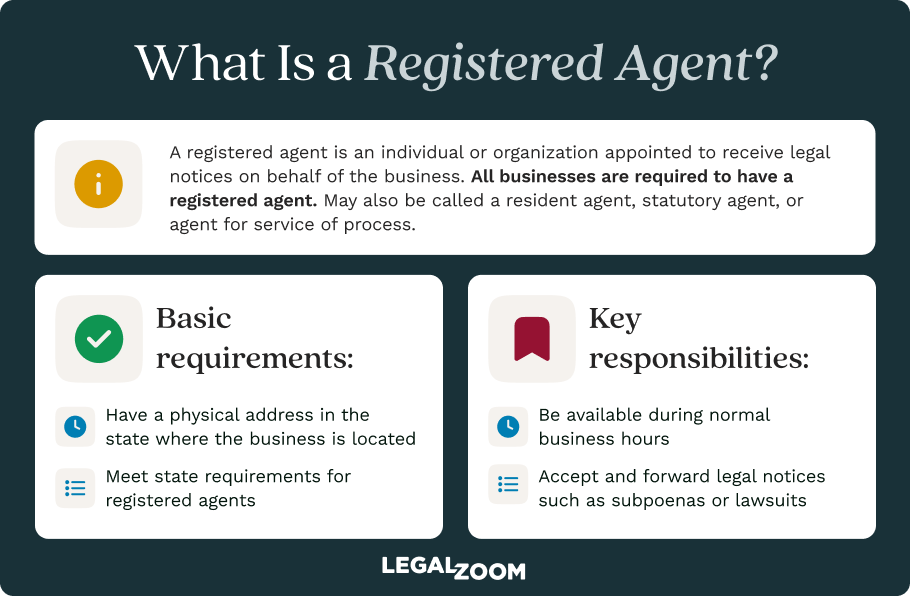
- Registered agent: Your nonprofit must appoint a Wisconsin registered agent to receive legal notices on its behalf. The agent must have a physical Wisconsin street address (P.O. boxes are not accepted) and be available during normal business hours. You can designate a director or officer, or use a professional registered agent service.
Step 3: Draft and file your Wisconsin articles of incorporation
Filing your articles of incorporation legally creates your organization. In Wisconsin, this form is called Form 102. You are not required to use the state form specifically, but any articles you draft must include all information listed on the template. It’s also wise to review the IRS’ suggested language.
Be prepared to provide the following:
- Your nonprofit's name and initial principal office address
- The name and address of your registered agent
- A statement on whether the nonprofit will have members
- The name and address of each incorporator
Additionally, you need to include two clauses that the IRS specifically will look for.
- 501(c)(3) purpose clause: If you intend to apply for federal tax-exempt status, your articles must contain IRS-required language before you file them with the DFI. You cannot add this language after the fact.
- Dissolution clause: The IRS also requires a clause stating that on dissolution, remaining assets will be distributed to another 501(c)(3) organization or to a federal, state, or local government entity for a public purpose.
You can file your articles online through the DFI’s filing system, or by mailing your paperwork to:
State of WI-Dept. of Financial Institutions
Box 93348
Milwaukee, WI
53293-0348
Include a $35 check payable to the Department of Financial Institutions.
Step 4: Draft your nonprofit bylaws and hold your organizational meeting
Bylaws are your organization's internal rulebook. They should cover how the board operates, how officers are elected, how meetings are conducted, and how decisions get made. You don't file bylaws with the state, but the IRS requires a copy as part of the Form 1023 or 1023-EZ application, so they must be in place before you apply for federal tax-exempt status.
What Wisconsin nonprofit bylaws should include:
- Organization name and principal office
- Statement of purpose
- Board of directors: Number of directors, term lengths, election procedures, and removal process
- Officer roles: Titles and responsibilities for president, secretary, and treasurer at minimum
- Meeting procedures: Quorum requirements, notice rules, and voting standards
- Conflict of interest policy: Required by the IRS for 501(c)(3) applicants
- Amendment procedures: How the bylaws can be changed and by what vote
After the bylaws are drafted, hold your organizational meeting where directors formally adopt them, elect officers, and authorize the organization to get an employer identification number, open a bank account, and pursue tax-exempt status. Document this meeting with written minutes and keep them in your permanent records.
Step 5: Get an EIN for your Wisconsin nonprofit
An employer identification number (EIN) is a federal tax identification number issued by the IRS. Your nonprofit needs one to open a bank account, hire employees, and apply for 501(c)(3) status even if it has no employees. Apply as soon as the state approves your articles. You must have your EIN before filing Form 1023 or 1023-EZ.
Apply online with the IRS at no cost. The process takes less than 15 minutes and produces a confirmation letter you can download immediately.
Step 6: Apply for federal 501(c)(3) tax-exempt status
Once your organization is incorporated and has its EIN and bylaws in hand, file one of two applications with the IRS through Pay.gov.
- Form 1023-EZ (streamlined application): Available to organizations with projected annual gross receipts under $50,000 and total assets under $250,000. The cost to file is $275 and processing typically takes 2–4 weeks.
- Form 1023 (full application): Required for larger or more complex organizations, and for churches, schools, hospitals, and supporting organizations regardless of size. The cost to file is $600, and processing can take up to six months, sometimes longer.
Complete the eligibility worksheet in the Form 1023-EZ instructions before choosing which form to file. The wrong form can delay your application significantly.
Once approved, the IRS issues a determination letter confirming your 501(c)(3) status. Keep it on file—grant-makers and donors may ask to see it.
Step 7: Apply for Wisconsin state tax exemption and charitable solicitation registration
Federal 501(c)(3) status does not automatically exempt your organization from Wisconsin sales and use tax. To make tax-exempt purchases, apply for a Certificate of Exempt Status (CES) number via Form S-103, filed with the Wisconsin Department of Revenue. There is no filing fee.
Before soliciting contributions from Wisconsin residents, you may need to register with the Wisconsin DFI. If you solicit or receive $25,000 or more in charitable contributions in a single year, or if you have any paid employees whose primary role is solicitation, you will need to file Form 296 (Charitable Organization Registration Statement) along with a $15 non-refundable application fee. The registration is processed through the Wisconsin DFI.
Wisconsin nonprofit annual compliance requirements
The state of Wisconsin and the IRS both require recurring filings each year to keep your status active. Missing them can cost your organization its good standing or trigger administrative dissolution.
Wisconsin annual report
Due each year during the calendar quarter in which your incorporation anniversary falls. The filing fee is $25 if filing online; a $15 surcharge applies for paper mailings. The report must include your organization's name, principal office address, registered agent name and address, and the names and addresses of current officers and directors. File online with the Wisconsin DFI.
IRS Form 990 (federal annual return)
A version of this form is required annually, even though no federal income tax is owed. It’s due on the 15th day of the 5th month after your fiscal year ends, which is May 15 for a calendar-year organization. The form you file is based on your nonprofit’s gross receipts:
- Form 990-N for gross receipts of $50,000 or less
- Form 990-EZ for $50,000–$200,000 and total assets less than $500,000
- Full Form 990 for gross receipts above $200,000
The IRS will revoke tax-exempt status for organizations that fail to file for three consecutive years.
Charitable solicitation renewal (Form 296)
Renewals are due on or before July 31 each year. The filing fee is $54 and an additional $25 late fee applies for missed deadlines. Failing to renew lapses your registration and requires a full reapplication before you can solicit again.
Wisconsin charitable financial report
Every registered charitable organization must file an annual financial report with the DFI within 12 months after your fiscal year ends. There are several different forms to choose from—see the instructions on the DFI website to determine which is right for your nonprofit.
Board meeting minutes
Wisconsin law requires nonprofit corporations to keep records of board proceedings. Maintain written minutes of every board meeting. Grant-makers and auditors routinely request them.
Cost to start a nonprofit in Wisconsin
Starting a nonprofit in Wisconsin costs a minimum of $310 if you qualify for Form 1023-EZ, or $635 if you must file the full Form 1023.
Here’s a breakdown of common startup costs:
- Articles of incorporation: $35
- Name reservation (optional): $10
- Form 1023-EZ: $275
- Form 1023 (full): $600
- Charitable solicitation registration (if applicable): $15
Beyond required fees, most organizations will incur optional costs: registered agent service ($50–$400 per year), attorney review of bylaws or Form 1023, and accounting setup. Verify current fees directly with each agency before filing.
How long does it take to start a nonprofit in Wisconsin?
From filing your articles through receiving your federal determination letter, expect 3–6 months with Form 1023-EZ, or 6–12 months or longer with the full Form 1023. The state steps move quickly; the IRS is where most of the waiting happens.
The single biggest factor in your timeline is the completeness of your IRS application. Your articles of incorporation must contain the correct purpose and dissolution language before you file them with the DFI. If they don't, your 501(c)(3) application will stall while you correct it.
Tip: You don't have to wait for your determination letter before preparing state-level filings. Keep your Form S-103 and Form 296 ready to submit as soon as federal approval arrives.
How to start your Wisconsin nonprofit with LegalZoom
You can DIY your nonprofit formation, but due to the increased scrutiny placed on tax-exempt organizations, many founders find it beneficial to seek some level of help to get started. LegalZoom has helped more than 100,000 nonprofits get up and running with our trusted, proven process. Just gather all of your information, and we can help compile everything correctly so your application process goes as smoothly as possible.
- Articles of incorporation filing: LegalZoom prepares and files your Form 102 with the Wisconsin DFI, including the IRS-required purpose and dissolution language.
- 501(c)(3) application: We will fill out and file your Form 1023-EZ with the IRS, making sure that you include all the required information.
- Attorney consultations: LegalZoom's attorney plans connect you with independent Wisconsin-licensed attorneys who can review your bylaws or guide you through the Form 1023 application.
100% Accurate Filing Guarantee
100% Accurate Filing Guarantee
We're committed to the highest quality and accuracy. If your filing is rejected or incorrect
due to our error, we'll correct it with the government agency at no additional cost to you.
We're committed to the highest quality and accuracy. If your filing is rejected or incorrect due to our error, we'll correct it with the government agency at no additional cost to you.
Wisconsin nonprofit FAQs
Can I start a nonprofit by myself?
Yes, one person can serve as the sole incorporator, but Wisconsin law requires at least three directors. You'll need to have at least two other individuals before filing your articles of incorporation.
What is the 80/20 rule for nonprofits?
This is an informal guideline suggesting nonprofits should spend at least 80% of expenses on program activities and no more than 20% on administration and fundraising combined. The IRS does not enforce a specific spending ratio, but charitable watchdog organizations use this benchmark when rating nonprofits.
Do Wisconsin nonprofits need to register with the Wisconsin Attorney General?
Charitable solicitation registration is filed with the Wisconsin DFI using Form 296, not with the Attorney General's office. The Attorney General oversees charitable organization compliance in Wisconsin but does not process the registration directly.
When does a Wisconsin nonprofit need to register for charitable solicitation?
Registration with the Wisconsin DFI is required before soliciting if your organization receives or expects to receive $25,000 or more in charitable contributions in a calendar year, or if it has any paid employees involved in solicitation. Some religious organizations and very small nonprofits may qualify for exemptions. Register using Form 296 before you begin fundraising, not after you cross the threshold.
'%20/%3e%3c/svg%3e)

'%3e%3cpath%20fill-rule='evenodd'%20clip-rule='evenodd'%20d='M9.31239%2025.5316H13.0679V14.1032H9.31239V25.5316ZM11.1913%208.46875C9.93945%208.46875%209%209.25086%209%2010.505C9%2011.5995%209.78211%2012.5389%2011.1913%2012.5389C12.6005%2012.5389%2013.3826%2011.5995%2013.3826%2010.505C13.3826%209.4082%2012.6005%208.46875%2011.1913%208.46875ZM27%2018.9577V25.5316H23.2445V19.4275C23.2445%2017.8609%2022.6174%2016.7664%2021.3679%2016.7664C20.2711%2016.7664%2019.644%2017.5463%2019.3316%2018.1756C19.1743%2018.488%2019.1743%2018.8004%2019.1743%2019.1128V25.5316H15.4165V13.9458H19.1743V15.5123C19.644%2014.7302%2020.5835%2013.6357%2022.6174%2013.6357C25.1234%2013.7908%2027%2015.3573%2027%2018.9577Z'%20fill='white'/%3e%3c/g%3e%3cdefs%3e%3cclipPath%20id='clip0_952_9489'%3e%3crect%20width='18'%20height='18'%20fill='white'%20transform='translate(9%208)'/%3e%3c/clipPath%3e%3c/defs%3e%3c/svg%3e)

