.
.





Starting an LLC in North Dakota involves a few key steps, from choosing a name and registered agent to filing articles of organization through the Secretary of State's FirstStop portal. The state also recognizes several LLC paths, including standard LLCs, professional LLCs, Farming or Ranching LLCs, and Authorized Livestock Farm LLCs, with different filing considerations and annual report deadlines.
After your LLC is approved, you'll still need to handle tax registrations, licenses and permits, business records, and ongoing filings. This guide explains what to know before you form your North Dakota LLC and how to keep it in good standing.
Key takeaways
- Choose a distinguishable name with an allowed LLC designator: “limited liability company,” “LLC,” or “L.L.C.”
- Choose an eligible registered agent with a physical North Dakota street address, and understand that the agent's name and address may be public.
- File the correct articles of organization through the Secretary of State's FirstStop portal and confirm the current state filing fee before paying.
- Create an operating agreement and keep business money and records separate, even though North Dakota does not require the agreement to be filed.
- Obtain a federal tax ID when the IRS requires one, then register for North Dakota tax, sales tax, unemployment, licensing, and permit programs that apply to the business.
- Calendar the correct annual report deadline: November 15 for standard LLCs and PLLCs, or April 15 for Farming or Ranching LLCs and Authorized Livestock Farm LLCs.
Step 1: Choose your North Dakota LLC’s name
Your name is the first decision in the filing, and a conflict can delay approval or force you to start over. Check the state's entity records and federal trademark records before you spend money on formation or branding. LegalZoom’s free North Dakota business name search tool lets you search for as many business names as you want. Be sure to search for your preferred business name and any close variations of it.
The Secretary of State decides whether a name is available for state registration. A state entity name search is useful, but it does not clear federal trademark rights or guarantee that a trademark application will succeed.
Free North Dakota Business Name Check
Starting a business? Use our free name check tool to check your business name against existing records in North Dakota.
By clicking "Check Availability," I agree to LegalZoom's Terms of Use. This search is a preliminary check of state databases and does not include variations or trademarks. Results do not guarantee name availability or compliance with legal requirements.
What are North Dakota's LLC naming requirements?
North Dakota requires a business LLC to have a unique name that uses one of these designators: “limited liability company,” “LLC,” or “L.L.C.” The Secretary of State makes the final decision on name availability, and a state name search does not clear federal trademark rights.
North Dakota business registration guidance says that names using “bank” or “trust” require written approval from the Department of Financial Institutions. If a name suggests another regulated activity, check the applicable agency’s requirements before filing.
A name that seems available in North Dakota may be protected under state or federal trademark, so always run trademark searches before committing to a particular name.
How do you reserve an LLC name in North Dakota before filing?
You can reserve an available name for 12 months by filing a reserved name application through FirstStop. The fee is $10. Reservation is optional: Filing the articles of organization can secure the name and create the LLC in the same process.
Do you need a North Dakota alternate name or trade name?
You need a trade name, sometimes called a DBA, when the business will operate under a name different from its legal entity name. The filing fee is $25, and the trade name remains valid for five years. The trade name must also meet the state's distinguishability rules.
Step 2: Appoint a North Dakota registered agent
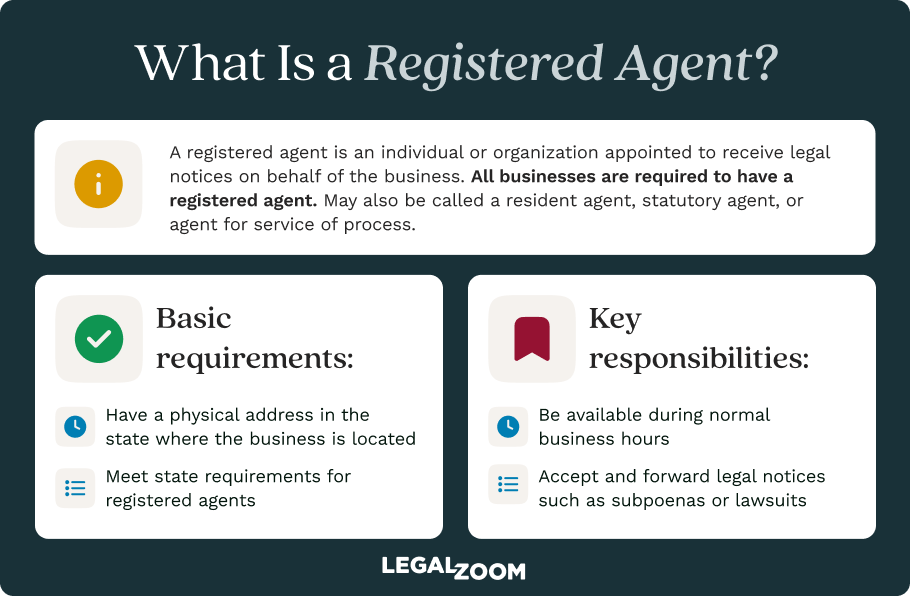
Every North Dakota LLC needs an eligible registered agent and registered office on the state record. Choose the agent before filing, because the articles of organization require the registered agent information. Then, keep the record current after approval.
The registered agent receives official notices and service of process. The choice also affects what name and address appear in the public business record, so understand the privacy and availability tradeoffs before listing a home address.
Who can serve as a registered agent in North Dakota?
A commercial registered agent may be a person or business that has filed the required commercial listing with the Secretary of State. An individual serving as a registered agent must reside in North Dakota. An entity serving as an agent must meet the state’s registration and North Dakota office requirements. A noncommercial corporation or LLC acting as an agent must be authorized to transact business in North Dakota, have a physical North Dakota address, and be in good standing. The LLC must obtain the named agent’s approval before appointment.
A P.O. box alone is not a substitute for the required registered office street address. Choose an agent who can reliably receive and forward official notices.
Can your North Dakota LLC serve as its own registered agent?
No. The registered agent must be an eligible individual or other authorized business entity. The LLC cannot serve as its own agent. A member, manager, or employee may serve individually when that person meets the state's requirements.
The registered agent name and address can be searchable public information. If using a home address would create a privacy concern, an eligible commercial registered agent service may be worth considering.
Step 3: File your North Dakota articles of organization with FirstStop
The articles of organization are the filing that creates the North Dakota LLC. Before you start, review the FirstStop form and instructions, because portal fields can change. A delayed effective date is a filing choice, not a promise about how quickly the Secretary of State will review or approve the filing.
What information goes into the articles of organization?
When creating your articles of organization, you’ll typically need to provide the following information:
- Entity type, whether it’s a standard domestic LLC, PLLC, Farming or Ranching LLC, or Authorized Livestock Farm LLC.
- Your LLC name and any name reservation information.
- Your registered office and registered agent information.
- The principal office address and organizer information.
- A statement on whether your LLC will have a member-managed or manager-managed structure.
- Purpose, duration, and any delayed effective date allowed by the form.
Are there different requirements for PLLCs and Farm/Ranch LLCs?
A North Dakota PLLC filing must include either a completed Certificate of Professional License or equivalent certification from the applicable licensing board for governors and members who will practice in the state. For annual reports filed on or after January 1, 2027, PLLCs must also include the required certificate with the report and send a copy of the filed report to the applicable regulatory board.
Farming or Ranching LLCs and Authorized Livestock Farm LLCs have special eligibility, activity, and reporting rules, including limits that can involve membership, income, land, and permitted activities. Confirm Secretary of State requirements before choosing to start one.
Step 4: Create a North Dakota LLC operating agreement
North Dakota does not require an operating agreement to be filed with the articles of organization, but writing and adopting one is still a practical way to document how the owners expect the LLC to operate.
The agreement should match the management structure reported in the filing and should be updated when ownership, authority, or major business terms change.
Do you need an operating agreement for an LLC in North Dakota?
You do not file an operating agreement with the Secretary of State, but an agreement can clarify ownership, contributions, voting, management authority, distributions, transfers, member departures, disputes, and dissolution. It supports consistent governance and recordkeeping and can help prove separation of business and personal property, which can strengthen liability protection.
What should you include in your operating agreement?
A single-member agreement can be concise, but a multi-member agreement should explain how owners make decisions and what happens when the owners disagree or one leaves. At a minimum, cover ownership percentages, contributions, management authority, voting, profit and loss allocations, distributions, records, transfers, dispute procedures, and dissolution.
Step 5: Obtain an EIN and set up business records
An employer identification number (EIN) and a separate business account help the LLC handle taxes, payroll, banking, and records, but they are different steps. The IRS determines when an EIN is required, while each bank sets its own account opening requirements.
Separate the LLC's core records at launch so personal and business funds, contracts, receipts, tax records, and owner decisions do not mix. You can request an EIN directly from the IRS or use LegalZoom’s EIN service to fill out and file the application. If you choose either the Pro or Premium LLC formation package, the EIN service is included at no extra charge.
When does a North Dakota LLC need an EIN?
A multi-member LLC generally receives partnership tax treatment by default and generally needs an EIN for its federal partnership filing. A single-member LLC is generally disregarded for federal income tax unless it elects otherwise, but it may still need an EIN for employees, certain federal tax obligations, or an elected corporate classification.
Eligible applicants can apply online for an EIN at no charge and may receive it in minutes. Applications by fax or mail take longer. Apply directly through the IRS at no charge, or let LegalZoom file for an EIN on your behalf.
Why should you open a separate business bank account?
A separate account makes it easier to track business income and expenses, prepare tax records, authorize payments, and show that the LLC is operating as a separate business. It supports good governance, but a separate account alone does not guarantee liability protection.
Banks set their own requirements for business accounts. They may ask for the approved formation document, EIN confirmation, ownership or authorization records, and identification, so check with the bank before applying.
Step 6: Register for North Dakota state taxes and business permits
An LLC's tax and permit obligations depend on its federal tax classification, business activity, workforce, industry, and location. Formation does not automatically register the LLC for every tax account, permit, or license it may need.
Use the North Dakota Tax Department, Job Service North Dakota, professional boards, industry agencies, and local authorities to identify applicable registrations before the business opens or hires.
What North Dakota taxes apply to your LLC?
The taxes your LLC incurs depends on how you’ve elected to be taxed. If your LLC is considered a disregarded entity, its profits pass through to your individual tax return. Check the North Dakota Tax Department’s income tax rate table for specific tax rates.
North Dakota corporate income tax rates range from 1.41% to 4.31%. The applicable filing path depends on the LLC's federal tax classification and other facts. Review the Tax Department's guidance rather than assuming every corporate election produces the same state rate.
When does a North Dakota LLC need a sales tax permit?
A business may need a North Dakota sales tax permit if it sells taxable tangible personal property, admissions to recreational activities, or lodging rentals. When a permit is required, the Tax Department recommends applying about 30 days before opening.
When must an employer register for unemployment insurance?
An employer liable for North Dakota unemployment insurance must register with Job Service North Dakota within 20 days after first employing workers. Employers may also need to set up a North Dakota income tax withholding account and meet workers’ compensation requirements before payroll begins.
What business licenses and permits does your North Dakota LLC need?
Licenses and permits are conditional. Alcohol sales, professional services, contracting, agriculture, food, childcare, transportation, environmental activities, and other industries may have specialized requirements. Check state and local authorities for your business location and activity instead of assuming the LLC filing covers licensing. LegalZoom’s business license service can help research and manage applicable licensing requirements.
Building a business is enough work as it is. We'll help you start your LLC with confidence.

North Dakota LLC costs: Formation fees and ongoing expenses
North Dakota's state filing fees are only part of the startup budget. Separate required state charges from conditional filings, optional services, recurring compliance costs, and payment or provider charges.
| Cost item | Amount | When it's due |
|---|---|---|
| Articles of organization (domestic LLC) |
$135 | At filing |
| Annual report | $50 | First report due in the year after the calendar year of initial registration; after that, file annually by LLC type. |
| Name reservation (optional) |
$10 | Before filing. |
| Trade name registration (if applicable) |
$25 | When you'd like it registered. Renew every five years. |
| Certificate of good standing (optional) |
$20 | As needed. |
The risks of filing a North Dakota LLC yourself
It’s possible to file your LLC directly with the state, but doing so isn’t without risks. Even minor mistakes can keep the state from approving your registration.
These are the DIY risks you should consider before you start filing your LLC with the SOS:
- Choosing the wrong entity type can send the filing down the wrong compliance path. A PLLC filing requires licensing documentation for governors and members who will practice. Farming or Ranching LLCs and Authorized Livestock Farm LLCs have special eligibility and reporting rules.
- A registered agent gap can cause important notices to be missed. Use an eligible agent, keep a real North Dakota street address on the record, and file a separate change when the agent or office changes.
- Tax and employer registrations depend on the activity. A business selling taxable tangible personal property, recreational admissions, or lodging rentals may need a sales tax permit; an employer liable for unemployment insurance must register within 20 days after first employing workers and may also need a North Dakota income tax withholding account and workers’ compensation coverage.
- A missed annual report can put the LLC out of good standing or lead to administrative action. Mark your calendar for your annual report due date and verify the late filing and reinstatement rules.
- Foreign qualification depends on the facts and activities. An existing LLC formed outside North Dakota should compare its North Dakota activities with the Secretary of State's guidance before assuming registration is or is not required.
Start your North Dakota LLC with LegalZoom
North Dakota's formation process is manageable, but it includes state-specific choices and ongoing deadlines. LegalZoom can help simplify the process by guiding you through the North Dakota filing, registered agent options, operating agreement preparation, EIN process, and business license research, depending on the package you choose. After your LLC is formed, LegalZoom's compliance services can help you keep track of annual reports and other ongoing requirements. Ready to get started? Explore LegalZoom's LLC formation services.
Find the right state to form an LLC
Find the right state to form an LLC
Every state has different rules, costs, and considerations for LLC formation.


North Dakota LLC FAQs
Do all North Dakota LLCs have the same annual report deadline?
No. Standard LLCs and PLLCs generally use the November 15 deadline, while Farming or Ranching LLCs and Authorized Livestock Farm LLCs generally are due April 15. Confirm the entity type and filing instructions before setting a recurring reminder.
When does a North Dakota LLC need sales tax or unemployment registration?
It depends on the business activity and workforce. A business selling taxable tangible personal property, admissions to recreational activities, or lodging rentals may need a sales tax permit. An employer that becomes liable for unemployment insurance generally registers with Job Service North Dakota within 20 days after first employing workers.
What additional requirements apply to a North Dakota PLLC or agricultural LLC?
A PLLC filing must include a Certificate of Professional License or equivalent licensing-board certification for governors and members who will practice. PLLC annual reports also have an additional certificate requirement and must be copied to the applicable regulatory board under the schedule described in Step 3. Farming or Ranching LLCs and Authorized Livestock Farm LLCs have special eligibility, activity, and reporting rules; check state requirements before choosing one.
Does North Dakota require an LLC to publish a notice of formation in a newspaper?
No. The North Dakota Secretary of State’s LLC guidance says a domestic LLC is created by filing articles of organization. There is no newspaper publication requirement as a formation step.
How long does it take to form an LLC in North Dakota?
The North Dakota Secretary of State does not publish a standard processing estimate for LLC filings, so review times can vary. Check your filing status through the FirstStop portal or contact the Secretary of State's Business Services team for an update.
'%20/%3e%3c/svg%3e)

'%3e%3cpath%20fill-rule='evenodd'%20clip-rule='evenodd'%20d='M9.31239%2025.5316H13.0679V14.1032H9.31239V25.5316ZM11.1913%208.46875C9.93945%208.46875%209%209.25086%209%2010.505C9%2011.5995%209.78211%2012.5389%2011.1913%2012.5389C12.6005%2012.5389%2013.3826%2011.5995%2013.3826%2010.505C13.3826%209.4082%2012.6005%208.46875%2011.1913%208.46875ZM27%2018.9577V25.5316H23.2445V19.4275C23.2445%2017.8609%2022.6174%2016.7664%2021.3679%2016.7664C20.2711%2016.7664%2019.644%2017.5463%2019.3316%2018.1756C19.1743%2018.488%2019.1743%2018.8004%2019.1743%2019.1128V25.5316H15.4165V13.9458H19.1743V15.5123C19.644%2014.7302%2020.5835%2013.6357%2022.6174%2013.6357C25.1234%2013.7908%2027%2015.3573%2027%2018.9577Z'%20fill='white'/%3e%3c/g%3e%3cdefs%3e%3cclipPath%20id='clip0_952_9489'%3e%3crect%20width='18'%20height='18'%20fill='white'%20transform='translate(9%208)'/%3e%3c/clipPath%3e%3c/defs%3e%3c/svg%3e)