




Starting a nonprofit in Massachusetts means navigating multiple separate legal processes: First you must incorporate under state law, then you can apply to the IRS for 501(c)(3) status, which is the federal designation that makes donor contributions tax-deductible and qualifies your organization for most grant funding.
This guide explains how to start a nonprofit in Massachusetts, from naming your organization and filing articles of organization with the Massachusetts Secretary of the Commonwealth, to obtaining federal tax-exempt status, registering with the Massachusetts Attorney General before you solicit donations, and meeting annual compliance obligations.
What's the difference between a nonprofit corporation and 501(c)(3) status?
A nonprofit corporation is a legal entity formed under state law. In Massachusetts, that means filing with the Secretary of the Commonwealth. In contrast, 501(c)(3) status is a separate federal designation the IRS grants that makes your organization tax-exempt and allows donors to deduct their contributions. You must incorporate under state law before the IRS will consider your tax-exemption application.
How to start a nonprofit in Massachusetts: Step by step
Step 1: Choose your Massachusetts nonprofit name
Your nonprofit's name must be distinguishable from any other existing business name in Massachusetts, and it must not imply a purpose your organization doesn't actually pursue. Words like "bank," "insurance," or "university" require additional regulatory clearance.
Search the business entity name database on the Secretary of the Commonwealth's website or with the LegalZoom name check tool below before you start putting anything on paper. For a deeper dive, read our comprehensive guide to Massachusetts business names.
Free Massachusetts Business Name Check
Starting a business? Use our free name check tool to check your business name against the Massachusetts Secretary of State records.
By clicking "Check Availability," I agree to LegalZoom's Terms of Use. This search is a preliminary check of state databases and does not include variations or trademarks. Results do not guarantee name availability or compliance with legal requirements.
You may also choose to reserve your desired name for up to 60 days if you want to keep it available while you prepare formation documents.
Step 2: Appoint incorporators, initial directors, and a resident agent
A few roles are required for submitting your articles:
- Incorporators. One or more incorporators sign and date your articles of organization. An incorporator doesn't need to be a director, officer, or member, and their role ends once the articles are accepted.
- Initial directors. Massachusetts requires a minimum of one director, but for IRS tax-exempt status, appoint at least three directors. An even number can create voting deadlocks, so aim for an odd number.
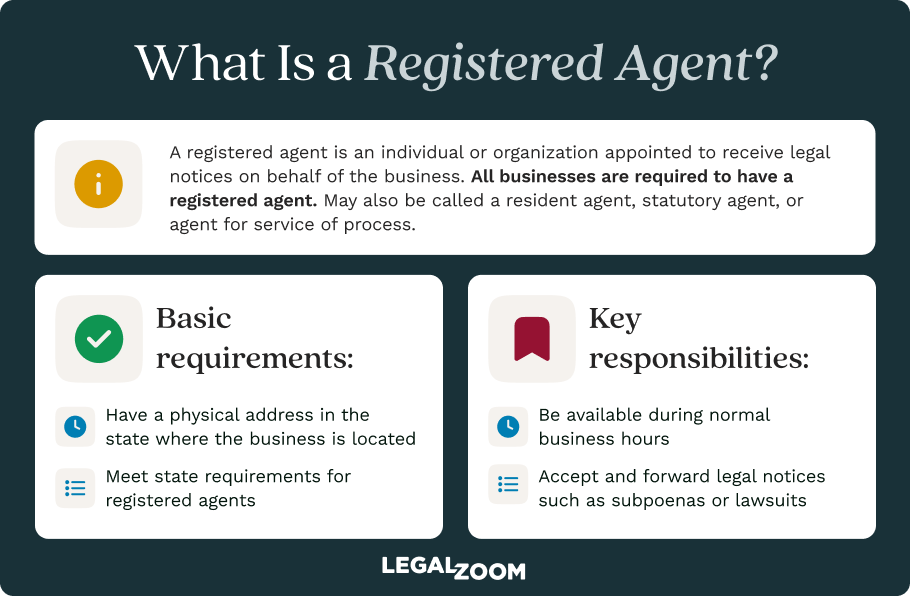
- Resident agent. Your resident agent (called a registered agent in other states) must be available at a publicly listed Massachusetts street address during normal business hours. If your nonprofit is served with legal process, it goes to your registered agent's address. You can serve as your own resident agent, but you must be able to receive service of process during normal business hours year round.
Step 3: File your Massachusetts articles of organization
The articles of organization legally create your nonprofit corporation. You can download or access the form through the Massachusetts Secretary of the Commonwealth's Corporations Division online filing system. Your articles should include:
- Nonprofit name.
- Purpose clause. Nonprofits seeking 501(c)(3) status should have a purpose clause that aligns with the IRS charitable purpose requirements.
- Resident agent name and registered office address.
- A statement on the classes of members allowed.
- Effective date. This cannot be more than 30 days after submission.
- Officer information. You must have a president, treasurer, and clerk named on the articles, but they can be changed later. If you are serving as your own resident agent, your clerk must be a Massachusetts resident.
- Names and addresses of initial directors. Include at least three unrelated directors to be tax exempt.
- Incorporator information and signature. Your incorporator must include their address and sign the form.
The form has a place for additional clauses. If you will seek 501(c)(3) status, you will need to include all the following:
- Dissolution clause stating that upon dissolution, assets will be distributed to another 501(c)(3) organization or to a federal, state, or local government entity for a public purpose
- Charitable purpose clause stating the specific purpose of the organization (charitable, educational, religious, or scientific)
- No-private-inurement clause. State that no part of your net earnings will benefit any private shareholder or individual.
When you’re ready to file, you can do so through the Secretary of the Commonwealth’s portal or file the paper version by mail or in-person. If you’re using the paper form, you can mail or deliver it to:
Secretary of the Commonwealth
One Ashburton Place
Room 1717
Boston, Massachusetts 02108-1512
Make sure to keep your approved articles since you'll need them for your IRS application and Attorney General registration.
Step 4: Draft nonprofit bylaws and adopt a conflict-of-interest policy
Bylaws are the internal governing document of your nonprofit. Massachusetts does not necessarily require you to have bylaws, but you should still have them. The IRS will request them as part of your 501(c)(3) application, and the Massachusetts Attorney General will also expect to see your bylaws when you register as a public charity.
They should address the following:
- Board composition and terms. Include how many directors serve, how long, and how they're removed.
- Officer roles and duties. You must, at minimum, have a president, treasurer, and clerk.
- Meeting frequency and quorum requirements. A quorum is a majority of directors in office immediately before the meeting begins, unless the articles or bylaws specify otherwise.
- Voting procedures. Explain what constitutes a majority and whether remote participation is allowed.
- Fiscal year. Determine whether your fiscal year follows the calendar year or not.
- Amendment procedures. Set procedures for changing the bylaws.
- Conflict of interest policy. The IRS asks about it directly on Form 1023, and it must be in place before you file. It requires board members and officers to disclose any personal financial interest in matters before the board and step back from voting on those matters.
The board formally adopts the bylaws at the first board meeting—the same meeting at which officers are elected, the employer identification number (EIN) application is authorized, and the opening of a bank account is approved. Every action should be recorded in written minutes, which become the legal record of how your organization was formed.
Step 5: Obtain an EIN for your Massachusetts nonprofit
An EIN is a nine-digit federal tax identification number. You need it to open a bank account, hire employees, and file Form 1023.
You can apply directly through IRS.gov or use an EIN filing service like LegalZoom if you want this task taken off your plate.
Step 6: Apply for federal 501(c)(3) tax-exempt status
This federal process is filed with the IRS and is your biggest timing variable, with the process taking potentially anywhere from two weeks to more than six months.
- Form 1023-EZ (streamlined application) is available to organizations that project gross receipts of $50,000 or less in each of the next three years, have total assets of $250,000 or less, and meet additional criteria on the IRS Form 1023-EZ eligibility worksheet. The fee is $275, and the application is typically processed within 2–4 weeks.
- Form 1023 (full application) is required for all other organizations. The fee is $600, and the application typically takes 3–6 months or more to get approved.
Note: Until your application is approved, you are not exempt from taxes. However, if you file within 27 months of incorporation and the IRS approves your application, your 501(c)(3) status is generally recognized retroactively to your date of incorporation.
Step 7: Apply for Massachusetts state tax exemption
Your IRS determination letter does not automatically exempt your organization from Massachusetts state taxes. Register your nonprofit online with the Massachusetts Department of Revenue and provide a copy of your IRS exemption letter.
To obtain exemption from Massachusetts sales taxes specifically, you need to apply for a Certificate of Exemption (Form ST-2). Massachusetts also exempts qualifying nonprofits from the corporate excise tax. You can find the relevant forms by logging into MassTaxConnect.
Step 8: Register with the Massachusetts Attorney General for charitable solicitation
Any charitable organization organized, operating, or raising funds in Massachusetts must register with the Non-Profit Organizations/Public Charities Division before soliciting contributions, including online. Here are the steps to take:
- Register through the Attorney General’s charity portal. All charitable registrations and annual filings must be submitted through the online charity portal. Paper submissions are not accepted.
- Pay the initial registration fee. First-time registrants pay a one-time fee of $100, plus an annual filing fee based on gross support and revenue.
- Submit required documents. You’ll need your articles of organization, bylaws, and other applicable formation documents.
- Obtain your certificate of solicitation. Before soliciting contributions, a charitable organization must obtain a valid certificate of solicitation. Organizations that want to begin soliciting before their first Form PC (annual filing) is due can complete a Schedule A-2 and $50 payment in the charity portal.
- Receive your Attorney General account number. Once registered, your organization is assigned an Attorney General account number for all future filings with the Division.
- Renew annually.
Failing to comply can result in fines, criminal penalties, and loss of tax-exempt status or solicitation rights.
Some narrow exemptions exist, such as religious organizations and small nonprofits raising less than $5,000 annually from fewer than ten persons using only unpaid volunteers, but most organizations won't meet that bar. Those that are exempt typically will need to register within 30 days in the event they no longer qualify for the exemption. When in doubt, register.
How much does it cost to start a nonprofit in Massachusetts?
| Filing | Agency | Fee |
|---|---|---|
| Articles of organization | Secretary of the Commonwealth | $35 |
| Form 1023-EZ | IRS | $275 |
| Form 1023 | IRS | $600 |
| Attorney General initial charitable registration | Massachusetts Attorney General | $100 |
Most nonprofits will also want to budget for attorney fees for legal review, particularly for organizations filing Form 1023 with complex program activities or governance structures. Additionally, larger nonprofits should plan to work with an accountant, as organizations crossing certain thresholds are required to have a CPA review their annual filings.
Remember: The government puts a lot of scrutiny on nonprofits in exchange for tax exemptions. For help with initial or ongoing costs, consider applying for a grant.
How long does it take to start a nonprofit in Massachusetts?
Generally, expect the entire process to take 4–12 months from formation to full tax-exempt status. This may seem like a rather large range, but it reflects the variability in processing times, especially at the federal level.
| Stage | Agency | Typical timeline |
|---|---|---|
| Articles of organization | Secretary of the Commonwealth | 1 business day (online/in-person); 2–4 days (mail) |
| Form 1023-EZ | IRS | 2–4 weeks |
| Form 1023 | IRS | 3–6+ months |
| Massachusetts state tax exemption | Massachusetts DOR | Varies |
| Attorney General charitable registration | Massachusetts Attorney General | Varies |
What you can do while you wait
Your nonprofit corporation legally exists the moment the Secretary of the Commonwealth accepts your articles of organization. You can open a bank account, adopt bylaws, hire staff, and accept donations while your 501(c)(3) application is pending.
What you cannot do is promise donors a federal tax deduction. That deduction only applies once the IRS issues your determination letter. You also cannot legally solicit charitable contributions in Massachusetts until you have completed your Attorney General registration.
Massachusetts nonprofit ongoing compliance
Massachusetts nonprofits are subject to recurring compliance obligations with three separate agencies every year. Missing any of them can put your corporate existence, tax-exempt status, or right to fundraise at risk.
Annual report to the Secretary of the Commonwealth
November 1 is the fixed deadline for nonprofit corporations to file their annual report with the Secretary of the Commonwealth. It does not shift based on your fiscal year.
The filing fee is $15. You can file online through the online filing system or by mail. The report requires your organization's identification number, business name, address, and officer and director details. It must be signed by the president and treasurer, plus a majority of directors. If any information changed since your last filing, the annual report is how you update it.
Massachusetts does not send reminders. If a nonprofit fails to file for two consecutive years, the Corporations Division will send a notice of default. If the report is not filed within 90 days of that notice, the organization's corporate charter may be revoked. Reinstatement requires filing all owed reports and fees.
IRS Form 990
The form your organization must file depends on its financial activity:
- Form 990-N (e-Postcard): Available to organizations with annual gross receipts normally $50,000 or less.
- Form 990-EZ: Available to organizations with gross receipts under $200,000 and total assets under $500,000 at year end.
- Form 990: Required for larger organizations exceeding either 990-EZ threshold.
The deadline is the 15th day of the 5th month after the end of your fiscal year, which is May 15 for calendar-year organizations.
An organization that fails to file for three consecutive tax years automatically loses its tax-exempt status. Reinstatement requires a new IRS application and the applicable fee. The IRS doesn't send reminders. Make sure to confirm which form applies to your organization each year, as revenue and asset growth may shift you from one form to another.
Form PC annual filing with the Attorney General
Every registered Massachusetts charity must file Form PC with the Attorney General's Non-Profit Organizations/Public Charities Division each year. Annual filings are due four and one-half months after the conclusion of the charity's fiscal year, which is April 15 for calendar-year organizations. You’ll need to attach the appropriate IRS Form 990 and the correct filing fee.
The filing fee varies based on gross support and revenue. Check the charity portal for the current schedule.
Depending on the size of your organization, you may need to attach CPA-prepared financial statements. The information below highlights when such a financial statement is needed:
- More than $500,000 in gross support and revenue requires a CPA's review report.
- More than $1,000,000 requires an audited financial statement.
- Nonprofits with gross support and revenue of $25,000 or less may be exempt from filing Form PC, though they must still comply if registered.
All Form PC filings must go through the charity portal. Late filing results in a $25 per month fee and may result in civil penalties against your organization or its officers.
How LegalZoom can help
LegalZoom has helped over 100,000 nonprofit organizations get started. Whether you need help filing your nonprofit articles of incorporation, preparing your bylaws, or working through the IRS Form 1023-EZ application, LegalZoom's nonprofit formation and 501(c)(3) application services handle the paperwork so you can focus on your mission.
FAQs about Massachusetts nonprofits
How much does it cost to start a nonprofit in Massachusetts?
Mandatory government fees total approximately $410 for a small nonprofit using Form 1023-EZ: $35 for articles of organization, $275 for the IRS user fee, and $100 for the initial AG charitable registration. Organizations filing Form 1023 spend closer to $735. Annual compliance adds a $15 Secretary of the Commonwealth report and a variable Form PC fee each year. Attorney, accounting, and audit costs are additional and vary by organization size.
What is the 33% rule for nonprofits?
The 33% rule is the IRS public support test. A public charity must receive at least one-third of its total support over a rolling five-year period from the general public, government grants, or other public charities. Failing the test can result in reclassification as a private foundation, which carries stricter regulations and less favorable donor deductibility. New organizations are not required to pass the test during their first five years.
Does FMLA apply to nonprofits?
The FMLA applies to nonprofits that employ 50 or more employees for at least 20 workweeks in the current or preceding calendar year, which is the same threshold as for-profit employers. Massachusetts also maintains its own paid family and medical leave law with separate coverage rules. Confirm how both apply to your organization's specific headcount.
Can a Massachusetts nonprofit receive grants before getting 501(c)(3) status?
Most private foundation and government grants require a current IRS determination letter. There are a few grant programs designed for nonprofit startups, but these are rare. The primary workaround is fiscal sponsorship, which is a legal arrangement in which an established 501(c)(3) accepts and administers funds on behalf of your project, allowing you to receive tax-exempt contributions before your own determination letter arrives. Fiscal sponsorship carries legal and fiduciary obligations for both parties. Talk to an attorney familiar with the structure before proceeding.
Do Massachusetts nonprofits need to register in every state where they fundraise?
Your Massachusetts charitable solicitation registration covers only Massachusetts. If your nonprofit solicits donations in other states, including through an online donation page accessible to out-of-state donors, you may need to register as a foreign charitable organization in those states as well. Rules vary by state. Consider consulting a business attorney for a detailed review of your situation.
'%20/%3e%3c/svg%3e)

'%3e%3cpath%20fill-rule='evenodd'%20clip-rule='evenodd'%20d='M9.31239%2025.5316H13.0679V14.1032H9.31239V25.5316ZM11.1913%208.46875C9.93945%208.46875%209%209.25086%209%2010.505C9%2011.5995%209.78211%2012.5389%2011.1913%2012.5389C12.6005%2012.5389%2013.3826%2011.5995%2013.3826%2010.505C13.3826%209.4082%2012.6005%208.46875%2011.1913%208.46875ZM27%2018.9577V25.5316H23.2445V19.4275C23.2445%2017.8609%2022.6174%2016.7664%2021.3679%2016.7664C20.2711%2016.7664%2019.644%2017.5463%2019.3316%2018.1756C19.1743%2018.488%2019.1743%2018.8004%2019.1743%2019.1128V25.5316H15.4165V13.9458H19.1743V15.5123C19.644%2014.7302%2020.5835%2013.6357%2022.6174%2013.6357C25.1234%2013.7908%2027%2015.3573%2027%2018.9577Z'%20fill='white'/%3e%3c/g%3e%3cdefs%3e%3cclipPath%20id='clip0_952_9489'%3e%3crect%20width='18'%20height='18'%20fill='white'%20transform='translate(9%208)'/%3e%3c/clipPath%3e%3c/defs%3e%3c/svg%3e)

