




Starting a nonprofit in Alaska begins with a distinction many first-time founders miss: State incorporation and federal tax-exempt status are two entirely separate processes. Under the Alaska Nonprofit Corporation Act, you form your organization by filing with the Alaska Division of Corporations. Then, separately, you apply to the IRS for 501(c)(3) status—the designation that makes your organization exempt from federal income tax and allows donors to deduct their contributions.
This guide covers every required step in sequence, from choosing a compliant name and drafting articles of incorporation to registering for charitable solicitation with the Alaska Department of Law and meeting recurring compliance deadlines.
Nonprofit vs. 501(c)(3): What's the difference?
Many founders assume that incorporating as a nonprofit automatically makes their organization exempt from federal income taxes. It does not. In Alaska, forming a tax-exempt nonprofit involves three distinct steps handled by three different authorities:
| Step | Who grants it | Required? |
|---|---|---|
| State nonprofit incorporation | Alaska Division of Corporations | Yes, and it must happen first |
| Federal 501(c)(3) tax-exempt status | IRS | Required to receive tax-deductible donations and most charitable grants |
| Charitable solicitation | Alaska Department of Law | Required before fundraising |
| registration | (Attorney General's office) | from the public in Alaska |
Alaska incorporation comes first because the IRS requires your organization to exist as a legal entity before it will review a 501(c)(3) application. Charitable solicitation registration must happen before you ask the public for donations, regardless of whether you have received your IRS determination letter yet.
How to start a nonprofit in Alaska: Step-by-step
Step 1: Choose a name for your Alaska nonprofit
Alaska has two main rules for names: First, your organization’s name must be distinguishable from any other name on record with the state, including reserved names. To be distinguishable, a name must contain different letters or numerals, have a different sequence of letters or numerals, and have a marked difference in meaning to all other registered entity names.
Second, the name cannot mislead or imply a purpose other than what’s stated in your articles of incorporation. To see if your preferred name is available, search the Alaska Division of Corporations' entity database or LegalZoom’s name check tool before you draft your articles of incorporation.
Free Alaska Business Name Check
Starting a business? Use our free name check tool to check your business name against the Alaska Division of Corporations database.
By clicking "Check Availability," I agree to LegalZoom's Terms of Use. This search is a preliminary check of state databases and does not include variations or trademarks. Results do not guarantee name availability or compliance with legal requirements.
If your name is available but you’re not ready to file, you can reserve your chosen name for 120 days. Read more in our comprehensive guide to Alaska business names.
Step 2: Select incorporators and appoint at least three directors
Before drafting your articles of incorporation, you need two things in place: at least three incorporators to sign and file those articles and at least three directors to govern your organization once it exists. One person can serve as both an incorporator and a director, but both roles carry distinct responsibilities.
An incorporator must be a natural person at least 19 years of age who signs and files the articles of incorporation. Their legal role ends once the articles are accepted, but a director is permanent. Directors are members of the board of directors, which is the governing body responsible for overseeing the organization's mission, finances, and strategy. Alaska requires a minimum of three directors, all who must be named on the articles of incorporation.
The IRS scrutinizes board composition and is likely to reject situations where one person, family, or business group dominates the board and could steer assets toward private benefit. It’s considered good practice for your founding board to have an independent majority.
Step 3: Appoint a registered agent in Alaska
An Alaska registered agent is the person or corporation your nonprofit designates to receive official legal documents and state correspondence on its behalf, including service of process, tax notices, and compliance communications from the Alaska Division of Corporations.
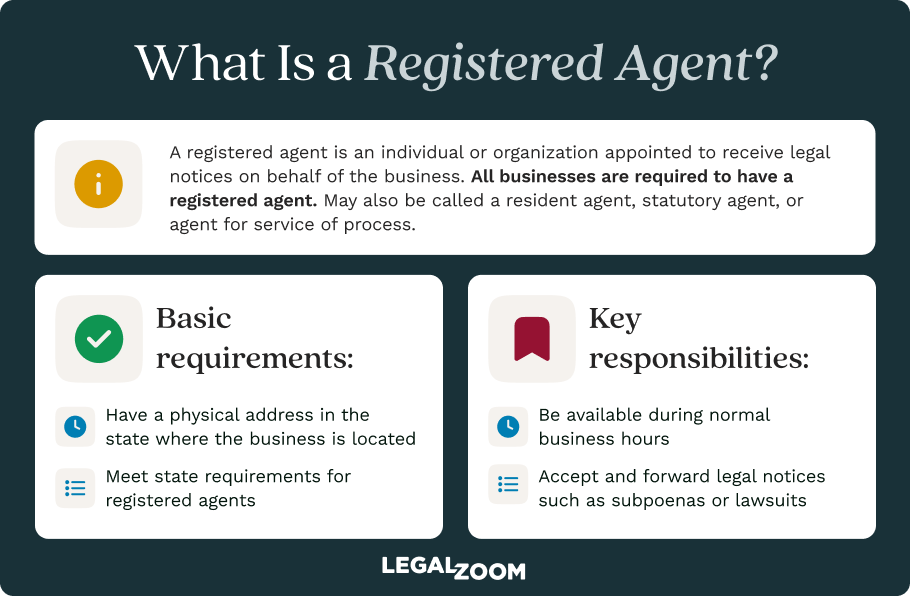
Alaska law requires every nonprofit to appoint and continuously maintain a registered agent, and failure to do so will result in non-compliance status and may lead to involuntary dissolution.
A registered agent in Alaska must:
- Be an individual Alaska resident or a corporation authorized to transact business in Alaska
- Have both a physical street address and a mailing address in the state. A P.O. box can be used as a mailing address, but does not satisfy the physical address requirement.
- LLCs, LLPs, and LPs are not eligible to serve as registered agents.
If you are an Alaska resident with a permanent physical street address, you can list yourself, but your address becomes part of the public record, and you must be available to accept service during business hours. Alternatively, you can hire a professional registered agent service to provide privacy protection, guaranteed availability, and operational flexibility.
Your registered agent's name and Alaska address go directly into your articles of incorporation. When the Division accepts your articles, the appointment takes effect automatically.
Step 4: File nonprofit articles of incorporation in Alaska
The articles of incorporation create your nonprofit as a corporate entity under Alaska law. Once the Division of Corporations accepts them, your organization officially exists, and then you can apply for an EIN, open a bank account, or file for federal tax-exempt status.
Your articles cover a lot, but there are two specific clauses that Alaska's state form does not automatically prompt you to include. Leaving them out means the state may accept your articles while the IRS rejects your tax-exempt application, so include everything listed here.
- Corporation name: It must be distinguishable on the Alaska entity record.
- Statement of purpose: This describes the activities of the organization.
- Registered agent name and Alaska address: Both a physical street address and a mailing address are required.
- Incorporator names and addresses: There must be at least three incorporators.
- Director names and addresses: There must be at least three directors.
- IRS-required purpose clause: Alaska's form permits a general "any lawful purpose" statement, but for your IRS application, you’ll need a statement that the entity is organized exclusively for one or more exempt purposes under IRC Section 501(c)(3).
- IRS-required dissolution clause: Include a statement that upon dissolution, remaining assets will be distributed to another 501(c)(3) organization or to a federal, state, or local government for a public purpose. It’s not required by Alaska but is necessary for your IRS application.
Filing your articles costs $50. Online filings are processed the fastest and can be completed through Alaska’s corporate portal. Paper filings take up to three weeks to be processed, with delays common between October and February.
Once the Division accepts your articles, it issues a certificate of incorporation. Keep that certificate alongside your articles, as you will need both when you open a bank account and file your 501(c)(3) application.
Note that nonprofits planning to regularly sell goods and services may need to obtain an Alaska business license before beginning operations, which costs an additional $50 annually.
Step 5: Hold your organizational meeting and adopt bylaws
After the certificate of incorporation is issued, the board of directors must hold an organizational meeting to approve the bylaws, adopt the conflict of interest policy, approve resolutions such as opening the organization's bank account, and elect officers. There must be at least a president, a vice president, a secretary, and a treasurer. Two or more roles can be held by an individual person, except for president and secretary. Board members can also be officers, meaning you’ll need a minimum of three individuals to fill all the positions.
Alaska requires a minimum of three days' notice by mail for the initial meeting, and all board meetings must be recorded in corporate minutes.
At the meeting, the board must adopt bylaws, which are the internal governing rules of your nonprofit. You do not file bylaws with the state, but the IRS requires a copy as part of your 501(c)(3) application, and banks and grant applications typically require them as well.
Your Alaska nonprofit bylaws should include:
- Your organization’s name
- The purpose of the nonprofit
- Officers and directors
- Details on meeting frequency and voting procedures
- Amendment procedures
- A written conflict of interest policy, which IRS Form 990 specifically asks about
For a deeper look, see LegalZoom’s guide on writing nonprofit bylaws. Due to the scrutiny that the IRS puts on nonprofit bylaws, it may be wise to consult an Alaska attorney or use LegalZoom’s corporate bylaws service.
Step 6: File the initial report
An initial report is due within six months of the date your entity is created. It is a free filing online that adds your officers and directors to the state record.
Filing within six months gives your organization time to hold its organizational meeting and formalize the governing structure you will document in the report.
Failure to file within six months may result in involuntary dissolution. Reinstatement requires additional filings and fees before you can continue operating or applying for 501(c)(3) status. Consider assigning responsibility for statutory filings to a specific officer in your bylaws during your organizational meeting in Step 5.
Step 7: Get an EIN
An employer identification number (EIN) is your nonprofit's federal tax identification number. Without one, a nonprofit cannot open a bank account, apply for tax exemption, hire staff, or receive grants. The EIN is free and available immediately online through the IRS website, but you can only apply only after your organization is legally formed.
Step 8: Apply for 501(c)(3) tax-exempt status
Federal 501(c)(3) status makes your organization exempt from federal income tax on revenue related to its exempt purpose and allows it to receive tax-deductible donations. You file with the IRS, and your organization must already have an EIN, adopted bylaws, and a conflict of interest policy in place before you apply. There are two forms available, and the one you need will depend on your entity’s size.
- Form 1023-EZ is for nonprofits with projected gross receipts of $50,000 or less and total assets of $250,000 or less, excluding churches, schools, hospitals, supporting organizations, and several other categories. To use it, first complete an eligibility worksheet, where a single "yes" answer means you must use the standard Form 1023. The filing fee for Form 1023-EZ is $275, and processing takes approximately 22 days.
- Form 1023 (full application) is required if your organization exceeds either size threshold or falls into an excluded category. The filing fee is $600, and processing can take up tsix months or longer.
If your application is approved, the IRS will issue a determination letter confirming 501(c)(3) status. That letter is retroactive to the date of incorporation as long as you file within 27 months of formation, meaning donations received during the application period are treated as tax-deductible from the start. If the IRS requests additional information, respond promptly, as delays extend your processing timeline.
Step 9: Register for charitable solicitation with the Alaska Department of Law
Alaska requires most nonprofits that solicit charitable contributions from the public to register with the Alaska Department of Law before they start. This applies regardless of whether your organization has received its IRS determination letter. Solicitation before registration puts your organization in violation of Alaska law.
Registration can be completed online by first paying the $40 registration fee and then completing the form that Alaska’s Department of Law provides by email. Additional forms are not required unless requested by the Department of Law. A few types of nonprofits are not required to register, including certain religious and political organizations.
Ongoing compliance for Alaska nonprofits
To maintain your business’ legal existence and tax-exempt status, you’ll need to meet recurring obligations on a predictable schedule.
There are two recurring Alaska requirements to be aware of.
- Biennial report: This must be filed before July 2 every other year with the Division of Corporations. It has a $25 fee.
- Charitable solicitation renewal: This must be renewed annually by September 1 of each year. It has a $40 fee, and failure to renew can result in loss of authorization to solicit in Alaska.
Additionally, you’ll need to file one of the following with the IRS each year. Failure to file for three consecutive years results in automatic revocation of federal tax-exempt status.
- Form 990-N (e-Postcard). Gross receipts of $50,000 or less.
- Form 990-EZ. Gross receipts under $200,000 and total assets under $500,000.
- Form 990 (full form). Gross receipts of $200,000 or more, or total assets of $500,000 or more.
Fees and timelines to start a nonprofit in Alaska
| Item | Agency | Fee | Timing |
|---|---|---|---|
| Articles of incorporation | Alaska Division of Corporations | $50 | Up to three weeks by mail, delays Oct–Feb; faster online |
| Initial report | Alaska Division of Corporations | $0 | Due within six months of incorporation |
| Form 1023 | IRS | $600 | 3–6+ months for IRS review |
| Form 1023-EZ | IRS | $275 | 1–3 months for IRS review |
| Charitable solicitation registration | Alaska Department of Law | $40 | Before soliciting |
Founders should expect a minimum of $365 in required fees (for articles, solicitation registration, and Form 1023-EZ ) and possibly up to $765 (if Form 1023 and licensure are required and name reservation is pursued). Neither of these figures accounts for additional professional fees, such as registered agent services or accounting.
The IRS waiting period dominates the timeline. Many of Alaska’s requirements can be completed quickly online, and drafting and adopting bylaws can take a matter of weeks. From filing your articles to receiving your IRS determination letter, the timeline may take less than three months (Form 1023-EZ with prompt processing) to potentially six months or longer for organizations using the full Form 1023.
How LegalZoom can help
LegalZoom has helped more than four million businesses get started since 2001, including over 100,000 nonprofits. Our nonprofit formation service guides you through the state filing process, with optional support available through our independent attorney network if needed. And when it’s time to file for 501(c)(3) tax-exempt status, we can help prepare and file your IRS Form 1023-EZ.
FAQs about starting a nonprofit in Alaska
Can I pay myself a salary if I start a nonprofit in Alaska?
Yes. The IRS requires that compensation be reasonable, which means comparable to what similar organizations pay for similar roles. Paying yourself an unreasonably high salary can jeopardize 501(c)(3) status. Document compensation decisions in board meeting minutes and consider a formal compensation study for higher-paid positions.
What is the 33% rule for nonprofits?
The 33% rule, also called the public support test, generally requires that a 501(c)(3) public charity receive at least one-third of its total support from public sources—donations, government grants, and membership fees—rather than from a small number of private donors. Failing this test can cause the IRS to reclassify the organization as a private foundation, which carries stricter rules and excise taxes.
Do Alaska nonprofits need a state business license?
Alaska requires most businesses, including nonprofits that engage in business activities, to obtain a license from the Alaska Division of Corporations. The license costs $50 per year. Nonprofits are unlikely to qualify for exemption categories, which cover industries like fisheries, insurance, and mining. For help securing a business license, explore LegalZoom’s licensing services.
Does Alaska grant nonprofit tax-exempt status?
Alaska has no state income tax, so there is no state income tax exemption to apply for separately. Alaska has no statewide sales tax, but some municipalities levy local sales taxes. Local exemptions for nonprofits vary—check with your local borough or city government to determine whether an exemption applies and how to apply.
'%20/%3e%3c/svg%3e)

'%3e%3cpath%20fill-rule='evenodd'%20clip-rule='evenodd'%20d='M9.31239%2025.5316H13.0679V14.1032H9.31239V25.5316ZM11.1913%208.46875C9.93945%208.46875%209%209.25086%209%2010.505C9%2011.5995%209.78211%2012.5389%2011.1913%2012.5389C12.6005%2012.5389%2013.3826%2011.5995%2013.3826%2010.505C13.3826%209.4082%2012.6005%208.46875%2011.1913%208.46875ZM27%2018.9577V25.5316H23.2445V19.4275C23.2445%2017.8609%2022.6174%2016.7664%2021.3679%2016.7664C20.2711%2016.7664%2019.644%2017.5463%2019.3316%2018.1756C19.1743%2018.488%2019.1743%2018.8004%2019.1743%2019.1128V25.5316H15.4165V13.9458H19.1743V15.5123C19.644%2014.7302%2020.5835%2013.6357%2022.6174%2013.6357C25.1234%2013.7908%2027%2015.3573%2027%2018.9577Z'%20fill='white'/%3e%3c/g%3e%3cdefs%3e%3cclipPath%20id='clip0_952_9489'%3e%3crect%20width='18'%20height='18'%20fill='white'%20transform='translate(9%208)'/%3e%3c/clipPath%3e%3c/defs%3e%3c/svg%3e)

