




Starting a nonprofit in Hawaii means working through four separate government agencies: the Hawaii Department of Commerce and Consumer Affairs (DCCA), the IRS, the Hawaii Attorney General's office, and the Hawaii Department of Taxation. Each runs its own process, on its own timeline, with its own forms and fees. Filing with one agency does not automatically satisfy another, and getting the sequence wrong can delay your organization's ability to fundraise or accept tax-deductible donations.
This guide walks through every required step in order, from reserving your organization's name and filing Form DNP-1 with the DCCA to applying for 501(c)(3) status and completing two Hawaii-specific requirements that routinely catch founders off guard: a general excise tax (GET) exemption application that federal tax-exempt status does not automatically cover, and a charitable solicitation registration with the state Attorney General that must happen before any public fundraising begins.
What you need to know before you start
Nonprofit vs. 501(c)(3): What is the difference?
A nonprofit corporation is a legal entity formed under state law. In Hawaii, you create one by filing articles of incorporation with the DCCA. A 501(c)(3) is a federal tax designation the IRS grants separately, after you incorporate. One is a legal structure; the other is a tax classification. You must complete both to operate as a tax-exempt public charity that can accept tax-deductible donations.
Three processes, four agencies
State incorporation comes first. To register a domestic nonprofit corporation in Hawaii, you file Form DNP-1 (the articles of incorporation) with the DCCA Business Registration Division. That filing creates your organization as a legal entity under Hawaii state law. It does not make you tax-exempt.
Federal tax exemption is a separate process entirely. If you want to allow donors to deduct their contributions on their federal tax returns, and if you want your organization to pay no federal income tax, you must apply to the IRS for 501(c)(3) status after you incorporate.
Hawaii's state tax treatment adds a third layer. Federal 501(c)(3) status does not automatically cover every Hawaii state tax obligation. Hawaii income tax exemption follows automatically once the IRS issues your determination letter. Hawaii's GET exemption is different: You must apply separately to the Hawaii Department of Taxation.
In total, you'll interact with four agencies: the DCCA for incorporation, the IRS for federal tax-exempt status, the Hawaii Department of Taxation for state tax treatment, and the Attorney General's Charity Registration office, which nonprofits that solicit donations must register with before fundraising begins.
How to start a nonprofit in Hawaii: Step by step
Step 1: Choose and reserve your Hawaii nonprofit name
Your nonprofit corporation’s name must be distinguishable from any other business entity already registered with the DCCA. Before you commit to a name, search the DCCA's business name database or LegalZoom’s search tool below to confirm if it's available.
If you’ve found an available name but you’re not ready to file your paperwork yet, you can reserve it for 120 days before filing. Name reservation is not required, but it protects your chosen name while you prepare your formation documents. Read more in our comprehensive guide to Hawaii business names.
Free Hawaii Business Name Check
Use our free name check tool to check your business name against the Department of Commerce and Consumer Affairs records.
By clicking "Check Availability," I agree to LegalZoom's Terms of Use. This search is a preliminary check of state databases and does not include variations or trademarks. Results do not guarantee name availability or compliance with legal requirements.
Step 2: Appoint a registered agent
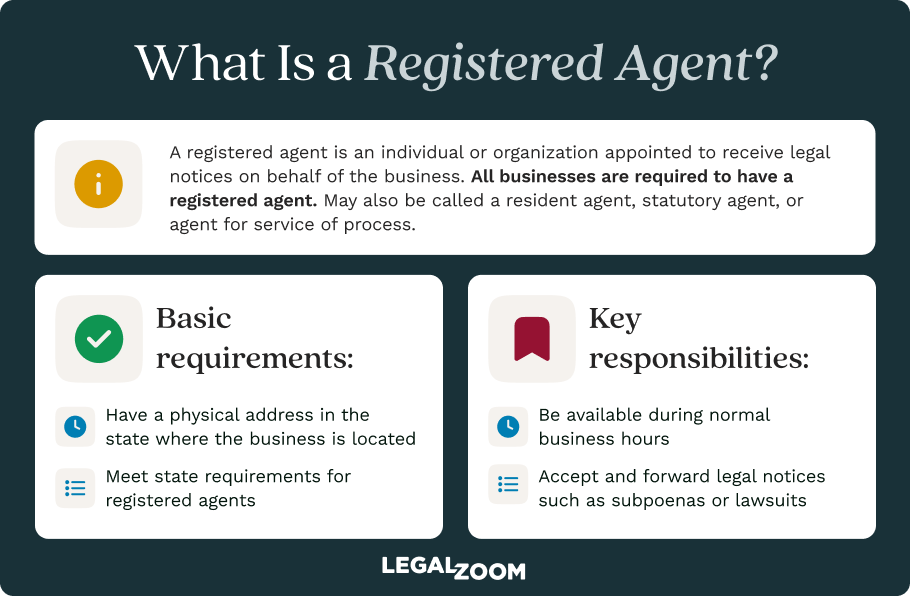
A registered agent is a person or entity designated to receive official legal documents on your organization's behalf. Every Hawaii nonprofit corporation must have one.
The agent may be an individual who resides in Hawaii, a domestic entity, or a foreign entity authorized to transact business in the state. A P.O. box is not acceptable. The registered agent must have a physical street address in Hawaii.
You can serve as your own registered agent if you're a Hawaii resident, or you can appoint a commercial registered agent service. Either way, the registered agent's name and complete street address must appear in the articles of incorporation.
If your registered agent relocates, resigns, or becomes unreachable and you don't promptly update the DCCA, your organization could miss critical legal notices.
Step 3: Select your incorporators and initial directors
An incorporator is the person who signs and submits the articles of incorporation to the DCCA. You only need one incorporator, and they don't need to be a director or officer.
Directors are the governing board members who will manage the organization's affairs after incorporation. Hawaii law sets a firm minimum: A board of directors must consist of three or more individuals, with the number specified in or fixed in accordance with the articles or bylaws.
Directors do not need to be Hawaii residents unless the articles or bylaws impose a residency requirement. The articles of incorporation form asks for the names and addresses of all initial directors, so have this information ready before you file.
Step 4: File articles of incorporation with the Hawaii DCCA
With your name confirmed, your registered agent appointed, and your initial directors identified, you have everything you need to file. This is the step that officially creates your nonprofit as a legal entity under Hawaii state law.
The articles of incorporation will ask for the following information:
- The nonprofit's name (including a corporate designator)
- The registered agent's name and physical Hawaii address
- The incorporator's name and address
- A statement saying whether or not the corporation will have members
- The mailing address and principal office address
The IRS will not grant 501(c)(3) recognition unless your articles contain two specific provisions.
- Exempt purpose clause. This clause states that your organization's activities are limited to one or more purposes listed in the Internal Revenue Code Section 501(c)(3).
- Dissolution clause. This clause directs that, upon dissolution, remaining assets will be distributed to another 501(c)(3) or to a federal, state, or local government entity for a public purpose.
You can file your articles of incorporation online via the Hawaii Business Express portal, or by email, mail, or fax. Online filing is the fastest option. If you file by email, mail, or fax, send it to the address or number noted on the top of the form. The fee is $25, with an additional $25 for expedited service. Filing fees are not refundable.
Step 5: Draft nonprofit bylaws and a conflict of interest policy
Bylaws are the internal rulebook governing how decisions get made, how the board operates, and what happens when things go wrong. You do not file bylaws with the DCCA, but you must adopt them, as the IRS will scrutinize them closely during the 501(c)(3) application process.
The incorporators or board of directors must adopt initial bylaws for the corporation. Hawaii doesn’t specify what needs to be included, but at minimum, well-drafted Hawaii nonprofit bylaws should address the following.
- Purpose and mission. Be consistent with the language in the articles of incorporation.
- Board composition. Describe the number of directors, term lengths, how vacancies are filled, and how directors are elected or appointed.
- Officer roles and responsibilities. Describe the roles and responsibilities of designated officers within the nonprofit.
- Meeting procedures. Propose the frequency, quorum requirements, and how meetings can be called.
- Notice requirements. Include the advance notice required to set a meeting.
- Voting procedures. Establish vote thresholds for major decisions.
- Conflict of interest policy. This policy should require directors and officers to disclose personal financial interests that could conflict with the organization's interests.
- Amendment procedures. Detail what steps need to be taken to amend your nonprofit bylaws.
- Dissolution procedures. These must be consistent with the dissolution clause in your articles.
That last item is non-negotiable for 501(c)(3) eligibility. The IRS requires that your organizing documents specify that upon dissolution, remaining assets will transfer to another tax-exempt organization, not to individual founders or board members.
Step 6: Hold your organizational meeting and adopt initial resolutions
If initial directors are named in the articles of incorporation, those directors must hold an organizational meeting. At this meeting, the board should take the following actions:
- Formally adopt the bylaws
- Elect officers, at minimum a president, secretary, and treasurer
- Authorize the employer identification number (EIN) application
- Adopt the conflict of interest policy, if not already done
- Document everything in written minutes, including what was discussed, who was present, and what was voted on
The IRS may request organizational records, including meeting minutes, as part of the Form 1023 review. Start the habit of thorough documentation now to save significant headaches later.
Step 7: Obtain an EIN from the IRS
An EIN is your organization's federal tax identification number. You need it before you can open a bank account, hire employees, or apply for 501(c)(3) status.
You can apply online through the IRS website. The application is free and available to any organization whose principal officer has a valid Social Security number or ITIN. The IRS issues the EIN immediately upon completion.
The legal name you enter on the EIN application must match the name on your articles of incorporation exactly—any discrepancy can cause problems during the 501(c)(3) application. You'll use the EIN on every government form you file from this point forward.
Step 8: Apply for 501(c)(3) tax-exempt status
Once the IRS grants 501(c)(3) status, your organization pays no federal income tax on qualifying income, and donors can deduct their contributions on their federal tax returns.
You’ll need to use the correct application form.
- Form 1023 (full application): This is required for most organizations. It’s a comprehensive application covering your organizational structure, activities, governance, and financial projections. The user fee is $600.
- Form 1023-EZ (streamlined application): This is available only to qualifying organizations with annual gross receipts under $50,000 and total assets under $250,000. The user fee is $275.
Don't choose the shorter form just to save $325. A single "yes" response to any question on the IRS eligibility checklist means you must use Form 1023 instead. If you file Form 1023-EZ and are denied because you didn't qualify, you lose the filing fee entirely.
Form 1023-EZ is typically processed in two to four weeks. Form 1023 processing typically takes at least three to six months.
Organizations can operate and solicit some donations while the 501(c)(3) application is pending, but tax-exempt status is not confirmed until the IRS issues a determination letter. If the IRS approves your exemption and you filed Form 1023 within 27 months of formation, your 501(c)(3) status is generally recognized retroactively to your date of incorporation, so qualifying contributions made during the pending period are usually deductible once the determination letter is issued.
If the exemption is denied or recognized only prospectively, those contributions may not be deductible, so donors should be told clearly that your application is pending.
Hawaii-specific tax exemptions: What 501(c)(3) status does and doesn't cover
Hawaii income tax exemption
Once the IRS issues your 501(c)(3) determination letter, Hawaii automatically recognizes your organization as exempt from state income tax. No separate Hawaii application is required.
Keep a copy of your IRS determination letter on file. If the IRS ever revokes your 501(c)(3) status, your Hawaii income tax exemption generally goes with it.
Hawaii GET exemption
Hawaii does not have a sales tax; instead, it has the GET, assessed on most business activities. Federal 501(c)(3) status does not automatically exempt your organization from GET. You must apply separately.
Organizations created for certain purposes may be exempt from GET. File the application for exemption (Form G-6) with the Hawaii Department of Taxation online. Your application must include an executed copy of your articles of incorporation, a copy of your current bylaws, and a copy of your IRS determination letter.
If you haven't received your IRS determination letter, the Department will accept the Form G-6 application and approve the exemption on a conditional basis. Once you receive the IRS letter, submit a copy to the Department to convert the conditional exemption to a full exemption. The conditional exemption will be revoked if the IRS does not make a favorable determination.
Even with GET exemption approved, not all income is automatically shielded:
- Gifts, nonprofit grants, contributions, and membership dues are exempt from GET regardless of whether the recipient is a registered exempt organization.
- Exempt function income (income from activities that directly further the reason your organization is exempt) is also exempt from GET, but only if you are registered on Form G-6 and approved. For example, if the exempt organization is a school, tuition is exempt function income.
- Fundraising income—whether from a bake sale, benefit dinner, or silent auction— is GET taxable, because income from an activity whose primary purpose is raising money is subject to GET.
One additional wrinkle: The Use Tax Law does not provide a complementary exemption. Use tax applies to goods or services your organization imports from outside Hawaii when the seller was not subject to GET.
If your organization earns income from multiple streams—program fees, rental income, fundraising events, and donations—talk to a tax professional to map out which receipts are exempt and which are taxable before you start operating.
How to register with the Hawaii Attorney General for charitable solicitation
Hawaii imposes a separate requirement before you can legally ask the public for money: registration with the Hawaii Attorney General's Charities Unit. It must be satisfied before a single donation is solicited. If you fundraise first, your organization may be subject to penalties and will need to stop fundraising until you come into compliance.
Who must register
Any charitable organization that solicits contributions in Hawaii must register with the Attorney General, unless the Attorney General has granted an exemption. The requirement isn't limited to Hawaii-based organizations—any nonprofit in any state that intends to solicit in Hawaii must also register.
The term "solicit" is broader than most people assume. It covers any oral or written request for a contribution: sending an email appeal, posting a donation link on your website, or asking for support at a community event all qualify. A solicitation occurs whether or not the person making the solicitation receives any contribution. Applying for a grant from a governmental authority or a 501(c)(3) organization is not considered solicitation, but virtually every other form of asking for public support is.
Who may be exempt
A charitable organization that normally receives less than $25,000 in contributions annually is exempt from registration, provided it does not compensate any professional solicitor or professional fundraising counsel. "Normally receives less than $25,000" means the average contributions received over the previous three years is less than $25,000. Contributions do not include grants from governmental authorities or 501(c)(3) organizations.
Other exempt categories include religious organizations and government agencies. Don't simply assume your organization qualifies—apply to the Attorney General for an exemption and confirm eligibility before you solicit any contributions.
How to register
Initial registration must be completed online through Hawaii's internet-based registration system for the Unified Registration Statement (URS). The registration statement has 22 questions and requires an electronic signature from one officer or authorized agent.
You'll need articles of incorporation or equivalent governing documents, an IRS determination letter confirming your tax-exempt status, and financial disclosures, typically your most recent IRS Form 990. Organizations that meet specific revenue thresholds may also need audited financial statements.
There is no fee to submit an initial registration with the Hawaii Attorney General.
Annual reporting after registration
Although the initial charitable solicitation registration is a one-time occurrence, organizations must update the Hawaii Attorney General each year with IRS Form 990 and an annual report. Annual financial reporting requires a fee determined by prior-year contribution amounts, ranging from $10 for organizations that received less than $25,000 to $600 for organizations that received $5 million or more. Organizations receiving over $500,000 must also provide an audited financial statement.
Organizations can file for an extension for up to ten and a half months after their fiscal year ends. Missed due dates can result in late fees or a temporary suspension of fundraising activities.
Why this step matters
Beyond penalties, many institutional donors, community foundations, and grant programs verify charitable registration status before releasing funds. An organization registered and in good standing with the Attorney General signals credibility to prospective donors and grantors alike.
If you haven't yet received your IRS determination letter when you're ready to begin fundraising, contact the Attorney General's Charities Unit directly to understand your options before moving forward.
Ongoing compliance requirements for Hawaii nonprofits
Even after you’ve completed every step above, your obligations are not complete. Hawaii nonprofits carry ongoing compliance requirements to the DCCA, the IRS, and the Hawaii Attorney General each year. Any missed deadline can cost your organization its good standing, its tax-exempt status, or its ability to fundraise legally.
Annual report filing with the DCCA
Every Hawaii nonprofit corporation must file an annual report with the DCCA Business Registration Division—a separate obligation from the Attorney General's annual reporting requirement.
Your deadline falls in the same calendar quarter as your original incorporation date. So, for example, if you incorporated in March, your annual report is due by the end of the first quarter each year. The filing fee is $2.50. You can file online via the Hawaii Business Express portal or by mail.
Failure to file results in administrative dissolution. Reinstatement is possible but requires additional filings and fees.
IRS Form 990 filing requirements
Every 501(c)(3) organization must file an annual information return with the IRS. Which form you file depends on your organization's financial activity.
- Form 990-N (e-Postcard): For organizations with annual gross receipts normally $50,000 or less.
- Form 990-EZ: For organizations with annual gross receipts less than $200,000 and total assets at year-end less than $500,000.
- Form 990 (full return): Required for organizations with gross receipts of $200,000 or more, or total assets of $500,000 or more.
The return is due on the 15th day of the 5th month after the end of the organization's fiscal year—May 15 for calendar-year organizations. You can extend the due date by six months by filing Form 8868 before the deadline.
Organizations that fail to file required Forms 990, 990-EZ, or 990-N for three consecutive years automatically lose their tax-exempt status. Reinstatement requires a new exemption application and the applicable fee. During the revocation period, donations are not tax-deductible, and many grant-makers will not fund organizations whose exempt status is unverified.
Even if your organization had no income or activity during the year, you must still file.
Registered agent and corporate records
If your registered agent moves, changes address, or resigns, update that information with the DCCA promptly. Keep complete corporate records at your organization's principal office: meeting minutes, financial records, and copies of all government filings. The IRS may request these records during audits or compliance reviews, and many grant-makers require access to organizational records as a condition of funding.
How much does it cost to start a nonprofit in Hawaii?
Starting a Hawaii nonprofit costs between approximately $300 and $650 for most organizations, depending primarily on which IRS application form you file.
| Agency | Filing | Fee |
|---|---|---|
| DCCA | Articles of Incorporation (Form DNP-1) | $25 |
| Expedited processing (optional) | $25 | |
| Name reservation (optional) | $10 | |
| IRS | EIN application | $0 |
| Form 1023 (full application) | $600 | |
| Form 1023-EZ (streamlined) | $275 | |
| Hawaii Dept. of Taxation | Form G-6 GET exemption application | $20 (waived if already paid with GET license registration) |
| Hawaii Attorney General | Charitable solicitation registration | $0 |
These are government fees only. They do not include costs for legal assistance, registered agent services, or accounting support.
How long does it take to start a nonprofit in Hawaii?
Most Hawaii nonprofits can be incorporated and operational within a few weeks, but full 501(c)(3) status—especially via Form 1023—can take several months.
- Name reservation and preparation: 1–2 weeks
- DCCA articles of incorporation (standard processing): Approximately 5–10 business days; expedited processing available for an additional $25
- EIN from IRS: Same day if applying online
- Bylaws and organizational meeting: 1–2 weeks, depending on the board's schedule
- IRS Form 1023-EZ: Typically 2–4 weeks
- IRS Form 1023 (full): Typically 3–6 months or longer
- Hawaii Attorney General charitable registration: Often processed within several weeks
- Hawaii GET exemption (Form G-6): Often processed within several weeks
If your organization qualifies for Form 1023-EZ, you can realistically be fully operational—incorporated, tax-exempt, and registered to fundraise—within two to three months. If you need to file Form 1023, build at least six months into your planning horizon before you expect a determination letter.
Start your Hawaii nonprofit with LegalZoom
Starting a nonprofit involves more paperwork, more agencies, and more sequencing decisions than most founders anticipate. LegalZoom has helped more than four million businesses get started, including more than 100,000 nonprofit organizations.
From preparing and filing your nonprofit articles of incorporation with the Hawaii DCCA to providing registered agent services that keep your organization in good standing year after year, LegalZoom handles the administrative work so you can focus on building your mission.
Common mistakes in nonprofit formation can delay your 501(c)(3) application by months. LegalZoom's formation process is designed to catch those issues before they become problems. And when it’s time to apply for federal tax exemption, we can help file your IRS Form 1023-EZ.
Hawaii nonprofit FAQs
Does Hawaii require a nonprofit to have a minimum number of directors?
Yes, at least three. Directors do not need to be Hawaii residents unless the articles or bylaws impose that requirement. The minimum cannot be reduced below three by amendment.
What is the 33% rule for nonprofits?
The 33% rule, also called the public support test, requires public charities to receive at least one-third of their total support from the general public, including government grants and a broad base of donors. Failing the test can cause reclassification as a private foundation, which carries stricter operational rules and higher excise taxes. Newly formed organizations typically have a five-year window to demonstrate they meet the threshold.
Can a Hawaii nonprofit apply for state grants without 501(c)(3) status?
Most Hawaii state grant programs and private foundations require 501(c)(3) status as a condition of eligibility. Fiscal sponsorship—where a recognized 501(c)(3) receives funds on your behalf—is sometimes accepted as an alternative. Organizations planning to pursue grant funding should prioritize the 501(c)(3) application early to avoid being locked out of opportunities.
How much funding do you need to start a nonprofit in Hawaii?
No legal minimum exists. The state filing fee is $25. In practice, budget for at least several hundred to a few thousand dollars to cover the IRS application fee ($275–$600), registered agent fees, accounting, and initial program expenses. The IRS also asks about projected budgets on Form 1023, so a realistic financial plan should be in place before you apply.
What happens if a Hawaii nonprofit loses its 501(c)(3) status?
The IRS automatically revokes 501(c)(3) status after three consecutive years of missed Form 990 filings. Reinstatement requires a new application (Form 1023 or 1023-EZ) and the applicable fee. During the revocation period, donations are not tax-deductible
'%20/%3e%3c/svg%3e)

'%3e%3cpath%20fill-rule='evenodd'%20clip-rule='evenodd'%20d='M9.31239%2025.5316H13.0679V14.1032H9.31239V25.5316ZM11.1913%208.46875C9.93945%208.46875%209%209.25086%209%2010.505C9%2011.5995%209.78211%2012.5389%2011.1913%2012.5389C12.6005%2012.5389%2013.3826%2011.5995%2013.3826%2010.505C13.3826%209.4082%2012.6005%208.46875%2011.1913%208.46875ZM27%2018.9577V25.5316H23.2445V19.4275C23.2445%2017.8609%2022.6174%2016.7664%2021.3679%2016.7664C20.2711%2016.7664%2019.644%2017.5463%2019.3316%2018.1756C19.1743%2018.488%2019.1743%2018.8004%2019.1743%2019.1128V25.5316H15.4165V13.9458H19.1743V15.5123C19.644%2014.7302%2020.5835%2013.6357%2022.6174%2013.6357C25.1234%2013.7908%2027%2015.3573%2027%2018.9577Z'%20fill='white'/%3e%3c/g%3e%3cdefs%3e%3cclipPath%20id='clip0_952_9489'%3e%3crect%20width='18'%20height='18'%20fill='white'%20transform='translate(9%208)'/%3e%3c/clipPath%3e%3c/defs%3e%3c/svg%3e)

