




Turning a mission into an official organization in Idaho requires coordinating between state and federal agencies: First, form a nonprofit corporation under Idaho state law. Then you can apply to the IRS for 501(c)(3) tax-exempt status.
This article covers every required step in sequence, from selecting a compliant name and filing articles of incorporation through board setup, bylaws, federal tax exemption, state tax benefits, and ongoing compliance. It also addresses the IRS-required purpose and dissolution language that must appear in your articles of incorporation.
Nonprofit vs. 501(c)(3): what is the difference?
A nonprofit corporation is a legal entity formed under state law that does not distribute profits to owners or shareholders. A 501(c)(3) is a federal tax status granted by the IRS that makes the organization exempt from federal income tax and allows donors to deduct their contributions.
You can be a nonprofit corporation without applying for 501(c)(3) status, but most organizations that want to accept tax-deductible donations and apply for grants need both.
How to start a nonprofit in Idaho: Step by step
Step 1: Choose a name for your Idaho nonprofit
Every business entity needs a name, and Idaho has a few rules about what a nonprofit’s name can be.
- The name must be distinguishable. Idaho law requires your nonprofit's name to be distinguishable from any other entity already registered with the Idaho Secretary of State.
- Restricted terms require approval. Words including "bank," "trust," and "insurance" cannot appear in your name without prior approval from the relevant state agency. Using them without authorization can delay or block your filing.
- Your name should reflect your purpose. Idaho prohibits names that imply a purpose different from what your articles of incorporation state.
- "Inc." and "Corporation" are optional. Idaho does not require a nonprofit corporation to include a corporate designator, but you may include one if you prefer.
To check availability of your name, search the Idaho Secretary of State's business entity database to confirm availability or use our free name check tool below. For a comprehensive look at name requirements, check out our guide to Idaho business names.
Free Idaho Business Name Check
Starting a business? Use our free name check tool to check your business name against the Idaho Secretary of State records.
By clicking "Check Availability," I agree to LegalZoom's Terms of Use. This search is a preliminary check of state databases and does not include variations or trademarks. Results do not guarantee name availability or compliance with legal requirements.
Name reservation is available but not required. Idaho allows you to reserve a name through its online filing system to hold it for four months while you finalize formation documents.
Step 2: Appoint incorporators, directors, and a registered agent
A nonprofit can’t be a single-person endeavor. Here are some requirements for roles in your organization.
- An incorporator is the person who signs and files the articles of incorporation. This is often a founding director, but it doesn't have to be. The incorporator's role ends once the articles are filed.
- Idaho nonprofits must have a minimum of three directors. Directors do not need to be Idaho residents and can serve without compensation, though reasonable compensation is permitted if the board approves it.
- Idaho nonprofits must also have at least three officer roles: president, secretary, and treasurer. One person may hold multiple offices, but Idaho law does not allow the same individual to serve as both president and secretary, except in the case of a religious corporation.
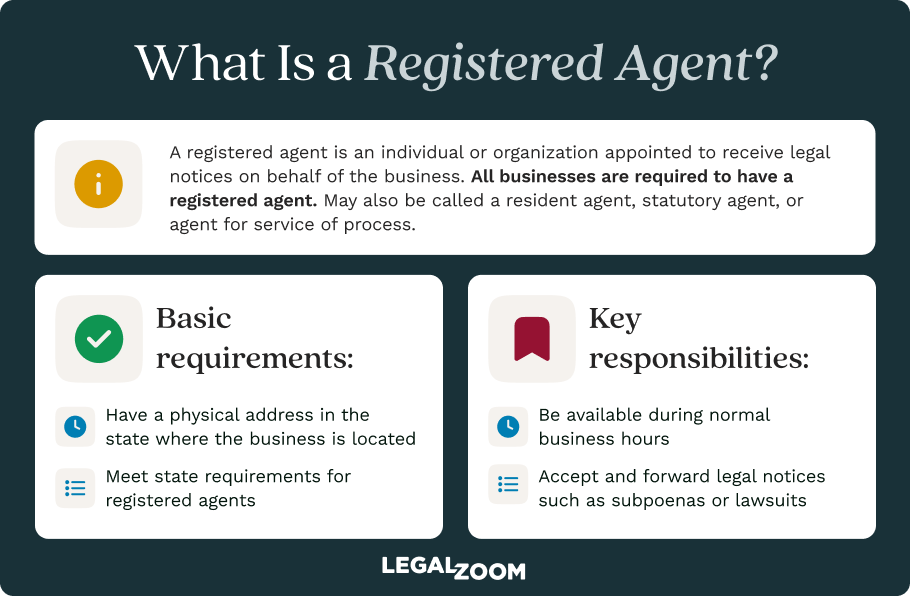
Apart from officers, every Idaho nonprofit must designate a registered agent. The agent must be a person or company with a physical Idaho street address, available during normal business hours to receive legal documents and service of process. A P.O. box does not meet the requirement.
Step 3: File Idaho nonprofit articles of incorporation
The articles of incorporation legally create your nonprofit corporation. Nothing else happens until this document is approved: You can't apply for 501(c)(3) status, open a bank account, or formally conduct business as a nonprofit entity.
Here’s what you need to include:
- Organization name. Your nonprofit's legal name, exactly as confirmed available with the Secretary of State.
- Purpose statement. A written description of why the corporation exists. This is one of two fields where 501(c)(3) applicants must use specific IRS-approved language (see the compliance note below).
- Registered agent name and address. The name and physical Idaho address of the person designated to receive legal documents. Cannot be a P.O. box.
- Initial board of directors. Must have three. List names and addresses here.
- Incorporator information. Name and address of at least one incorporator. Only one listed incorporator needs to sign the articles.
- Mailing address for future reports. Where you want government correspondence sent.
- Member structure. A statement on whether the corporation will have voting members. Most small nonprofits answer no.
The above is required for incorporation, but if you plan to apply for 501(c)(3) status, your articles of incorporation must include two specific provisions that Idaho's standard form template does not automatically prompt you to add:
- Purpose clause. Your organizing documents must limit the organization to exempt purposes and must not authorize activities that don't further those purposes. Your purpose statement cannot simply say "any lawful activity."
- Dissolution clause. This states that if your organization dissolves, its assets must go to another exempt organization, to the federal government, or to a state or local government for a public purpose.
Omission of these two provisions is one of the most common reasons the IRS rejects an application.
You can file your articles online or by mail.
- Online filing through the SOSbiz portal: Idaho’s nonprofit articles of incorporation have a base filing fee of $30. Standard processing is often completed in about 10–15 business days, and expedited filings are often processed within one business day.
- Filing by mail: If you print and mail the state form, the fee is $50 (the $30 base fee plus a $20 manual processing fee), with the option to add $40 for expedited service or $100 for same‑day service. The articles do not need to be notarized.
Step 4: Draft nonprofit bylaws and hold your first board meeting
Draft the bylaws before the organizational meeting, then have the board formally adopt them at it. Bylaws control how authority is assigned, how decisions are made, and who holds power inside the organization. They are one of the core governance documents the IRS will review as part of your 501(c)(3) application.
A well-drafted set of bylaws should address:
- Organizational purpose. A statement consistent with the purpose language in your articles of incorporation.
- Board structure. The number of directors, how they are elected, how long they serve, and how vacancies are filled.
- Officer roles and duties. At minimum, the president, secretary, and treasurer.
- Meeting requirements. How often the board meets, how meetings are called, and what constitutes a quorum.
- Voting procedures. How decisions are made and what thresholds are required for routine vs. major actions.
- Fiscal year. Bylaws commonly specify the organization’s fiscal year (for most nonprofits, January 1–December 31), which helps keep your IRS and state filings consistent.
- Amendment procedures. How and when the bylaws themselves can be changed.
- Member structure. Whether the organization will have voting members, and if so, their rights and how they are admitted and removed.
- Conflict of interest policy. Required for 501(c)(3) approval.
The conflict of interest policy governs decisions made by directors or officers to ensure they benefit the nonprofit's mission rather than individuals' personal interests. The IRS expects this to be included when you submit your bylaws. Many organizations keep it as a standalone policy reviewed and signed annually, which aligns with IRS governance guidance and avoids frequent bylaw amendments.
Initial directors named in the articles must hold an organizational meeting to appoint officers, adopt bylaws, and carry on any other business. The board should also pass a resolution authorizing the applications for an EIN and for 501(c)(3) status—it signals unified intent and creates a clear record for the IRS.
Keep minutes from this meeting and every board meeting going forward. These minutes are not filed with any government agency but become part of your organization's permanent governance record.
Step 5: Get an EIN for your Idaho nonprofit
An EIN is a nine-digit federal tax ID the IRS assigns to your organization. You need one before you can open a bank account, apply for 501(c)(3) status, run payroll, or apply for grants—even if your nonprofit has no employees.
Apply online through IRS.gov at no cost, and you’ll receive your EIN immediately. Have your nonprofit's legal name, state of incorporation, and the responsible party's Social Security number ready.
Download, save, and print the confirmation before exiting the screen. You’ll need your EIN for a lot of business setup.
Step 6: Apply for 501(c)(3) federal tax-exempt status
Once your EIN is acquired, it’s time to apply for 501(c)(3) status, which exempts your organization from federal income tax, makes contributions tax-deductible for donors, and qualifies you for most private foundation grants and government programs requiring 501(c)(3) designation.
There are two application forms available, each with different eligibility requirements:
- Form 1023-EZ (streamlined application) is available to organizations that project gross receipts of $50,000 or less in each of the next three years, have total assets of $250,000 or less, and meet additional criteria on the IRS Form 1023-EZ eligibility worksheet. The user fee is $275.
- Form 1023 (full application) is required for all other organizations. The user fee is $600.
The IRS issues many Form 1023-EZ determinations within 22 days, while others may take up to 120 days. For full Form 1023 applications, most determinations are issued within 191 days. If the IRS requests additional information, the timeline can stretch to a year or more.
When the IRS approves your application, it issues a determination letter. Store it permanently with your formation documents. You'll need it to apply for Idaho state tax exemptions, access grant opportunities, and demonstrate legitimacy to donors and partners.
Step 7: Apply for Idaho state tax exemptions
Once the IRS grants 501(c)(3) status, your nonprofit is generally exempt from Idaho income tax automatically—no separate application required. The exemption stays in place as long as you maintain your federal 501(c)(3) status.
But, the exemption isn't total. You must still file an Idaho income tax return and pay state tax on any unrelated business income reported on federal Form 990-T.
Idaho does not have a general sales tax exemption for nonprofits, but certain specifically named nonprofit categories can purchase goods tax-exempt. If your organization qualifies, claiming the exemption is straightforward: Give the seller a completed Form ST-101 (Sales Tax Resale or Exemption Certificate).
One important distinction: Even if your nonprofit qualifies to purchase goods tax-free, fundraising sales or gift shop transactions are not automatically exempt. Nonprofits that make taxable sales must obtain an Idaho sales tax permit and collect and remit tax to the state.
Check the Idaho State Tax Commission's guidance directly to confirm whether your organization type qualifies before assuming an exemption applies.
How much does it cost to start a nonprofit in Idaho?
| Expense | Cost |
|---|---|
| Articles of Incorporation (online filing) | $30 |
| Articles of Incorporation (mail filing) | $50 |
| EIN | $0 |
| IRS Form 1023-EZ user fee | $275 |
| IRS Form 1023 user fee | $600 |
The estimated total startup cost range is approximately $305–$930, depending on filing method and which IRS form applies. That range covers required government fees only and excludes optional costs like name reservation, expedited processing, or professional formation assistance. Attorney or professional service fees for drafting bylaws, preparing the 501(c)(3) application, or reviewing your articles of incorporation are separate and vary widely.
Ongoing Idaho nonprofit compliance
Forming your nonprofit is not the finish line. Idaho law and the IRS both require ongoing filings to keep your organization in good standing and your tax-exempt status active. Miss these deadlines and you risk administrative dissolution at the state level or automatic revocation of your 501(c)(3) status—neither of which is quick to fix.
Idaho nonprofit annual report
Idaho nonprofits must file an annual report that confirms your registered agent, principal office address, and officer and director information. It does not require you to summarize programs or finances.
The report is due on the last day of your entity's anniversary month—the month in which you incorporated. The filing fee is $0. File online through the SOSbiz portal. Failure to file can result in administrative dissolution.
IRS Form 990 filing
Most 501(c)(3) organizations must file an annual information return with the IRS. The form required depends on gross receipts.
- Form 990-N (e-Postcard): Gross receipts of $50,000 or less.
- Form 990-EZ: Gross receipts between $50,001 and $200,000 and total assets under $500,000.
- Full Form 990: Gross receipts over $200,000 or total assets over $500,000.
Failure to file for three consecutive years results in automatic revocation of 501(c)(3) status. Reinstatement requires a new IRS application and, in most cases, a new user fee.
How LegalZoom can help
Ready to start a nonprofit in Idaho? LegalZoom can help you file your articles of incorporation, obtain your EIN, and apply for 501(c)(3) status. We’ve has helped millions of people form businesses, including over 100,000 nonprofit organizations. You can use our nonprofit formation service to prepare and file your articles of incorporation with the Idaho Secretary of State without having to decode state filing instructions on your own.
LegalZoom can also serve as your registered agent and connect you with an Idaho attorney from our network for personalized guidance on unusual organizational structures, grant eligibility concerns, or compensation arrangements for founders. We’re your go-to service for getting your nonprofit up and running.
Idaho nonprofit FAQs
What is the 33% rule for nonprofits?
The 33% rule is a public support test the IRS uses to confirm that an organization qualifies as a public charity rather than a private foundation. Your organization must receive at least one-third of its total support from public sources, including government grants, contributions from the general public, and certain program service revenues. Failing the test can trigger reclassification as a private foundation, which carries stricter operating rules and excise taxes.
Does Idaho require charitable solicitation registration?
Idaho does not require nonprofits to register before soliciting charitable donations. Your organization can begin fundraising as soon as your formation and federal tax-exempt status are in order.
One caveat: If you solicit donations in other states through direct mail, online giving pages, or event fundraising, those states' charitable solicitation registration requirements may apply independently. Consult a licensed attorney familiar with charitable solicitation law before fundraising beyond Idaho's borders.
What records must an Idaho nonprofit keep after formation?
- Permanent records: Articles of incorporation, bylaws and all amendments, IRS determination letter, EIN confirmation, board meeting minutes, and annual reports filed with the Idaho Secretary of State.
- Financial records (retain at least seven years): Bank statements, receipts, invoices, payroll records, and documentation supporting all income and expenses reported on Form 990.
- Conflict of interest disclosures: Signed annual disclosures from each director and officer, retained for at least six years.
- Contracts and agreements: Retain for the life of the contract plus at least three years after expiration.
- Grant records: Retain all documentation for at least five years after the grant period closes, or longer if the grant agreement requires it.
Store these records in a secure location and ensure more than one person knows where they are and how to access them. Leadership transitions are far smoother when records are organized and accessible.
'%20/%3e%3c/svg%3e)

'%3e%3cpath%20fill-rule='evenodd'%20clip-rule='evenodd'%20d='M9.31239%2025.5316H13.0679V14.1032H9.31239V25.5316ZM11.1913%208.46875C9.93945%208.46875%209%209.25086%209%2010.505C9%2011.5995%209.78211%2012.5389%2011.1913%2012.5389C12.6005%2012.5389%2013.3826%2011.5995%2013.3826%2010.505C13.3826%209.4082%2012.6005%208.46875%2011.1913%208.46875ZM27%2018.9577V25.5316H23.2445V19.4275C23.2445%2017.8609%2022.6174%2016.7664%2021.3679%2016.7664C20.2711%2016.7664%2019.644%2017.5463%2019.3316%2018.1756C19.1743%2018.488%2019.1743%2018.8004%2019.1743%2019.1128V25.5316H15.4165V13.9458H19.1743V15.5123C19.644%2014.7302%2020.5835%2013.6357%2022.6174%2013.6357C25.1234%2013.7908%2027%2015.3573%2027%2018.9577Z'%20fill='white'/%3e%3c/g%3e%3cdefs%3e%3cclipPath%20id='clip0_952_9489'%3e%3crect%20width='18'%20height='18'%20fill='white'%20transform='translate(9%208)'/%3e%3c/clipPath%3e%3c/defs%3e%3c/svg%3e)

