




Starting a nonprofit in Vermont can be a sound option for your mission-based venture. In fact, nonprofits in The Green Mountain State employ one out of five workers, making it one of the largest sectors in the state.
But incorporation of a nonprofit in and attaining 501(c)(3) status are two distinct legal processes with separate agencies: first you incorporate under Vermont state law, then apply separately to the IRS for federal 501(c)(3) tax-exempt status.
Note: Third-party sources online conflict on several Vermont-specific requirements, including state filing fees. This article points you to the primary official sources at each step.
What is the difference between nonprofit and 501(c)(3)?
A nonprofit corporation is a legal entity formed under state law that operates for a purpose other than generating profit for owners or shareholders. A 501(c)(3) is a separate federal tax classification granted by the IRS. Incorporation comes from the state (in this case, Vermont), while tax-exempt status comes from the federal government; you must obtain them through separate processes.
What "nonprofit" means under Vermont law
A nonprofit corporation is organized to serve a purpose other than financial gain for its members or owners. The label describes your state-level legal structure: how your organization is formed, governed, and dissolved. It says nothing about whether the IRS recognizes your organization as tax-exempt. You can be a validly incorporated Vermont nonprofit and still owe federal income tax.
What 501(c)(3) status means and why it matters
Section 501(c)(3) of the Internal Revenue Code exempts an organization from federal income tax on income related to its exempt purpose and allows donors to deduct their contributions—a meaningful incentive that directly affects fundraising capacity.
Most private foundation grants, many government grants, and a significant share of corporate giving programs require applicants to hold 501(c)(3) status directly. State incorporation alone does not satisfy this requirement. After the Secretary of State approves your articles, you must file a separate application with the IRS.
How to start a nonprofit in Vermont: Step by step
Step 1: Choose a name for your Vermont nonprofit
Select a name that reflects your organization’s mission and values—and one that resonates with your community and donor base. Vermont requires that a nonprofit corporation's name include a corporate designator: "Corporation," "Incorporated," "Company," or "Limited" (or their abbreviations, such as “Corp.”). The name may not include "cooperative" unless the organization is registered as a cooperative corporation. You can dive deeper with our comprehensive guide to Vermont business name requirements.
Vermont applies a "distinguishable in the record" standard: If your requested name is too similar to an already-registered entity, the Secretary of State will likely reject it. That’s why it’s helpful to perform a free business name check with LegalZoom or search existing names through the Vermont Secretary of State's business search tool before you file. You can also check the IRS’ Tax Exempt Organization Search to confirm that your chosen name doesn't closely match an existing 501(c)(3).
Free Vermont Business Name Check
Starting a business? Perform a free name check to see if your business name is available according to the Vermont Secretary of State records.
By clicking "Check Availability," I agree to LegalZoom's Terms of Use. This search is a preliminary check of state databases and does not include variations or trademarks. Results do not guarantee name availability or compliance with legal requirements.
If you've settled on a name but aren't ready to file your paperwork, you can reserve your nonprofit name for 120 days by submitting a name reservation application (either through your business services account or by requesting a PDF form) with the Secretary of State Business Services Division. The application costs $35.
Step 2: Appoint an incorporator, directors, and a registered agent
Next, you’ll need to identify the incorporator, directors, and registered agent for your nonprofit in Vermont.
An incorporator is the person who signs and submits the nonprofit articles of incorporation in Vermont. Vermont nonprofit law does not require incorporators to be directors, officers, or Vermont residents (but they can be). Their legal obligation ends once the articles are filed and the initial board is appointed.
The board of directors of a Vermont nonprofit must have at least three directors. Directors govern the organization, set policy, and hold fiduciary responsibility. Vermont nonprofit board requirements don’t mention state residency, but the organization’s bylaws can set this requirement. Officers (including president, treasurer, secretary, etc.) should typically not be blood related or business partners and are appointed by the board, typically at the first organizational meeting.
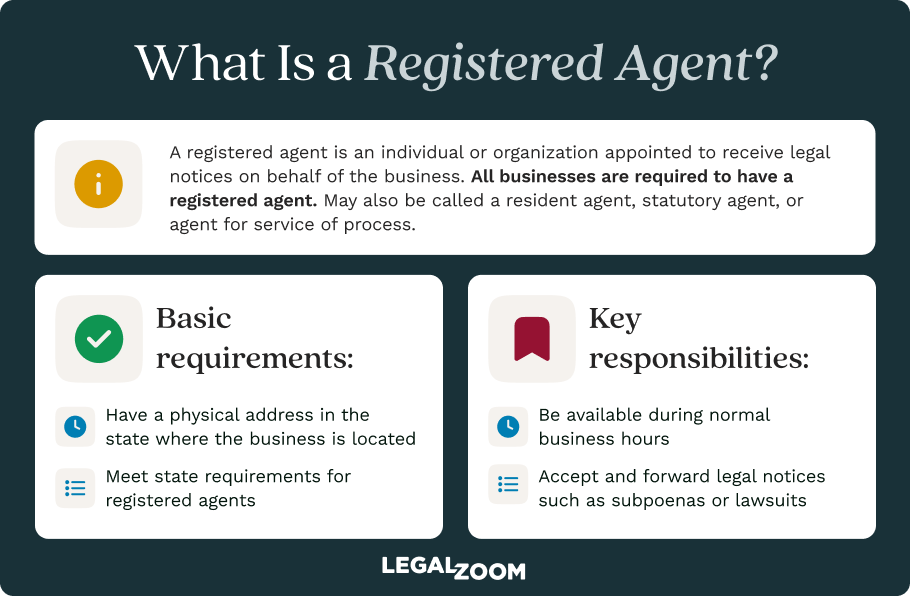
A registered agent is an individual or a business entity designated to receive legal notices and government correspondence on the nonprofit's behalf. The registered agent must have a physical Vermont street address (P.O. boxes do not qualify) and must be available during normal business hours to accept service of process. A founder, board member, or employee can serve in this role, or the organization can hire a professional registered agent service.
Step 3: Prepare and file Vermont articles of incorporation
Filing articles of incorporation for a nonprofit in Vermont is the most important step for making your venture legal and able to operate in the state.
Online filing is preferred and typically processes within one business day. You can file online through your business services account. To file by mail, first obtain a PDF form by submitting a forms request. You’ll then receive the form via email, typically within one business day, along with instructions for filling out and submitting the form.
Mail filings take approximately 7–10 business days to process. No matter which way you file, the fee is $155.
Your articles must include the following:
- Name of the corporation, including its entity designator
- Business type (public benefit corporation or mutual benefit corporation)
- Name and Vermont street and mailing address of the registered agent
- Name and address of each incorporator
- Whether or not the corporation will have members
- A description of how assets will be distributed upon dissolution
- The type of nonprofit (for tax purposes)
- Description of business purpose
- Initial principal office street address (no P.O. box) and mailing address
- Names and addresses of initial directors and officers (optional)
- Any additional provisions
When applying for 501(c)(3) status, the IRS will look for three specific clauses:
- A purpose clause limiting the organization to exempt purposes—charitable, educational, religious, or similar. A generic "any lawful purpose" statement is not sufficient.
- A private inurement prohibition, which says that no part of the organization’s net earnings will benefit any specific person who is part of the nonprofit, such as a creator, family member, or shareholder.
- A dissolution clause directing remaining assets to another 501(c)(3) or a government entity upon dissolution.
Step 4: Draft nonprofit bylaws and hold your organizational meeting
Bylaws are your nonprofit's internal rulebook. Unlike your articles of incorporation, bylaws are not filed with the Vermont Secretary of State—you adopt them internally and keep them in your corporate records.
Well-drafted nonprofit bylaws in Vermont should address:
- Name and purpose of the organization
- Board composition, including the number of directors, term lengths, election procedures, and removal
- Officer roles and responsibilities
- Meeting requirements, including frequency, quorum, and notice procedures
- Voting procedures, including whether proxy voting is permitted
- Conflict of interest policy (required by the IRS as part of the tax-exempt-status application)
- Amendment procedures
- Fiscal year and basic financial controls
After adopting the bylaws, the initial board holds an organizational meeting to elect officers, authorize opening a bank account, acquiring an EIN, and completing any other setup tasks. Everything that happens in this board meeting and others should be kept in written minutes.
Keep the minutes in your corporate records book—they are evidence that your governance structure was properly established and can come in handy if the IRS requests to see your meeting minutes in the 501(c)(3) review process.
Learn more in our guide to how to write nonprofit bylaws, or consider using our corporate bylaws service to make sure you cover the most important points.
Step 5: Get an EIN for your Vermont nonprofit
An employer identification number (EIN) is a nine-digit federal tax identification number issued by the IRS. You need it before you can open a bank account, hire employees, or apply for tax-exempt status from the IRS.
You can apply for an EIN through the IRS’ website, or you can use LegalZoom’s dedicated EIN service, which compiles all your information and files the application for you.
Step 6: Apply for 501(c)(3) status with IRS Form 1023 or Form 1023-EZ
There are two 501(c)(3) applications available for applying for tax-exempt status. These are how you get 501(c)(3) status in Vermont and across the nation:
- Form 1023-EZ (short form). This streamlined form is available to organizations that reasonably expect gross receipts of $50,000 or less annually for the next three years and hold total assets of $250,000 or less. The current IRS user fee is $275, and it typically processes within two to four weeks.
- Form 1023 (standard form). The standard form is required for organizations exceeding the 1023-EZ thresholds, or those with complex structures, foreign activities, or unusual compensation arrangements. The current IRS user fee is $600, and it usually processes within three to six months, but could take longer.
What you need before filing either form:
- EIN for your nonprofit in Vermont
- Signed and filed Vermont articles of incorporation, with the 501(c)(3) clauses in place
- Adopted bylaws
- Conflict of interest policy
- Financial data, including actual financials for prior years (if any) and projected budgets for the next two to three years
- A narrative description of activities, such as what the organization does, who it serves, and how it advances its exempt purpose
Both applications are filed online through Pay.gov.
Retroactive exemption: If you file Form 1023 within 27 months of your incorporation date, the IRS will generally grant 501(c)(3) status retroactively to the date your articles were approved. This means that you won’t owe federal income tax for that period and donations made while your application was pending can be treated as tax-deductible. While the IRS may grant certain exemptions to this 27-month rule, aim to complete and file your form within this period to avoid any financial repercussions or delays.
Vermont nonprofit tax exemption and Department of Taxes registration
While federal 501(c)(3) status resolves your federal tax picture, it does not automatically resolve all your Vermont state taxes. In the same vein, if the IRS revokes your federally designated tax-exempt status, you’ll immediately lose your state tax-exempt status for nonprofits in Vermont. Protecting your federal 501(c)(3) status protects your Vermont tax status too.
Below are the types of state taxes that your organization may or may not owe.
State corporate income tax
Vermont generally follows federal IRS designations for tax-exempt organizations. Income tied to your exempt mission is typically not subject to Vermont corporate income tax. If your organization earns unrelated business income, Vermont requires a state filing for that income.
Sales and use tax
Vermont typically exempts 501(c)(3) organizations from collecting sales tax on taxable sales. One exception: If your organization's total sales of tangible personal property exceeded $20,000 in the prior year, you must collect and remit sales tax on those sales in the current year.
To claim a sales tax exemption on your own purchases, register for a business tax account with the Vermont Department of Taxes, then complete Form S-3 (Purchases for Resale, by Exempt Organizations, and by Direct Pay Permit). Vermont does not require annual renewal of sales tax exemption certificates.
Meals and rooms tax
If your organization runs a café, hosts ticketed dinners, or operates any facility serving food or lodging, register for a Meals and Rooms Tax license before your first taxable transaction.
Local option tax
Some Vermont municipalities charge a local option tax, which your nonprofit may be subject to depending on its activities.
Other Vermont registrations and requirements
Paid fundraisers
Vermont specifically regulates paid fundraisers—outside individuals or firms hired to solicit donations on your nonprofit's behalf in exchange for compensation.
Under Vermont's charitable solicitations law, paid fundraisers must file a notice of solicitation with the Vermont Attorney General's office at least 10 days before each campaign begins. Each campaign carries a $270 filing fee. Paid fundraisers also owe an annual registration fee of $675. The law covers telephone solicitation, direct mail, door-to-door solicitation, and other forms of paid fundraising conducted on behalf of Vermont charities.
Vermont does not require fundraising counsel to register. Fundraising counsel advise on strategy and donor outreach without directly soliciting donations. If you're hiring someone to help plan a campaign rather than make the ask, the paid fundraiser rules likely don't apply. When in doubt, confirm with the Vermont Attorney General's office.
Out-of-state charities soliciting in Vermont
If your organization is incorporated in another state and wants to operate or solicit funds in Vermont, you must obtain a certificate of authority from the Vermont Secretary of State.
Local registration requirements
Some Vermont municipalities may require charities that solicit in person to register before fundraising. Check with the specific city or town before running a door-to-door or in-person local campaign.
What about fundraising in other states?
Vermont's exemption from charitable solicitation registration applies only within Vermont. If your nonprofit solicits donations from residents of other states—including through a national online fundraising campaign—you may need to register in each of those states before soliciting. Requirements vary significantly by state. Review each state's rules or consult an attorney before launching any multistate or national fundraising effort.
Ongoing compliance for Vermont nonprofits
After incorporating your nonprofit, you’ll need to abide by requirements for nonprofit compliance in Vermont and with the IRS.
Vermont Secretary of State biennial report
Vermont nonprofit corporations must file a biennial report every two years, beginning the first year following initial registration, between January 1 and April 1. This report keeps your registered agent information, principal office address, and officer details current.
The filing fee for your biennial report is $35. Failure to file by the April 1 deadline can result in administrative dissolution. Reinstatement requires filing all past-due reports and paying outstanding fees—far more disruptive than meeting the deadline.
IRS Form 990
Most 501(c)(3) organizations must file an annual information return with the IRS. The specific form depends on gross receipts:
- Form 990-N (e-Postcard). Annual revenue of $50,000 or less
- Form 990-EZ. Annual revenue below $200,000 and total assets below $500,000
- Form 990 (full form). Annual revenue of $200,000 or more, or total assets of $500,000 or more
Form 990 is due by the 15th day of the fifth month after the close of the fiscal year. To request a six-month extension, you can file Form 8868 by the original deadline. (The Form 990-N extension is not available, but there is no penalty for filing it late.)
If your nonprofit fails to file its Form 990 for three consecutive years, the IRS automatically revokes its tax-exempt status, which also triggers the loss of your Vermont state tax exemption. Treat Form 990 as a non-negotiable annual obligation.
Registered agent and records maintenance
Your nonprofit must maintain a registered agent with a physical Vermont street address at all times. If your registered agent moves, resigns, or becomes unavailable, update the Secretary of State promptly.
Additionally, maintain a corporate records book containing your articles of incorporation, bylaws, board meeting minutes, officer election records, and financial documents. Grant funders, auditors, and the IRS may all request them.
How much does it cost to start a nonprofit in Vermont?
The only mandatory out-of-pocket costs are the nonprofit filing fee in Vermont and the IRS user fee for whichever Form 1023 version applies. But there are other costs that may apply, depending on your organization’s needs.
| Step | Estimated fee |
|---|---|
| Name reservation (optional) | $35 |
| Articles of incorporation | $155 |
| EIN application | Free through the IRS website |
| Form 1023-EZ (small orgs) | $275 |
| Form 1023 (larger orgs) | $600 |
Vermont state fees and federal IRS fees are subject to change. Always verify current amounts at the official agency website before filing.
How LegalZoom can help
The formation process spans many steps across state and federal agencies, and a timeline that can stretch from three months to over a year. Errors in foundational documents like your articles of incorporation can create delays that compound across every subsequent filing.
LegalZoom's nonprofit formation service guides you through a structured process to ensure nothing is missed. Plus, your formation is backed by our 100% accuracy guarantee. When you’re ready to apply for your federal tax status, our 501(c)(3) filing service can help with your IRS Form 1023-EZ.
Vermont nonprofit FAQs
How long does it take to start a nonprofit in Vermont?
If your organization qualifies for Form 1023-EZ, you can realistically move from filing your Vermont articles to holding 501(c)(3) status in under two months when everything goes smoothly. But, when planning how to start a nonprofit in Vermont, build at least six months into your planning timeline, in case you need to file the full Form 1023.
If the IRS requests additional information after reviewing your Form 1023, respond promptly—delays on your end extend the overall timeline.
What is the 33% rule for nonprofits?
The 33% rule is a public support test the IRS uses to determine whether a 501(c)(3) qualifies as a public charity rather than a private foundation. To pass, an organization must receive at least one-third of its total support from public sources—such as government grants and contributions from a broad donor base—rather than from a small number of private sources. Public charities receive more favorable tax treatment than private foundations. If your organization relies heavily on a single donor or small group of funders, plan your fundraising strategy with this threshold in mind.
Can I pay myself a salary if I start a Vermont nonprofit?
Yes. Nonprofit founders, directors, officers, and employees can receive reasonable compensation for services they actually perform. The IRS requires that compensation be "reasonable and not excessive" compared to what similar organizations pay for similar roles. Excessive compensation can jeopardize your 501(c)(3) status and trigger personal excise taxes on the individuals who approved the payment.
Document every compensation decision in board meeting minutes, and conduct periodic comparability reviews using salary data from similar organizations.
Does FMLA apply to Vermont nonprofits?
Yes. The federal Family and Medical Leave Act applies to nonprofit employers with 50 or more employees that work for 20 or more weeks in the current or previous calendar year. Eligible employees can take up to 12 weeks of unpaid, job-protected leave per year for qualifying reasons.
Vermont also has its own Parental and Family Leave Act, which applies to nonprofits and other entities that employ 10 or more people who have worked 30 or more hours per week for the last 12 months.
What is the difference between an incorporator and a director in a Vermont nonprofit?
An incorporator signs and files the nonprofit articles of incorporation in Vermont. Their role is purely administrative—once the articles are accepted and the initial board is in place, the incorporator's legal involvement ends. A director is a member of the nonprofit’s board of directors in Vermont who holds ongoing fiduciary responsibility: setting policy, overseeing finances, and making major organizational decisions for the life of the organization. The same person can serve as both, but the roles are legally distinct.
What specific language must Vermont nonprofit articles of incorporation include to qualify for 501(c)(3) status?
Three clauses are required. First, there should be a purpose clause limiting the organization's activities to one or more exempt purposes under the Internal Revenue Code section 501(c)(3)—typically charitable, educational, religious, scientific, or literary.
Second, include a dissolution clause specifying that remaining assets will be distributed to another 501(c)(3) or a government entity upon dissolution—not returned to founders or directors.
Finally, include a private inurement prohibition that states that no part of the organization’s net earnings will benefit any specific person in the nonprofit. All clauses must appear in your articles before you file them with the Vermont Secretary of State.
'%20/%3e%3c/svg%3e)

'%3e%3cpath%20fill-rule='evenodd'%20clip-rule='evenodd'%20d='M9.31239%2025.5316H13.0679V14.1032H9.31239V25.5316ZM11.1913%208.46875C9.93945%208.46875%209%209.25086%209%2010.505C9%2011.5995%209.78211%2012.5389%2011.1913%2012.5389C12.6005%2012.5389%2013.3826%2011.5995%2013.3826%2010.505C13.3826%209.4082%2012.6005%208.46875%2011.1913%208.46875ZM27%2018.9577V25.5316H23.2445V19.4275C23.2445%2017.8609%2022.6174%2016.7664%2021.3679%2016.7664C20.2711%2016.7664%2019.644%2017.5463%2019.3316%2018.1756C19.1743%2018.488%2019.1743%2018.8004%2019.1743%2019.1128V25.5316H15.4165V13.9458H19.1743V15.5123C19.644%2014.7302%2020.5835%2013.6357%2022.6174%2013.6357C25.1234%2013.7908%2027%2015.3573%2027%2018.9577Z'%20fill='white'/%3e%3c/g%3e%3cdefs%3e%3cclipPath%20id='clip0_952_9489'%3e%3crect%20width='18'%20height='18'%20fill='white'%20transform='translate(9%208)'/%3e%3c/clipPath%3e%3c/defs%3e%3c/svg%3e)

