.
.





Starting an LLC in Connecticut comes down to one document: the certificate of organization, filed with the Connecticut Secretary of the State's Business Services Division. Connecticut calls it a "certificate" rather than the "articles of organization" label most other states use. Below, you'll find each step, every fee, and the compliance deadlines you need to track once your LLC exists.
Key takeaways
- A Connecticut LLC is formed by filing a certificate of organization with the Secretary of the State's Business Services Division; the filing fee is $120.
- Your LLC name must be distinguishable from existing Connecticut business names, and you need a registered agent with a Connecticut street address.
- The certificate of organization asks for key business, registered agent, and member or manager information, and the filing becomes part of the public record.
- Connecticut LLCs must file an annual report each year and pay the $80 annual report fee.
- Formation does not cover everything: You may still need a federal tax ID, Department of Revenue Services registrations, licenses, permits, and a business bank account.
Step 1: Choose a name for your Connecticut LLC
Your name has to clear the Business Services Division's naming rules before the state accepts your certificate of organization.
Every name needs a designator: "Limited Liability Company," "LLC," "L.L.C.," or "Limited Liability Co." ("Limited" can shorten to "Ltd.," "Company" to "Co."). Your name must be distinguishable from every business already formed, registered, or reserved with the Secretary of the State. Any name that's confusingly similar to an existing one can still get flagged during review.
Connecticut also prohibits names that imply a government affiliation or misrepresent the LLC's purpose. Names suggesting a regulated financial or insurance business may require additional review or licensing, so check with the appropriate state agency before filing.
Professional LLCs need "Professional Limited Liability Company," "P.L.L.C.," or "PLLC" instead.
Free Connecticut Business Name Check
Starting a business? Use our free name check tool to check your business name against the Connecticut Secretary of the State records.
By clicking "Check Availability," I agree to LegalZoom's Terms of Use. This search is a preliminary check of state databases and does not include variations or trademarks. Results do not guarantee name availability or compliance with legal requirements.
How do I check Connecticut LLC name availability?
Search the Secretary of the State's database at Business.CT.gov, or use LegalZoom's free Connecticut LLC business name search tool below to catch exact matches and close calls. A clean result isn't a guarantee of approval. The Business Services Division makes the final determination when it reviews your certificate of organization.
Should I reserve my Connecticut LLC name before filing?
If you've settled on a name but aren't ready to file, you can reserve it via the Application for Reservation of Name for $60. The reservation holds the name for 120 days and cannot be renewed.
Step 2: Appoint a Connecticut registered agent
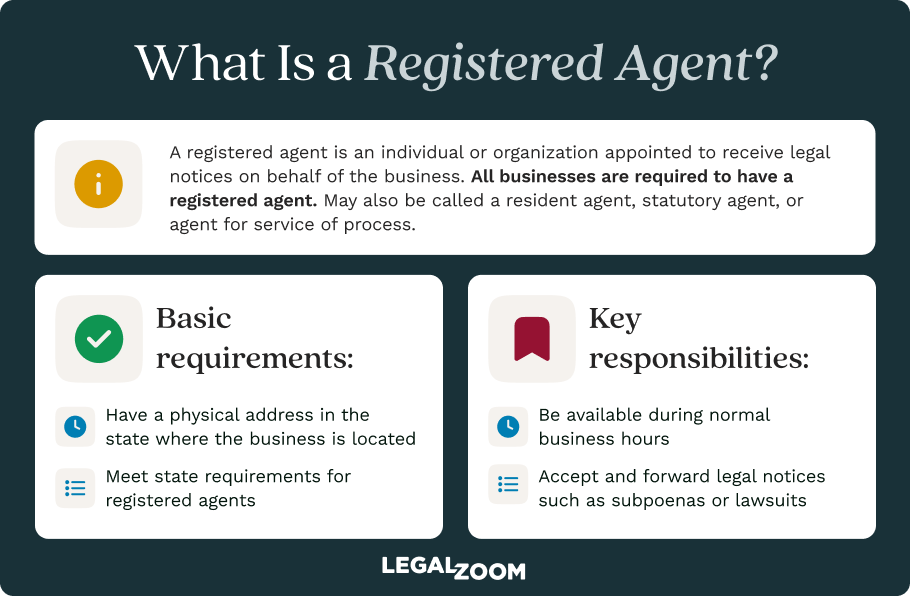
Every Connecticut LLC needs someone authorized to accept legal paperwork on its behalf, and you must name your registered agent right on the certificate of organization. An incomplete or invalid agent listing can cause the filing to be rejected.
Who can serve as a Connecticut registered agent?
Connecticut allows an individual adult Connecticut resident, a domestic business entity authorized to act as a registered agent, or a foreign business entity authorized to do business in the state to be a registered agent. All registered agents must have a physical street address in Connecticut (no P.O. boxes), and your LLC can't act as its own registered agent.
The registered agent must also sign the certificate of organization to confirm consent. A blank or unsigned agent line is one of the most common rejection reasons.
Can I use my home address as my Connecticut registered agent?
You can, but it becomes searchable in the public record once the state processes your filing, and there's no way to remove it later. Changing it down the road requires a filing with the Business Services division.
Should I use a commercial registered agent service in Connecticut?
Consider a professional service if you value privacy, travel often, or lack a fixed office in the state. Your agent must be available during all normal business hours to accept service of process, and missing a time-sensitive document is a real risk otherwise. A commercial service can keep your home address off the registered-agent portion of the public record, but the certificate may still require a member or manager's residence address. See LegalZoom's guide to Connecticut registered agent requirements for more information.
Step 3: File the Connecticut certificate of organization
Once you've locked in a name and registered agent, the organizer (who doesn't have to be an owner) files the certificate. You’ll need to include certain information in your certificate of organization for it to be accepted by the state. Leave any required field blank and expect rejection.
- LLC name: full legal name, designator included
- Principal office address: full street address, no P.O. boxes
- Registered agent information: name, Connecticut street address, and signature accepting the role
- Member or manager information: name, title, business address, and residence address for at least one member or manager (only three appear on the public registry page; you can request copies of the full filing)
- Email address: how the state notifies your LLC when annual reports come due
- NAICS code: standard business classification code
- Organizer's signature: confirms accuracy; if a business entity is the organizer, the signer must include full name and title
Check every field twice. If an error appears after filing, Connecticut permits a Statement of Correction for certain inaccuracies or defects; other changes require an amendment.
The quickest way to file is online. Set up a business account on Business.CT.gov and file through the portal.
To deliver by mail, send completed forms with a check or money order made out to "Secretary of the State" to:
P.O. Box 150470
Hartford, CT 06115-0470
In person:
165 Capitol Avenue, Suite 1000
Hartford, CT 06106
An authorized organizer must sign and certify accuracy. Connecticut imposes real penalties for false statements, and unsigned forms are a common rejection reason.
What is the filing fee to start an LLC in Connecticut?
The fee is $120, no matter how you file. That covers formation only, not the optional $60 name reservation or the $80 annual report due each year after. Pay online by credit card or by check or money order for mail-in filings.
Step 4: Create a Connecticut LLC operating agreement
Your operating agreement spells out ownership, decision-making, and profit splits. It's internal, not filed with the state, but a written agreement can reduce disputes and clarify how the business operates.
Does Connecticut law require an LLC operating agreement?
No. Without one, default rules under the Connecticut Uniform Limited Liability Company Act (Connecticut General Statutes Chapter 613) govern every dispute. That's fine for a simple one-person shop but risky once members start contributing unequally.
The certificate of organization may list only one member or manager, so it may not show every owner. An operating agreement can document each member's ownership and management rights, but a bank, landlord, or other third party may still ask for additional proof.
Even single-member LLCs benefit: A signed agreement helps separate personal finances from the business, which matters if a creditor or court ever challenges your liability protection.
What should a Connecticut LLC operating agreement include?
Your operating agreement should include the following information at a minimum.
- Ownership percentages: What each member contributed and their stake.
- Management structure: Member-managed or manager-managed, matching your certificate of organization.
- Voting rights and decision-making: Approval thresholds and tie-breaking rules.
- Profit and loss allocation: How earnings and losses split.
- Transfer and buyout rules: What happens when someone leaves, sells, or dies.
- Dissolution terms: How you'll wind down the LLC.
Connecticut's LLC Act lets you rewrite most default rules, with a small handful of provisions you can't waive. If you have multiple members, prioritize this document. Drafting it now costs far less than litigating an ownership dispute later.
Step 5: Get an EIN for your Connecticut LLC
An employer identification number (EIN) is a federal tax ID the IRS assigns to your business. Multi-member Connecticut LLCs generally need one; single-member LLCs generally need one if they have employees or certain excise-tax obligations, and a bank or state agency may also require one. You can apply through the IRS’ website or let LegalZoom submit your application on your behalf.
Starting a business takes courage. LegalZoom makes sure the legal details don’t stand in your way, from the day you register until the day you retire.

Step 6: Register for Connecticut taxes with the Department of Revenue Services
Filing your certificate of organization doesn't register you for state taxes. Some Connecticut LLCs must register separately with the Department of Revenue Services (DRS) before they begin activities that create a state tax obligation, such as selling taxable goods or services or hiring employees.
What tax IDs or registrations do I need for a Connecticut LLC?
Register with the DRS if you plan to sell taxable goods or services, hire employees, or owe any state-administered tax, and do it before you start operating. Complete the Business Taxes Registration Application (Form REG-1) electronically through myconneCT. You'll receive a Connecticut Tax Registration Number for ongoing filings. Several state tax accounts, including sales tax, can't legally operate without this registration.
What other Connecticut state taxes might apply to my LLC?
The exact taxes you’ll need to cover will depend on your business. Common examples include:
- Sales and use tax. Selling physical products or certain taxable services requires a Sales and Use Tax Permit ($100 to register). Connecticut's general sales tax rate is 6.35%; restaurant meals are taxed at 7.35%.
- Employee withholding. Hiring staff requires DRS registration to withhold Connecticut income tax from wages.
- Unemployment insurance. Employers must also register with the Connecticut Department of Labor for unemployment insurance through ReEmployCT, separate from DRS registration.
Connecticut's $250 biennial business entity tax no longer applies to tax periods beginning after 2018, although prior-period liabilities may still be due.
Step 7: Open a business bank account for your Connecticut LLC
A dedicated business account helps keep your LLC's money separate from your own, supports clean records that help preserve the separation between you and the business, and makes tax time simpler.
Most banks want your approved certificate of organization (or certified copy), your EIN confirmation letter from the IRS, and government-issued ID for each authorized person. Many also ask for your operating agreement, especially with multiple members. Call ahead to confirm requirements.
Step 8: Apply for Connecticut business licenses
There's no general statewide business license in Connecticut. Requirements break down across three levels:
- State occupational and professional licenses. Regulated services (healthcare, contracting, real estate, financial services, home improvement, childcare, food service) usually need licensing through a state agency: the Department of Consumer Protection for contractors and real estate, the Department of Public Health for healthcare, the Department of Banking for financial services. Each has its own application, fees, and renewal schedule.
- Municipal permits. Your town may require zoning approval, a certificate of occupancy, signage permits, or health department clearances. Check with your town clerk or planning and zoning office.
- Federal licenses. Only relevant for federally regulated industries (transportation, alcohol, firearms, broadcasting). Most Connecticut LLCs never need one.
Fore more information, see the Connecticut business license guide.
Connecticut LLC filing fees and ongoing costs
Forming your LLC in Connecticut requires a minimum of $120 to file your certificate of organization. All other amounts in this table are either post-formation or optional fees, the most important being your annual report filing.
| Fee type | Amount | When to pay |
|---|---|---|
| Certificate of organization | $120 | Once, at formation |
| Name reservation (optional) | $60 | Before filing, if reserved in advance |
| Annual report | $80 | Each year, January 1 through March 31 |
| Certificate of existence (long form) | $100 | As needed (banks, lenders, contracts) |
| Certificate of existence (short form) | $50 | As needed |
| Certified copies of filed documents | $55 | As needed |
| Dissolution (domestic LLC) | $0 | When you close the LLC |
| Statement of Correction | $100 | As needed to correct an inaccurate or defective filing |
The risks of filing a Connecticut LLC on your own
Filing a Connecticut LLC yourself may seem like it’ll save you money, but even a small mistake can delay formation or create compliance problems later. The risks extend beyond choosing the correct form and include incomplete information, public-record exposure, missed tax registrations, and overlooked annual-report deadlines.
- Using the wrong formation document. Connecticut uses a certificate of organization for domestic LLCs, not articles of organization.
- Choosing a name that is not distinguishable on the Secretary of the State's records. Your business name must be unique and not similar to others already in use.
- Naming an invalid registered agent. The agent must have a Connecticut street address, and the filing must include the agent's consent.
- Leaving required certificate of organization fields incomplete. Your forms must be filled out completely for the Business Services Division to process your registration. This includes the principal-office address, registered-agent information, member or manager details, business email, NAICS code, or organizer signature.
- Underestimating Connecticut's public-record exposure. The filing requires business and residence addresses for at least one member or manager, so a commercial registered agent will not remove every personal address from the record.
How to start your Connecticut LLC with LegalZoom
LegalZoom’s LLC formation service can help with the paperwork needed to form your LLC and the ongoing tasks that help keep it in good standing.
- Registered agent service. Provides a Connecticut registered agent address and can help keep your personal address off the registered-agent portion of the public filing.
- Operating agreement drafting. Helps document ownership, management responsibilities, voting rights, and profit distributions.
- Business license and permit search. Our business license service helps identify the licenses, permits, and registrations your business may need.
- Legal consultation plans. Connect you with licensed attorneys for questions about LLC management, professional licensing, and compliance requirements.
Find the right state to form an LLC
Find the right state to form an LLC
Every state has different rules, costs, and considerations for LLC formation.


Connecticut LLC FAQs
Is Connecticut a good state to form an LLC?
If your business operates in Connecticut, forming here is generally your best move. Some people think they should form in Delaware, Wyoming, or Nevada but operate daily in Connecticut, and while you can, you'll typically still need to register as a foreign LLC here anyway, which means covering both states' fees. For most Connecticut-based businesses, forming domestically is simpler and cheaper.
Do I need to file as a foreign LLC in Connecticut if I formed my LLC in another state?
Possibly. Hiring employees, leasing space, or regularly serving customers in Connecticut can indicate that registration is required, but the legal test is whether the LLC is transacting business here. If registration is required, file a foreign registration statement rather than a new domestic Certificate, because you're registering an existing entity. State law does not draw one exact line between occasional contact and transacting business, so confirm your facts before filing.
How do I dissolve a Connecticut LLC?
Members typically dissolve voluntarily following the process in the operating agreement, usually a member vote, since an LLC still on the books keeps accruing annual report obligations and fees even after it stops operating. Dissolution can also happen involuntarily if the state initiates dissolution by forfeiture for unfiled annual reports. Filing a certificate of dissolution ends the LLC under state law, but you still need to wind up the business and address remaining taxes, debts, and other obligations. See LegalZoom's guide to how to dissolve a Connecticut LLC.
How do I correct a mistake on my Connecticut certificate of organization after filing?
File a correction as soon as you catch a misspelled name, wrong address, or bad member information, since an inaccurate public record can cause problems if a bank, lender, or court relies on it. Connecticut lets LLCs fix this through a formal amendment filed with the Business Services Division when an amendment is appropriate. For certain inaccuracies or defects, Connecticut instead allows a Statement of Correction. You do not need to start over with a new certificate.
'%20/%3e%3c/svg%3e)

'%3e%3cpath%20fill-rule='evenodd'%20clip-rule='evenodd'%20d='M9.31239%2025.5316H13.0679V14.1032H9.31239V25.5316ZM11.1913%208.46875C9.93945%208.46875%209%209.25086%209%2010.505C9%2011.5995%209.78211%2012.5389%2011.1913%2012.5389C12.6005%2012.5389%2013.3826%2011.5995%2013.3826%2010.505C13.3826%209.4082%2012.6005%208.46875%2011.1913%208.46875ZM27%2018.9577V25.5316H23.2445V19.4275C23.2445%2017.8609%2022.6174%2016.7664%2021.3679%2016.7664C20.2711%2016.7664%2019.644%2017.5463%2019.3316%2018.1756C19.1743%2018.488%2019.1743%2018.8004%2019.1743%2019.1128V25.5316H15.4165V13.9458H19.1743V15.5123C19.644%2014.7302%2020.5835%2013.6357%2022.6174%2013.6357C25.1234%2013.7908%2027%2015.3573%2027%2018.9577Z'%20fill='white'/%3e%3c/g%3e%3cdefs%3e%3cclipPath%20id='clip0_952_9489'%3e%3crect%20width='18'%20height='18'%20fill='white'%20transform='translate(9%208)'/%3e%3c/clipPath%3e%3c/defs%3e%3c/svg%3e)