.
.





Kansas offers a straightforward path to forming a limited liability company (LLC). To create one, you’ll file articles of organization with the Kansas Secretary of State, choose a resident agent with a Kansas registered office, and pay the state filing fee. After approval, you may also need tax accounts, licenses, insurance, employer registrations, and a plan for ongoing compliance.
This guide walks through the current Kansas process, including what belongs on the state form, how much filing and biennial reporting cost, and what to do after the LLC is approved. You can handle the state filing yourself, or use LegalZoom to help prepare and file the paperwork.
Key takeaways
- Kansas articles of organization cost $85 online or $90 on paper.
- Every Kansas LLC must maintain a resident agent and a Kansas registered office that is not a P.O. box.
- Kansas recognizes written, oral, or implied operating agreements and does not require the agreement to be filed, but a written agreement is strongly recommended.
- Kansas LLCs file a business entity information report every other year by April 15. The current filing fee is $90 online or $110 on paper.
- Formation is only one part of getting started. Tax, employer, licensing, insurance, and local requirements depend on the business’ activities and location.
Step 1: Name your Kansas LLC
Choose a name that works for both the state filing and your long-term brand. Before investing in a website, signs, or marketing, check the Kansas Secretary of State’s records, available domain names, and relevant federal trademarks. LegalZoom’s Kansas business name search tool is free to use, and you can run as many searches as you need to check your preferred name and close variations.
Free Kansas Business Name Check
Starting a business? Use our free name check tool to check your business name against the Kansas Secretary of State records.
By clicking "Check Availability," I agree to LegalZoom's Terms of Use. This search is a preliminary check of state databases and does not include variations or trademarks. Results do not guarantee name availability or compliance with legal requirements.
What naming rules apply to Kansas LLCs?
A Kansas LLC name must include “limited liability company,” “limited company,” or an approved abbreviation: L.L.C., L.C., LLC, or LC. It must also be distinguishable on the Secretary of State’s records from other registered, reserved, and recently forfeited or canceled names.
Kansas may allow a name that is not distinguishable if the existing entity provides written consent on the state’s prescribed form. Professional or regulated terms can trigger additional requirements, so check with the appropriate licensing body and the Secretary of State before filing. Kansas does not register statewide assumed or DBA names through the Secretary of State.
Can you reserve a Kansas LLC name?
If you have chosen a name but are not ready to form the LLC, you can reserve it for 120 days. The current fee is $30 online or $35 on paper. A reservation is optional; if you are ready to form the LLC, filing the articles of organization secures the approved legal name.
Step 2: Appoint a Kansas resident agent
Kansas uses the term “resident agent” for the person or entity that receives service of process and official communications for the LLC. The agent may be the LLC itself, an individual Kansas resident, an eligible domestic entity, or an eligible foreign entity authorized to do business in Kansas.
The registered office must be a complete Kansas street, rural route, or highway address—a P.O. box is not accepted. A domestic-entity agent must maintain a business office identical to the registered office that is open during standard business hours with an individual present to accept service and perform the agent’s duties.
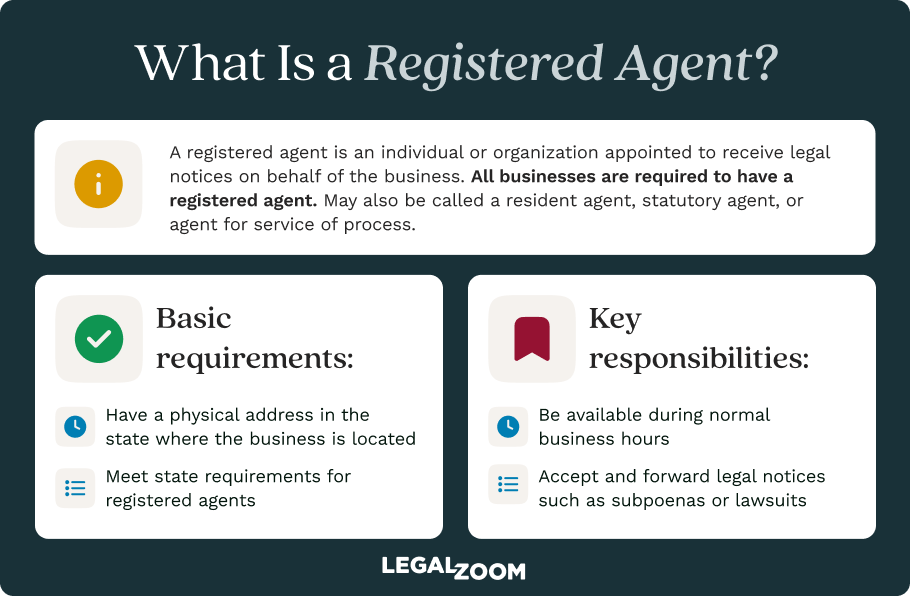
The resident agent and registered-office information become part of the public filing record. Using a professional service for this function can keep your home address private. For more detail, see LegalZoom’s guide to Kansas registered agent requirements.
If the agent or office changes later, file the state’s change form promptly. The current fee is $30 online or $35 on paper.
Step 3: File the Kansas articles of organization
Articles of organization legally create the Kansas LLC. Review the legal name, resident agent, registered office, and signer information carefully before submitting.
What information does the Kansas form require?
The general Kansas LLC form is brief, but the information becomes part of the LLC’s official state record. The form asks for:
- The LLC’s legal name, including an approved LLC designator
- The resident agent’s legal name
- The complete Kansas registered office address
- The signature of one or more authorized persons
The general form does not ask for a tax closing month or management structure.
Professional LLCs and LLCs that may create series use separate forms and may have additional requirements.
Kansas law generally makes a filed document effective on its filing date, but a document may specify a later date up to 90 days after filing.
How do you file, and what does it cost?
File online through the Kansas Secretary of State business filing system for $85. The agency says online processing occurs within minutes and allows the filer to print a certified copy after approval. A paper filing costs $90.
If you prefer, mail the current paper form and payment to:
Kansas Secretary of State
Docking State Office Building
915 SW Harrison Street
Topeka, KS 66612
Check the Secretary of State’s website before mailing, because forms, addresses, fees, and processing guidance can change. The current general LLC materials provide online filing and mail instructions; other entity and filing types may use different channels.
Step 4: Create a written Kansas LLC operating agreement
Kansas defines an operating agreement broadly: It may be written, oral, or implied, and it may exist before, at, or after the articles are filed. It’s not filed with the Secretary of State. A signed written agreement is still the safer practical choice because it records the owners’ decisions in one place.
Without a contrary operating-agreement term, Kansas vests management in members in proportion to their current interests in LLC profits, and members owning more than 50% control. An operating agreement can instead provide for manager management and establish a different decision process within the limits of Kansas law.
What should a Kansas operating agreement include?
A written operating agreement should reflect how the owners expect to run the business, not just repeat generic language. Addressing the following topics up front can reduce uncertainty when ownership, management, or business circumstances change:
- Each member’s ownership interest and initial contribution
- Voting rights and approval thresholds for major decisions
- How profits, losses, and distributions are allocated
- Whether the LLC is member-managed or manager-managed
- Procedures for admitting members and transferring interests
- Rules for departures, disputes, dissolution, and distribution of remaining assets
Keep the signed agreement with the LLC’s records and give each member a copy.
Step 5: Get an EIN for your Kansas LLC
An employer identification number (EIN) is a federal tax ID issued by the IRS. Multi-member LLCs taxed as partnerships, LLCs with employees, and LLCs that elect corporate tax treatment commonly need one. A single-member LLC without employees may not need an EIN for federal income-tax reporting, but it can still request one for banking or state-tax purposes.
Form the LLC with the Kansas SOS before applying. The IRS issues EINs online and says eligible applicants can receive one in minutes. Apply directly through the IRS or use an EIN service if you want help.
Step 6: Complete Kansas tax, employer, license, and operating setup
An approved LLC is not automatically registered for every tax, license, or permit it may need. Requirements depend on what the business sells, whether it hires employees, its profession or industry, and where it operates.
Which Kansas tax and employer registrations may apply?
Use the Kansas Business Tax Application (Form CR-16) to register for applicable taxes administered by the Kansas Department of Revenue, including retailers’ sales tax and employee withholding. Kansas’ state sales-tax rate is 6.5%, with applicable local rates added. Whether a product or service is taxable and which combined rate applies depends on the transaction and destination.
If the LLC will have employees, also create an account with the Kansas Department of Labor and determine unemployment insurance, workers’ compensation, new-hire, payroll, and workplace obligations.
What Kansas licenses or permits might you need?
Kansas does not issue one general statewide business license. State agencies regulate particular professions, industries, products, and activities, while cities and counties may impose their own licenses, permits, zoning rules, and registrations. Kansas Business One Stop is a useful starting point, but confirm requirements with each agency and local government that applies to the business.
The current Kansas articles instructions also contain a narrow real-property reporting notice for certain foreign principals with interests near specified military installations. If that description could apply, review the Kansas Attorney General’s current instructions before acquiring or holding the property.
Starting a business takes courage. LegalZoom makes sure the legal details don’t stand in your way, from the day you register until the day you retire.

Kansas LLC costs
At a minimum, forming a general Kansas LLC costs $85 online or $90 on paper. Other costs are recurring, conditional, or optional.. The table separates state charges from services you may choose to purchase.
| Cost item | Amount |
|---|---|
| Articles of organization—online | $85 (required) |
| Articles of organization—paper | $90 (required alternative) |
| Name reservation—online/paper | $30 / $35 (optional) |
| Business entity information report—online / paper | $90 / $110 (recurring every two years) |
Professional resident-agent service, legal or tax advice, insurance, licenses, local permits, and document-preparation services vary by provider and business. Check current prices and agency fees before purchasing or filing.
The risks of filing your Kansas LLC yourself
Kansas’ general LLC form is short, but a valid filing is only one part of forming and maintaining the business. A do-it-yourself filer must also use the current form, make informed governance choices, and track conditional obligations after approval.
- Using an ineligible resident agent or incomplete Kansas registered-office address can delay the filing. The agent and office must satisfy the current statutory standards, and a P.O. box alone is not accepted.
- Using an outdated form, fee, or mailing address can misdirect the submission. Kansas currently lists the Docking State Office Building for mailed articles.
- Treating default law as a substitute for a written operating agreement can produce an unexpected voting result. Kansas’ default management rule follows profit interests, with more than 50% controlling.
- Missing the biennial-report cycle can lead to delinquency and eventual forfeiture or cancellation. The April 15 deadline falls only in the odd or even years that match the LLC’s formation year.
- Completing the articles does not complete tax, employer, licensing, insurance, or local setup. Those obligations depend on what the business does, where it operates, and whether it hires workers.
How to start your Kansas LLC with LegalZoom
Ready to file? LegalZoom can be your partner at every step of your Kansas LLC formation, from checking your business name to preparing and filing your articles of organization. After formation, LegalZoom’s services can help you stay organized as you manage ongoing business and compliance needs.
This can save valuable time while you set up your Kansas LLC, allowing you to focus on launching and running your business.
Find the right state to form an LLC
Find the right state to form an LLC
Every state has different rules, costs, and considerations for LLC formation.


Kansas LLC FAQs
Does a Kansas LLC eliminate personal liability for business debts?
No. An LLC generally separates entity obligations from its members, but the protection is not absolute. A member may still face personal exposure for personal guarantees, the member’s own wrongful conduct, certain statutory obligations, or circumstances in which a court disregards the entity. Separate accounts and accurate records are prudent, but they do not guarantee a particular legal outcome.
At what income is forming an LLC worth it?
There is no universal revenue threshold. Consider the business’s contracts, debt, partners, employees, products or services, liability exposure, tax treatment, recordkeeping burden, and formation and maintenance costs. A lawyer or tax professional can help when ownership, regulated activity, real estate, or tax elections make the choice less straightforward.
What if your Kansas LLC expands into another state?
A Kansas LLC is formed under Kansas law. If it opens a location, hires employees, owns property, or establishes another ongoing business presence elsewhere, it may need to register there as a foreign LLC. Each state applies its own standard, so check before beginning substantial activity outside Kansas.
When is the Kansas biennial report due, and what does it cost?
Kansas LLCs file a Business Entity Information Report every other year. An LLC formed in an even-numbered year files in each succeeding even-numbered year; one formed in an odd-numbered year files in each succeeding odd-numbered year. The deadline is April 15. See LegalZoom’s guide to filing a Kansas biennial report for a step-by-step walkthrough.
The current total fee is $90 online or $110 on paper. Those totals combine the $80 statutory base fee with current information-service and technology charges.
What happens if you miss the deadline?
Kansas provides a three-month, or 90-day, delinquency period after the due date. Once that period passes, the LLC’s registration may be forfeited or canceled, and it cannot file other documents with the Secretary of State until it submits past-due reports and completes reinstatement. File as soon as possible and confirm the current reinstatement requirements and charges with the state.
'%20/%3e%3c/svg%3e)

'%3e%3cpath%20fill-rule='evenodd'%20clip-rule='evenodd'%20d='M9.31239%2025.5316H13.0679V14.1032H9.31239V25.5316ZM11.1913%208.46875C9.93945%208.46875%209%209.25086%209%2010.505C9%2011.5995%209.78211%2012.5389%2011.1913%2012.5389C12.6005%2012.5389%2013.3826%2011.5995%2013.3826%2010.505C13.3826%209.4082%2012.6005%208.46875%2011.1913%208.46875ZM27%2018.9577V25.5316H23.2445V19.4275C23.2445%2017.8609%2022.6174%2016.7664%2021.3679%2016.7664C20.2711%2016.7664%2019.644%2017.5463%2019.3316%2018.1756C19.1743%2018.488%2019.1743%2018.8004%2019.1743%2019.1128V25.5316H15.4165V13.9458H19.1743V15.5123C19.644%2014.7302%2020.5835%2013.6357%2022.6174%2013.6357C25.1234%2013.7908%2027%2015.3573%2027%2018.9577Z'%20fill='white'/%3e%3c/g%3e%3cdefs%3e%3cclipPath%20id='clip0_952_9489'%3e%3crect%20width='18'%20height='18'%20fill='white'%20transform='translate(9%208)'/%3e%3c/clipPath%3e%3c/defs%3e%3c/svg%3e)