.
.






With more than 80,000 small businesses, Vermont has the incentives, support systems, and infrastructure entrepreneurs need to be successful. Forming a limited liability company (LLC) in the Green Mountain State is a great way to protect your personal assets and reap the benefits of a flexible, scalable business structure—and access to all the resources and unique offerings available in the state.
This guide details important tasks, like how to submit paperwork to the Secretary of State and register for taxes—two necessities for setting up an LLC in Vermont.

Why form a Vermont LLC?
An LLC in Vermont is a top choice for many entrepreneurs who want to operate in the state. For one, LLCs can lock in liability protection that sole proprietorships and general partnerships don’t have, which means that LLC members’ personal assets are protected from business debts or liabilities. Plus, this business structure is less rigid in terms of management and recordkeeping than a corporation.
In addition to these benefits, here’s why an LLC in Vermont can be a strong option for your small to medium-sized business:
- Tax flexibility. LLCs default to being taxed as sole proprietorships or general partnerships, where the business profits and losses pass through to the members. However, they can elect to be taxed as either a C corporation or an S corporation.
- Member privacy. Names and addresses of initial LLC members are optional on the Vermont articles of organization, which provides enhanced privacy protection.
- No franchise tax for single-member LLCs. While some states, like Delaware and California, charge a franchise tax for all LLCs operating in the state, Vermont doesn’t impose a traditional LLC franchise tax. However, LLCs taxed as partnerships or S corporations may be subject to the Vermont Business Entity Income Tax.
- Unique LLC structures. Vermont recognizes several types of LLCs other than the standard LLC: a professional LLC (PLLC) for licensed professions, a low-profit LLC (L3C) for businesses that aim to accomplish a charitable or educational purpose, and a blockchain-based LLC for companies that use blockchain technology for part of their business activities. All of these structures can be elected on your Vermont articles of organization.
Vermont LLC at a glance
Get a feel for what’s involved in the Vermont LLC formation process with this brief overview.
- Minimum formation cost: $155
- Articles of organization processing time: 1–10 days
- Registered agent: Required
- Operating agreement: Recommended for all, but required only for blockchain-based LLCs
- Annual report: Required, with filing fee of $45
- LLC franchise tax: Not required, but Business Entity Income Tax required for LLCs that elect to be taxed as S corporations or partnerships
Starting a business takes courage. LegalZoom makes sure the legal details don’t stand in your way, from the day you register until the day you retire.

How to form a Vermont LLC in 6 steps
The formation process for a State of Vermont LLC isn’t very complicated, but you’ll want to make sure you don’t miss any of the steps. Here’s how to officially establish your LLC, stay compliant with state requirements, and set your business up for success.
Step 1: Choose your business name
Before you can fill out the paperwork, you need a name for your Vermont LLC. Your business name must meet specific rules set by the Vermont Secretary of State. Here’s what you need to know when selecting a name for your business, according to Vermont law.
- Your business name can’t be the same as any other existing Vermont business. (You can do a Vermont LLC search using the Secretary of State’s business name availability tool, which will tell you if your desired name is available.)
- The name of an LLC must end with “Limited Liability Company,” “LLC,” “Ltd. Liability Co.,” “Limited Company,” “LC,” or “Ltd. Co.”
- The business name of a PLLC must end with the word “Professional” before one of the above abbreviations, such as “Professional Limited Liability Company” or the letters “PLC.”
- The name can’t suggest an association with government agencies.
- Names that include obscene, discriminatory, or misleading language are not allowed.
Free Vermont Business Name Check
Use our free name check tool to search the Vermont Secretary of State database and see if your business name is available.
By clicking "Check Availability," I agree to LegalZoom's Terms of Use. This search is a preliminary check of state databases and does not include variations or trademarks. Results do not guarantee name availability or compliance with legal requirements.
In addition to a business name search, it’s also a good idea to conduct a state and federal trademark search to ensure that your chosen name doesn’t infringe on any protected names. LegalZoom offers several trademark search packages to help you with your search.
You can get started for free with LegalZoom's free basic trademark search below.

If you’re not ready to file your LLC immediately, you can reserve your chosen name for 120 days for a $35 fee. That gives you time to complete your application without having to worry someone else will take the name you want. The Application to Reserve a Specific Business Name can be filed online, by mail, or in person. To file online, you’ll first need to register an online account with the Vermont Business Services Division. To file by mail or in person, submit a forms request through the Business Services Division, who will then email you a PDF version of the application. There are instructions for payment and where to send the form on the application itself.
Step 2: Appoint a registered agent
Vermont requires every LLC to name a registered agent on their articles of organization. This is someone who can accept legal documents, such as lawsuit notifications and official government correspondence, on behalf of your business.
A Vermont registered agent can be either an individual or a business or nonprofit entity that is registered with the Vermont Secretary of State. The registered agent must have a physical street and mailing address in the state.
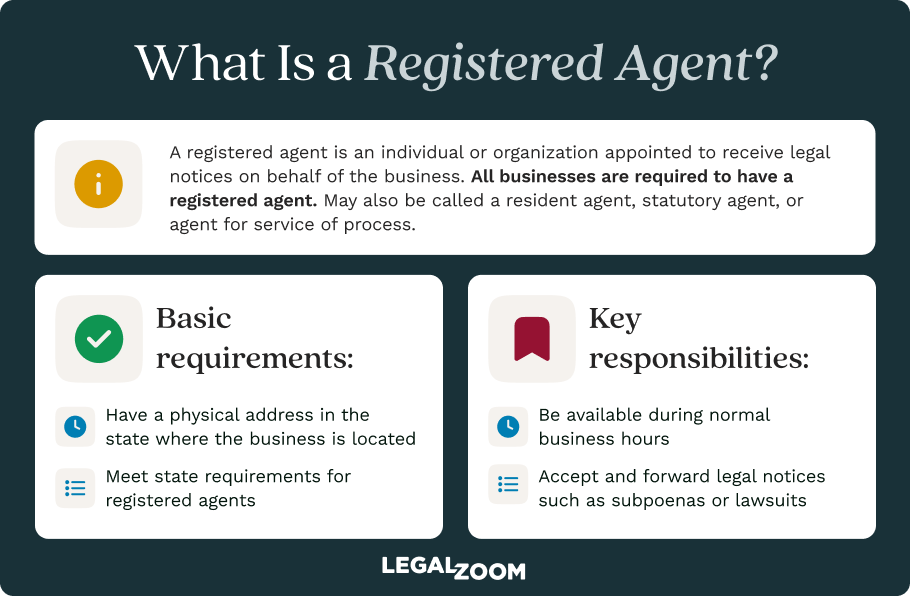
You can be your own registered agent, appoint a trusted individual, or use a professional registered agent service. While it might be tempting to serve in the role yourself to save on annual costs, doing so isn’t the best option for many businesses. Here’s why:
- Privacy. Registered agent information is part of the public record in Vermont. If you run a home-based business and serve as your own registered agent, that means that your residential address will become public information.
- Availability. To receive legal service of process, you’ll need to be at your designated office during all normal business hours. This might be difficult for business owners that travel or meet with clients out of the office frequently.
- Professional image. If your business office is the registered agent office, you run the risk of being served legal papers in front of employees, clients, or customers, which could affect your LLC’s professional image.
Professional registered agent services receive and forward your mail promptly, so you can be confident you won’t miss anything important. Business owners have enough to manage—that’s why many choose to use a solution like LegalZoom’s Shelburne-based registered agent service for peace of mind.
Step 3: File articles of organization
Vermont LLC registration begins with filing the articles of organization with the Secretary of State. The filing fee is $155. You’ll need to provide the following information:
- Your LLC’s full business name
- Type of LLC, if not a standard LLC (e.g., PLLC, L3C, or blockchain-based LLC)
- The NAICS Code or a brief description of your business (required for PLLCs)
- The month your LLC’s fiscal year will end
- The physical, mailing (if different from the street address), and e-mail address of your business
- The name, physical address (cannot be a P.O. box), mailing address, and email address of your registered agent
- The names and address of the LLC’s organizer (the person filing the articles of organization)
- Whether the company does or does not have members at the time of filing
- The names, addresses, and titles of initial members/managers (optional)
- Effective date of the LLC (if different from the formation date)
You can file online through your Business Services Division account, by mail, or in person. To file by mail or in person, submit a forms request for articles of organization, then you’ll receive the PDF form typically the same day. Mail or deliver the form, along with a check or money order payable to “VT SOS,” to:
Vermont Secretary of State
Business Services Division
128 State Street, Montpelier VT 05633-1104
Online filings are processed quickly, usually in less than one business day, while paper filings may take 7–10 business days or more. Once the Secretary of State approves your articles, they will return evidence of filing, and your LLC will appear in a business search on the Secretary of State’s website. Now your business is officially registered.
Here’s how to avoid a rejected filing:
- Fill out the form accurately and completely.
- Ensure that the business name is available and distinguishable from other reserved or existing names in Vermont.
- Include the correct LLC designator in the name.
- Make sure the registered office address is not a P.O. box.
- Include payment, either by credit card for online submissions or check or money order for paper filings.
Step 4: Create an operating agreement
An LLC operating agreement is an important legal document that outlines how your business will function. It’s more detailed than the articles of organization and includes important information, such as the following.
- Ownership structure: How much of the business each member owns
- Capital: Initial contributions of each member and how additional capital will be raised, if needed
- Business structure: Whether the LLC will be a standard LLC, PLLC, L3C, or blockchain-based LLC
- Roles and responsibilities: Who manages the business (e.g., member-managed or manager-managed), and how day-to-day decisions are made
- Profit distribution: How profits and losses will be shared and on what distribution schedule
- Voting rights: How voting on important business matters will be handled
- Procedures for adding or removing members: What happens if a member leaves or new members join
- Dissolution process: What happens if the LLC is dissolved
Vermont doesn’t require all LLCs to have an operating agreement—only blockchain-based LLCs (according to Vermont Statutes, Title 11, Section 4172). However, even if you don’t choose the blockchain-based LLC structure, it’s a good idea to have an operating agreement.
For multiple-member LLCs, an operating agreement can help you resolve disputes and challenging situations. For instance, one member may want to leave the company, but without written procedures, this process could become difficult, and internal conflicts may arise. Even if you’re a single-member LLC, the operating agreement clarifies your management structure and helps separate personal and business finances, which strengthens your personal liability protection.
You can create an operating agreement yourself, use an LLC operating agreement template, consult an attorney, or use LegalZoom. Our convenient operating agreement service creates a customized document based on the specifics of your company. All you have to do is answer key questions and let us do the rest.
Building a business is enough work as it is. We'll help you start your LLC with confidence.

Step 5: Obtain a federal tax ID and open a business bank account
A federal employer identification number (EIN) is a nine-digit number that identifies your business to the IRS for federal tax purposes. You’ll need it if your LLC has more than one member, plans to hire employees, or if you want to open a business bank account. Even if you’re the sole owner, an EIN helps to further separate your personal and business taxes.
You can apply for an EIN on the IRS website. If you want to be sure you don’t make any mistakes, use LegalZoom’s EIN filing service for an effortless, accurate filing. Once the IRS approves your application, we’ll send you the official documentation. EINs submitted online are typically approved immediately.
Once you have your EIN, consider opening a business bank account to help maintain a clear divide between your personal and business finances. A separate account also helps you manage your finances and protect your personal assets in case of a lawsuit.
Banks may ask for the following information when opening a business account:
- Articles of organization
- EIN (or, in some cases, a SSN for single-member LLCs)
- Operating agreement
- Personal identification information for owners or authorized signers
- Information about your business and its owners
Step 6: Register for state taxes and business licenses
After LLC formation, you need to register for any applicable state taxes through the Vermont Department of Taxes myVTax portal. Depending on your business activities, you may need to register and obtain a business tax license for the following taxes.
- Sales tax: If you sell tangible personal property, which includes art, writing, and software, you’ll need to register to collect sales tax.
- Meals and rooms tax: Any business entity that sells meals or prepared foods, including in vending machines; serves alcohol; or rents rooms to the public is subject to this tax.
- Employee withholding tax: If your LLC has employees, you’ll need to register for payroll taxes. You’ll also be required to withhold state income tax from employee wages and register for workers’ compensation insurance through the Vermont Department of Labor.
- Excise taxes: Vermont has additional taxes for cannabis products, cigarette and tobacco products, alcohol, and fuel.
You’ll also need to check if your business requires specific licenses or permits.
- Professional licenses: Service providers, including accountants, architects, athletic trainers, chiropractors, dieticians, doctors, massage therapists, physical and occupational therapists, radiologists, and real estate professionals, will need to register as a PLLC and get a state-issued license. You can find many professional licenses through the Secretary of State’s Office of Professional Regulation.
- Business permits: Certain types of businesses need permits to operate. For example, restaurants need health permits from the Vermont Department of Health, while those that serve alcohol need a liquor license from the Vermont Department of Liquor and Lottery.
- Environmental permits: You might need environmental permits if your business plans on doing construction, drawing groundwater, disposing of waste, or if your operations might affect the quality of the air, wastewater, or groundwater. For example, breweries need a Wastewater System Permit and Potable Water Supply Permit.
- Local licenses and permits: Your city or county might require business licenses or permits for certain operations. Check with your county clerk’s office to find out what you need.
Tracking down all the necessary permits and licenses can be cumbersome, so let LegalZoom help. Our business license report & management service identifies all the business licenses and permits you need—at federal, state, and local levels—providing a comprehensive list, with details on where to apply, when to renew, and other important information.
LegalZoom can help you file your state's formation paperwork for as little as $0 + state filing fees.

What to do after forming your Vermont LLC
Once you’ve started an LLC in Vermont, there are still a few more things to take care of.
- Register a domain name. Secure a domain name that matches your business name to make it easy for customers to find you online and prevent anyone else from claiming it. While the best time to see if the domain name is available is when you do your Vermont LLC name search, you can purchase a domain name any time through sites like GoDaddy or Wix.
- Obtain a certificate of good standing (if needed). A certificate of good standing verifies that your Vermont LLC is properly registered and compliant with certain state requirements. You typically only need this document when requested by a third party such as a bank, investor, or when registering your LLC as a foreign entity in another state. You can request one through your Business Services Division account for a $25 filing fee.
- Consider a foreign LLC. If you plan to expand your business outside Vermont, you can register your LLC in other states as a foreign LLC. Each state has its own foreign registration process, so research what paperwork is needed ahead of time.
- Trademark your name. Trademarking can protect your business name and logo at both the state and federal levels. To trademark your name in Vermont, file with the Vermont Secretary of State or apply for federal trademark protection through the U.S. Patent and Trademark Office.
- Register for an assumed business name. Also called a “doing business as” (DBA) name, an assumed business name in Vermont can be used by existing business entities and sole proprietors that want to operate under a name other than their registered name. You can file for your assumed business name through your Business Services Division account for $70. You’ll need to renew it every five years.
The cost of forming an LLC in Vermont
The cost to form a State of Vermont LLC is at least $155 to file your articles of organization. While this is the minimum, the following are all the potential fees involved in starting an LLC in Vermont.
- Articles of organization: $155
- Name reservation (optional): $35
- Registered agent: $0–$300 per year (depending on if you use a service)
- Operating agreement: $0–$99 (depending on if you use a service)
- EIN: $0–$79 (depending on if you use a service)
- Business bank account: Minimum deposit varies by bank
- Business licenses and permits: Varies by license/permit type
- Certificate of good standing, if needed: $25 filing fee
- Domain name: $10–$20 per year
- Annual report: $45 per year
- Business Entity Income Tax: $250+ (only required for certain tax elections)
- Insurance: Varies by policy and issuing company
The total cost of Vermont LLC formation, therefore, ranges from $155 to about $900, depending on several factors, such as professional services, the types of business licenses and insurance, and whether you reserve a business name or request certificates of good standing.
Vermont LLC timeline considerations
Before getting started, it’s important to understand the total time it may take to form an LLC in Vermont. Here’s a breakdown of each part of the process and its timeline.
- Articles of organization processing: 1–10 days
- Operating agreement creation: One week
- EIN processing: One day to a couple weeks, depending on method
- Business bank account approval: 5–10 business days
- State tax registration: Not specified
- Professional state licenses: Up to 10 days
- Business permits: Depends on type of permit
Although the total amount of time from formation to operation depends on several factors, your LLC could be up and running within one month if you begin all tasks immediately upon receipt of approval of your articles of organization.
Compliance requirements for Vermont LLCs
An LLC in Vermont is similar to LLCs in other states in many ways, but there are some special compliance requirements to keep in mind.
Annual report
The Vermont Secretary of State requires all for-profit corporations and LLCs to file an annual report. This report provides the Secretary of State with updated information about your business.
The annual report, along with the annual report filing fee of $45, is due within three months of your LLC’s fiscal year’s end, which you outlined in your articles of organization. You’ll need to complete and fill your annual report through your Business Services Division account.
Failure to file your annual report could result in a loss of good standing, involuntary termination, and the loss of use of your business name. LegalZoom can file your annual report every year as well as provide personalized compliance support to help you manage all of the tasks on your plate.
Vermont business tax obligations
LLCs are taxed as pass-through entities by default. This means that all members will report the business income on their personal tax returns and pay income tax (taxed at the individual income tax rate, which varies by the amount of taxable income). You’ll also need to pay federal income tax and self-employment tax, which, in 2026, is a rate of 15.3%.
If you elect for your LLC to be taxed as a corporation, it will be subject to the state corporate tax. The total tax owed is based on income allocated or apportioned to Vermont, with minimum amounts ranging from $100 to $100,000, depending on total gross receipts.
Vermont does have a Business Entity Income Tax, which applies to S corporations, partnerships, and LLCs that choose to be taxed as either an S corp or a partnership. (Therefore, this tax doesn’t apply to single-member LLCs). If this applies to your LLC, you’ll have to pay a minimum annual tax of $250 to the Vermont Department of Taxes.
Renew business licenses and permits
It’s important your LLC stay up to date on when licenses and permits need to be renewed. Deadlines, fees, and required paperwork vary by agency and license/permit type. And if the amount of compliance required feels overwhelming, LegalZoom’s Business License Report & Management service can help you stay on top of all relevant due dates and renewal information.

How to start your Vermont LLC with LegalZoom
LegalZoom makes it easy to start an LLC in Vermont. We handle all the paperwork, from filing your articles of organization to creating an operating agreement, plus we can act as your Vermont registered agent, file your annual report, and more. Our services help you stay compliant, saving you time and hassle so you can focus on growing your business. Start the LLC formation process today, and we’ll take care of the rest.
Find the right state to form an LLC
Find the right state to form an LLC
Every state has different rules, costs, and considerations for LLC formation.


FAQs about Vermont LLCs
How long does it take to form an LLC in Vermont?
If you file the articles of organization online, forming a limited liability company in Vermont usually takes just one business day. Paper filings can take up to 10 days or more. Once your articles of organization are approved, your LLC is officially recognized by the state.
What are the annual filing requirements for Vermont LLCs?
Vermont LLCs are required to file an annual report with the Secretary of State. This report helps keep your business in good standing with the state. The filing fee is $45, and the report is due each year within three months of your company’s fiscal year’s end.
How do I correct filing errors in Vermont?
If you make an error when filing your LLC articles of organization, you can submit articles of correction for $35 with the Vermont Secretary of State. This form allows you to update or fix mistakes without having to start over. It’s important to file corrections to your articles of organization quickly to avoid any complications with your LLC formation.
How do I dissolve a Vermont LLC?
To dissolve a Vermont limited liability company, you must file articles of termination for $20 with the Secretary of State. You can do this on your own or through LegalZoom’s dissolution service. This formally ends your business operations and stops future tax or reporting obligations. You’ll also need to settle any outstanding debts and distribute any remaining assets among LLC members.
Can I form a Vermont LLC if I don't live in Vermont?
Yes, you can form a Vermont LLC even if you don’t live in the state. The principal business office of your LLC also does not have to be in Vermont. However, all LLCs formed in the state must have a registered agent who has an office with a physical street address in Vermont.
Does Vermont require an operating agreement?
Vermont only requires an operating agreement for blockchain-based LLCs. There are specific items to be included in blockchain-based LLCs’ operating agreements, laid out in Vermont Statutes, Title 11, Section 4173.
While other LLC structures in Vermont aren’t required to have an operating agreement, it can help to further separate personal and business interests, prevent future disputes among members, and have written documentation for internal processes and procedures.
What happens if I miss the Vermont annual report deadline?
If you don’t file your annual report by the deadline, your Vermont LLC may be required to pay a late fee, lose its good standing status, the Secretary of State may involuntarily terminate your business, and you run the risk of losing the use of your business name.
Does my Vermont LLC need insurance?
Whether or not your Vermont LLC needs insurance depends on a few factors. If you have employees, you’re required to carry workers’ comp insurance, and if your business uses commercial vehicles, you must have business auto insurance.
Beyond these scenarios, getting insurance for your business is up to you. Learn more about when you need business insurance and the types of policies you can obtain.
What is a Vermont L3C or blockchain-based LLC?
Vermont L3C is short for “low-profit LLC.” This type of LLC can be selected by businesses that are formed to achieve the mission of an educational or a charitable purpose. To be eligible for an L3C, no significant purpose of your LLC can be to produce income.
A blockchain-based LLC is a type of LLC recognized in Vermont that utilizes blockchain technology for a portion of its business activities. Blockchain-based LLCs are required to have an operating agreement that provides specific details, including a mission or purpose, whether its decentralized consensus ledger will be fully or partially decentralized, and more.
Carolyn Albee and Rudri Bhatt Patel contributed to this article.
'%20/%3e%3c/svg%3e)

'%3e%3cpath%20fill-rule='evenodd'%20clip-rule='evenodd'%20d='M9.31239%2025.5316H13.0679V14.1032H9.31239V25.5316ZM11.1913%208.46875C9.93945%208.46875%209%209.25086%209%2010.505C9%2011.5995%209.78211%2012.5389%2011.1913%2012.5389C12.6005%2012.5389%2013.3826%2011.5995%2013.3826%2010.505C13.3826%209.4082%2012.6005%208.46875%2011.1913%208.46875ZM27%2018.9577V25.5316H23.2445V19.4275C23.2445%2017.8609%2022.6174%2016.7664%2021.3679%2016.7664C20.2711%2016.7664%2019.644%2017.5463%2019.3316%2018.1756C19.1743%2018.488%2019.1743%2018.8004%2019.1743%2019.1128V25.5316H15.4165V13.9458H19.1743V15.5123C19.644%2014.7302%2020.5835%2013.6357%2022.6174%2013.6357C25.1234%2013.7908%2027%2015.3573%2027%2018.9577Z'%20fill='white'/%3e%3c/g%3e%3cdefs%3e%3cclipPath%20id='clip0_952_9489'%3e%3crect%20width='18'%20height='18'%20fill='white'%20transform='translate(9%208)'/%3e%3c/clipPath%3e%3c/defs%3e%3c/svg%3e)