




Starting a nonprofit in Kentucky means completing multiple separate legal processes: forming a nonprofit corporation under Kentucky law, obtaining federal 501(c)(3) tax-exempt status from the IRS, and registering your status with state agencies. To become a traditional, tax-exempt nonprofit, you’ll need to complete all of these in order and coordinate your timing.
This guide walks you through every required stage, from choosing a name to ongoing compliance requirements.
Nonprofit corporation vs. 501(c)(3): What is the difference?
A nonprofit corporation is a legal entity formed under state law that is organized to serve a charitable or public mission rather than distribute profits to owners. 501(c)(3) is a federal tax classification granted by the IRS that exempts an organization from federal income tax and allows donors to deduct their contributions.
A nonprofit corporation exists the moment the Kentucky Secretary of State accepts your articles of incorporation. A 501(c)(3) designation comes later, through a separate process that can take several months.
Operating with only state incorporation leaves your organization meaningfully limited. You cannot accept tax-deductible donations, and most grant programs will not fund you until federal tax-exempt status is in place.
To understand how 501(c)(3) status compares to other federal tax classifications, see LegalZoom's article on the difference between 501(c)(3) and 501(c)(4) organizations.
How to start a nonprofit in Kentucky: Step-by-step
Follow these steps to get your 501(c)(3) status nonprofit corporation set up.
Step 1: Choose a name for your Kentucky nonprofit
Your nonprofit's name must meet two requirements under Kentucky law. First, it must end with a corporate designator: "Corporation," "Company," or "Limited," or the abbreviation "Corp.," "Inc.," "Co.," or "Ltd." (One quirk: a nonprofit's name can't use "and Company" or "& Co.") Second, it must be distinguishable from any other business entity already registered with the Kentucky Secretary of State.
Before you settle on a name, search for available nonprofit names in Kentucky to confirm availability. You can check via the Secretary of State’s website or by using LegalZoom’s tool below. For a full guide to naming your business, read our comprehensive guide to Kentucky business names.
Free Kentucky Business Name Check
Starting a business? Use our free name check tool to check your business name against the Kentucky Secretary of State records.
By clicking "Check Availability," I agree to LegalZoom's Terms of Use. This search is a preliminary check of state databases and does not include variations or trademarks. Results do not guarantee name availability or compliance with legal requirements.
If you’ve found a name that’s available but you’re not ready to file your articles, you can file an application to reserve it for up to 120 days. That form is available through the Secretary of State as well.
Step 2: Appoint incorporators, initial directors, and a registered agent
Kentucky law requires at least one incorporator—the person or entity that signs and submits the articles of incorporation. The incorporator does not need to be a director or officer after the organization is formed.
You need at least three initial directors. The IRS likewise expects at least three unrelated directors on a 501(c)(3) application. "Unrelated" means not connected by family, financial interest, or employment relationships that could compromise independent judgment.
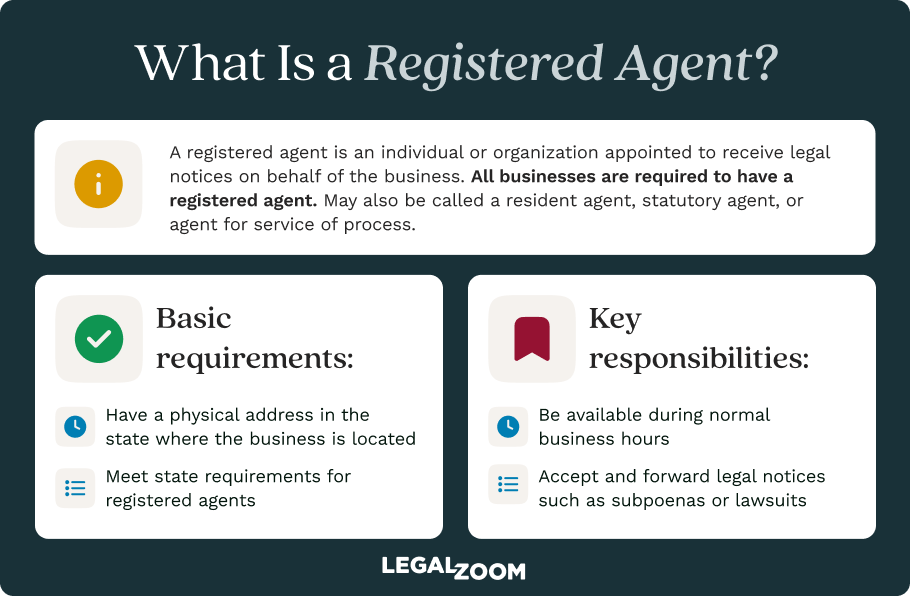
Your registered agent is the person or entity authorized to receive legal notices on behalf of the nonprofit. Kentucky requires a physical street address in Kentucky—a P.O. box does not satisfy this requirement. The registered agent must be available during regular business hours. This role can be filled by a director, officer, or a third-party registered agent service.
Step 3: File articles of incorporation
Filing your articles of incorporation officially creates your nonprofit corporation under Kentucky law. You file using Form NAI, Nonprofit Articles of Incorporation, available through the Kentucky Secretary of State's office.
Here’s what your articles will need to include:
- Corporate name. Your full legal name, including a required designator such as "Corporation," "Incorporated," or "Inc."
- Organizational purpose statement. A description of why the corporation exists. Vague language here is one of the most common reasons the IRS delays or denies an application.
- Registered agent name and Kentucky street address.
- Incorporator name and address.
- Initial director information. Kentucky's articles require the names of at least three initial directors and their addresses.
- Dissolution clause. What happens to remaining assets if the corporation winds down. This clause must meet IRS standards and must appear in the articles themselves, not just in the bylaws.
- Non-inurement statement. Language confirming that no part of the nonprofit's earnings will benefit private individuals such as directors or officers.
- Prohibited activities clause. Language restricting the organization from engaging in substantial lobbying or any political campaign activity on behalf of, or in opposition to, candidates for public office.
The last three listed requirements are not included on the form. They are IRS requirements for 501(c)(3) status, so make sure you have written and included them before you submit.
You can file by mail, in person, or online through the Kentucky Secretary of State’s website. In-person filings typically receive same-day processing; mailed and online filings take longer. The filing fee is $8, and checks should be made to “Kentucky State Treasurer.”
Mailing address:
Michael Adams
Office of the Secretary of State
P.O. Box 718
Frankfort, KY 40602-0718
In-person filings:
1025 Capital Center Drive
Suite 201
Frankfort, KY 40601
Step 4: Draft bylaws and hold your organizational meeting
Bylaws are your nonprofit's internal governance rules. They define how the board operates, how decisions get made, and how the organization resolves disputes. Bylaws are not filed with the Kentucky Secretary of State, but the IRS will request them as part of your 501(c)(3) application.
Your bylaws should address the following.
- Board composition: How many directors you will have and how they are elected or appointed
- Officer titles and duties: Typically president, vice president, secretary, and treasurer
- Meeting requirements: How often the board meets and what constitutes a quorum
- Voting procedures: What vote threshold is needed to pass a resolution
- Conflict of interest policy: How directors disclose and recuse themselves from decisions where they have a personal financial interest
- Amendment process: How the bylaws themselves can be changed
Your organizational meeting is where the board formally adopts the bylaws, elects officers, authorizes the employer identification number (EIN) and 501(c)(3) applications, and approves opening a bank account. Keep written minutes—they document that your organization functions as a legitimate governing body.
Step 5: Get an EIN from the IRS
An EIN is your nonprofit's federal tax identification number. You need it to open a bank account, hire employees, file tax returns, and complete your 501(c)(3) application.
Applying is free and takes only a few minutes through IRS.gov. If you apply online, the IRS issues your EIN immediately upon completion. You can also use an EIN filing service like LegalZoom if you want this task taken off your plate.
Step 6: Apply for federal 501(c)(3) tax-exempt status
Once your nonprofit is incorporated and organized, you can apply for federal tax-exempt status using one of two IRS forms.
- Form 1023 is required for organizations that project annual gross receipts above $50,000. The IRS user fee is $600. Review typically takes at least three to six months.
- Form 1023-EZ is available to smaller organizations projecting gross receipts of $50,000 or less that meet other IRS eligibility requirements. The user fee is $275, and processing typically takes two to four weeks.
Both forms are filed electronically through Pay.gov.
Tip: If you file your 501(c)(3) application within 27 months of your incorporation date, the IRS can issue a determination letter retroactive to the date of incorporation, meaning donations made before approval may still qualify as tax-deductible. But, if you miss the 27-month mark, deductibility begins only from the date your application was submitted.
Step 7: Register for charitable solicitation with the Kentucky Attorney General
Most Kentucky nonprofits that solicit charitable contributions must file with the Kentucky Attorney General's Office before beginning any fundraising. Soliciting without filing when it is required can expose your organization to penalties.
If your organization has filed an IRS Form 990, simply submit a copy of your most recent 990 to the Attorney General before soliciting. If your organization is newly formed and has not yet filed a Form 990, you may file a notice of intent to solicit before any fundraising begins. The notice of intent expires on December 31 of the year you file it. There is no filing fee.
Some organizations may be exempt under Kentucky law, but confirm with the Attorney General's Office before assuming you do not need to file.
Step 8: Apply for Kentucky state tax exemption
Federal 501(c)(3) recognition does not automatically exempt your nonprofit from Kentucky state taxes. To obtain a Kentucky sales and use tax exemption, you must file Form 51A125, Application for Purchase Exemption with the Kentucky Department of Revenue.
This application requires its own review and approval. Once approved, your organization can generally make purchases for its charitable mission without paying Kentucky sales and use tax. Reach out to the Department of Revenue for the most current guidance on which taxes the exemption covers and any categories that remain taxable.
Email: dorsalesusetaxanswers@ky.gov
Phone: (502) 564-5170
How much does it cost to start a nonprofit in Kentucky?
Expect to spend anywhere from $283 to $608 in required government fees, depending on which IRS application form your organization qualifies to use.
| Step | Agency | Fee |
|---|---|---|
| Articles of Incorporation (Form NAI) |
Kentucky Secretary of State | $8 |
| Form 1023 (501(c)(3) application) |
IRS | $600 |
| Form 1023-EZ (501(c)(3) application) |
IRS | $275 |
| Charitable Solicitation Registration | Kentucky Attorney General | Free |
| Form 51A125 (Application for Purchase Exemption) |
Kentucky Department of Revenue | Free |
These fees cover only government filing costs. If you work with an attorney to draft your articles, bylaws, or 501(c)(3) application—advisable given how much language precision matters for IRS review—professional fees will add to your total.
How long does it take to start a nonprofit in Kentucky?
Plan for several months. State incorporation moves quickly, often within a single business day, but IRS review for 501(c)(3) status is where most of the calendar gets consumed.
| Stage | Agency | Estimated Time |
|---|---|---|
| Articles of Incorporation (online or in-person) | Kentucky Secretary of State | Same business day |
| Articles of Incorporation (by mail) | Kentucky Secretary of State | Several business days |
| Form 1023-EZ | IRS | 2–4 weeks |
| Form 1023 | IRS | 3–6 months or longer |
| Charitable solicitation registration | Kentucky Attorney General | Varies |
| Sales and Use Tax Exemption (Form 51A125) |
Kentucky Department of Revenue | Varies |
Ongoing compliance for Kentucky nonprofits
Once your Kentucky nonprofit is operational, you take on recurring legal obligations with the Kentucky Secretary of State, the IRS, and the Kentucky Attorney General. Missing these deadlines can cost your organization its legal existence or its tax-exempt status.
Kentucky annual report
Kentucky nonprofits must file an annual report with the Kentucky Secretary of State each year between January 1 and June 30. The filing fee is $15, and it can be filed online. The report updates the state's records with your current registered agent, principal office address, and officer information.
Failure to file triggers administrative dissolution. A dissolved corporation loses its legal standing, cannot enter contracts, and must go through a formal reinstatement process to resume operations.
IRS Form 990
Tax-exempt does not mean tax-filing exempt. You need to file a version of Form 990 each year with the IRS, and which form you file depends on your gross receipts.
- Form 990-N (e-Postcard): For organizations with gross receipts normally $50,000 or less.
- Form 990-EZ: For organizations with gross receipts less than $200,000 and total assets less than $500,000.
- Form 990: For organizations with gross receipts of $200,000 or more, or total assets of $500,000 or more.
The filing deadline is the 15th day of the fifth month after the close of your fiscal year. Failure to file for three consecutive years results in automatic revocation of your tax-exempt status—a serious consequence that requires a formal reinstatement application to the IRS to undo.
Charitable solicitation registration renewal
Your obligation to the Kentucky Attorney General renews every year you solicit contributions in Kentucky. File a copy of your IRS Form 990 with the Attorney General's Office each year, at the same time you file it with the IRS. There is no separate renewal form and no fee.
Because the deadline tracks your IRS filing, a calendar-year organization's Attorney General copy is due May 15, the same day as its Form 990 (or November 15 with an IRS extension).
Tip: Build this into the same compliance task—when the 990 goes to the IRS, a copy goes to Frankfort.
Other ongoing requirements
Maintaining proper records is what the IRS expects from every 501(c)(3) and what auditors and grant-makers will look for when evaluating your organization's credibility.
Your bylaws should specify how often the board meets. Most nonprofits hold at least one formal board meeting per year, though quarterly meetings are common and advisable for active organizations. Keep detailed minutes of every board meeting.
Additionally, you must keep a registered agent at all times. If your registered agent resigns or is replaced, you should file a Statement of Change of Registered Agent immediately.
How LegalZoom can help
Forming a nonprofit means coordinating filings across multiple agencies. Getting the paperwork wrong at any stage can set you back months.
LegalZoom has helped form more than 4 million businesses, including over 100,000 nonprofits. Our nonprofit formation services handle the preparation and filing of your Kentucky articles of incorporation, help you draft bylaws, and guide you through the 501(c)(3) application process.
If your situation calls for legal review, like checking your purpose and dissolution clauses before you file, or getting guidance on IRS compliance, LegalZoom offers online business attorney access and a network of independent attorneys who can review your formation documents and answer your questions.
100% Accurate Filing Guarantee
100% Accurate Filing Guarantee
We're committed to the highest quality and accuracy. If your filing is rejected or incorrect
due to our error, we'll correct it with the government agency at no additional cost to you.
We're committed to the highest quality and accuracy. If your filing is rejected or incorrect due to our error, we'll correct it with the government agency at no additional cost to you.
Kentucky nonprofit FAQs
Does Kentucky require nonprofit bylaws to be filed with the state?
No. Bylaws are internal governance documents. Keep a signed, adopted copy in your corporate records. You must submit them with your IRS Form 1023, and most banks will require them before opening an organizational account.
What is the 33.3% public support test for nonprofits?
To qualify as a public charity rather than a private foundation, a 501(c)(3) must receive at least one-third of its total support from broad public sources over a five-year period (the current year plus the four preceding years) Organizations that fall below the threshold risk reclassification as a private foundation, which carries stricter IRS operating rules and additional reporting requirements.
Can a Kentucky nonprofit apply for grants before getting 501(c)(3) status?
Most foundations and government grant programs require confirmed 501(c)(3) status before awarding funds. Fiscal sponsorship is the most reliable bridge. Some funders will also consider applications from organizations with a pending IRS determination; ask individual grantors about their policy.
What required language must Kentucky nonprofit articles of incorporation include for 501(c)(3) approval?
Your articles must include a purpose clause stating the organization is organized exclusively for exempt purposes under Internal Revenue Code Section 501(c)(3), and a dissolution clause stating that remaining assets will be distributed to another 501(c)(3) or to a government entity for a public purpose upon dissolution. Without both clauses, the IRS will reject your application.
Does 501(c)(3) status automatically exempt a Kentucky nonprofit from state sales tax?
No. You must separately file Form 51A125, Application for Purchase Exemption with the Kentucky Department of Revenue.
When does a Kentucky nonprofit need to register with the Attorney General before fundraising?
Most Kentucky nonprofits that solicit charitable contributions must file with the Kentucky Attorney General's Office before beginning any fundraising. Soliciting without filing when it is required can expose your organization to penalties.
'%20/%3e%3c/svg%3e)

'%3e%3cpath%20fill-rule='evenodd'%20clip-rule='evenodd'%20d='M9.31239%2025.5316H13.0679V14.1032H9.31239V25.5316ZM11.1913%208.46875C9.93945%208.46875%209%209.25086%209%2010.505C9%2011.5995%209.78211%2012.5389%2011.1913%2012.5389C12.6005%2012.5389%2013.3826%2011.5995%2013.3826%2010.505C13.3826%209.4082%2012.6005%208.46875%2011.1913%208.46875ZM27%2018.9577V25.5316H23.2445V19.4275C23.2445%2017.8609%2022.6174%2016.7664%2021.3679%2016.7664C20.2711%2016.7664%2019.644%2017.5463%2019.3316%2018.1756C19.1743%2018.488%2019.1743%2018.8004%2019.1743%2019.1128V25.5316H15.4165V13.9458H19.1743V15.5123C19.644%2014.7302%2020.5835%2013.6357%2022.6174%2013.6357C25.1234%2013.7908%2027%2015.3573%2027%2018.9577Z'%20fill='white'/%3e%3c/g%3e%3cdefs%3e%3cclipPath%20id='clip0_952_9489'%3e%3crect%20width='18'%20height='18'%20fill='white'%20transform='translate(9%208)'/%3e%3c/clipPath%3e%3c/defs%3e%3c/svg%3e)

