




Starting a nonprofit in West Virginia can help you pursue a mission-driven purpose, whether that’s for educational, religious, or social welfare. Forming a nonprofit with the state is one thing, but you’ll need to pursue federal 501(c)(3) status to be exempt from federal taxes. West Virginia adds a third layer: Nonprofits that solicit public donations must register with the state before fundraising begins, and federal tax-exempt status does not automatically exempt you from all West Virginia state taxes.
This guide walks through what to expect when forming your nonprofit, where you’ll encounter common roadblocks, how to set yourself up for success, and when to get help.
Nonprofit vs. 501(c)(3) status
A nonprofit corporation is a state-level legal entity you form by filing articles of incorporation with the West Virginia Secretary of State, while 501(c)(3) is a federal tax-exempt designation the IRS grants through a separate application. This federal designation exempts your organization from federal income tax, makes donor contributions tax-deductible, and qualifies you for most grants.
These designations are not interchangeable, and the state and federal agencies don’t communicate with one another. It’s up to you to manage your status with the individual agencies.
How to start a nonprofit in West Virginia: Step by step
Follow these steps in order, as each one builds on the previous.
Step 1: Choose a name for your West Virginia nonprofit
Pick out a name for your nonprofit—one that resonates with your audience and community and reflects your mission and values. You can choose something creative, but your name must clear two West Virginia nonprofit corporation requirements: availability and compliance with state naming rules.
- Your nonprofit's name must include a corporate designator such as "Corporation," "Company," "Incorporated," "Limited," or an accepted abbreviation.
- The name must be distinguishable from entities already on record in West Virginia. The state offers detailed business name guidance for what’s considered distinguishable.
To confirm that your name is not already being used by another business in the state, conduct a West Virginia Secretary of State business entity search, or use LegalZoom’s free name check tool below. For a deep dive, read our comprehensive guide to West Virginia business names
Free West Virginia Business Name Check
Starting a business? Use our free name check tool to check your business name against the West Virginia Secretary of State records.
By clicking "Check Availability," I agree to LegalZoom's Terms of Use. This search is a preliminary check of state databases and does not include variations or trademarks. Results do not guarantee name availability or compliance with legal requirements.
If you’ve landed on a name but you’re not quite ready to file your West Virginia nonprofit formation documents, you can reserve a name for 120 days by filing Form NR-1 with the Secretary of State. The fee is $15.
Step 2: Appoint directors
Before you file your nonprofit articles of incorporation in West Virginia, you need a board of directors to govern the organization and should consider appointing a registered agent to receive legal notices.
- Directors: West Virginia nonprofit board requirements mandate a minimum of three directors on the initial board. Directors must be natural persons at least 18 years old, but there is no state residency requirement. Directors are responsible for governance, financial oversight, and mission accountability—roles the IRS scrutinizes closely during the 501(c)(3) review.
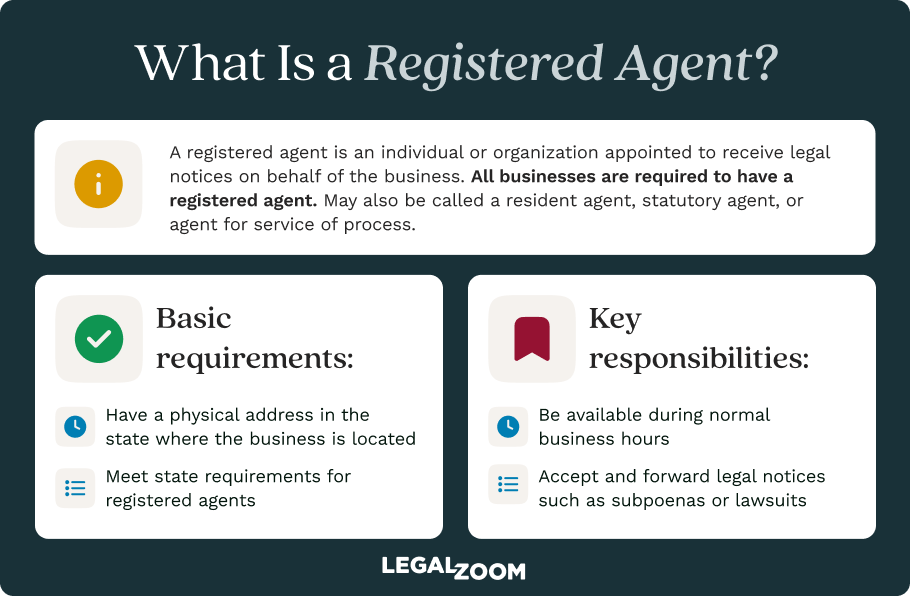
- Registered agent: West Virginia nonprofits may appoint a registered agent—a West Virginia resident or authorized entity maintaining a physical street address in the state—to receive legal service of process and government notices. A P.O. box does not qualify. The West Virginia registered agent must be available during regular business hours to accept service of process.
While you, a director, or an employee can serve as the nonprofit’s registered agent, many people choose to hire a professional registered agent service that can fill this role. LegalZoom’s registered agent service maintains a local presence in West Virginia and ensures that no legal or government correspondence is missed.
Step 3: File articles of incorporation
Now your business is ready to be formally recognized by the state. You’ll file articles of incorporation with the Secretary of State. Prepare to provide the following information:
- Corporate name, including the correct entity designator
- Physical and mailing addresses for the principal office and principal place of business
- Name and physical street address of the registered agent
- Business email address and website
- The nonprofit's purpose
- Whether the corporation will have members
- Name and address of each incorporator
- A statement on whether the corporation is veteran-owned
- A statement on whether the corporation owns or expects to own land in West Virginia
This West Virginia Secretary of State nonprofit filing is unique from other states in that it already includes the necessary language required by the IRS to apply for 501(c)(3) status. The form includes a purpose clause, dissolution clause, and private inurement prohibition—all of which the IRS looks for during its review of your Form 1023.
You can file online or by mail.
- Online: File online through the West Virginia One Stop Business Portal. This is the fastest method.
- By mail: Mail Form CD-1NP to any of the three Secretary of State hub offices. You can find the addresses on the Secretary of State’s home page via the interactive map. Standard processing for mailed forms takes approximately 5–10 business days.
There is a $25 filing fee, but expedited processing is available for an additional $25–$500, depending on how quickly you need approval.
Step 4: Draft bylaws and hold your organizational meeting
Bylaws are your organization's internal rulebook. West Virginia does not require you to file bylaws with the state, but you should still adopt them at your first organizational meeting. The IRS requires bylaws as part of the 501(c)(3) application, and banks and grantors will expect to see them.
Here’s what your nonprofit bylaws in West Virginia should cover:
- The organization's name and principal office address
- The purpose of the organization
- Membership provisions, if any
- Board of directors composition, including the number of seats, qualifications, term lengths, and how vacancies are filled
- Officer roles and responsibilities
- Meeting frequency and quorum requirements
- Voting procedures
- Amendment procedures
- Conflict of interest policy provisions (the IRS specifically looks for this)
After the Secretary of State approves your articles, the initial board must hold an organizational meeting to formally adopt the bylaws, elect officers, approve a conflict of interest policy, and authorize the employer identification number (EIN) application and bank account opening. Keep written minutes in your business records just in case the state or IRS requests their review in the future.
For a more in-depth look, check out LegalZoom’s guide on how to write nonprofit bylaws.
Step 5: Obtain an EIN from the IRS
An employer identification number is a nine-digit federal tax ID that the IRS assigns to your organization. Every nonprofit needs an EIN—even organizations with no employees—to open a bank account, establish credit with vendors, and file the 501(c)(3) application.
You can obtain an EIN either directly through the IRS’ website, or you can use LegalZoom’s EIN service, which compiles your information and files the application for you for an easy, stress-free process.
Step 6: Apply for federal 501(c)(3) tax-exempt status
Once you have your EIN, it’s time to apply for 501(c)(3) status, which exempts your organization from federal income tax, makes contributions tax-deductible for donors, and qualifies you for most private foundation grants and government programs requiring 501(c)(3) designation.
There are two application forms available, each with different eligibility requirements:
- Form 1023-EZ (streamlined application) is available to organizations that project gross receipts of $50,000 or less in each of the next three years, have total assets of $250,000 or less, and meet additional criteria on the IRS Form 1023-EZ eligibility worksheet. The user fee is $275.
- Form 1023 (full application) is required for all other organizations. The user fee is $600.
Some grant-making foundations scrutinize whether a 501(c)(3) used Form 1023-EZ instead of the full Form 1023. If grant funding is central to your mission, discuss this choice with an attorney before deciding which form to use.
Both forms are filed electronically through Pay.gov. Form 1023-EZ is typically processed within a few weeks, while Form 1023 can take several months to over a year. Check IRS application processing times for current estimates before filing.
When the IRS approves your application, it issues a determination letter that confirms your 501(c)(3) status. You’ll need that letter for West Virginia to grant your nonprofit a state-level tax exemption.
Step 7: Register for West Virginia nonprofit tax exemption
Your IRS determination letter does not automatically exempt you from all West Virginia state taxes. State tax-exempt status for nonprofits in West Virginia relies on federal status, the type of organization, and its business activities. Here’s a look at what your nonprofit may or may not be exempt from:
- Corporation Net Income Tax. If your nonprofit has been granted 501(c)(3) status, West Virginia automatically recognizes it, so you don’t have to pay the corporation net income tax. However, if you have unrelated business income that is subject to federal tax, you will need to pay it in regards to that income. Speak to a tax professional if you have questions regarding which income qualifies.
- Sales and use tax. Some nonprofit organizations may be eligible for an exemption from the West Virginia sales and use tax. Reference Document TSD-320 to determine if your nonprofit is eligible. If you’re eligible for a sales and use tax exemption, you’ll first need to register your organization with the West Virginia Tax Division, either through your One Stop Business Portal account or by mailing Form BUS-APP to the address on the form. This step is required for any entity conducting business in the state. The filing fee is $30.
Step 8: Register for charitable solicitation if you plan to fundraise
Most West Virginia nonprofits that plan on asking the public for money must register as a charitable organization. Soliciting without registration exposes your organization to penalties and can jeopardize your ability to fundraise in the state.
Every charitable organization that intends to solicit contributions within West Virginia, or have funds solicited on its behalf, must register with the Secretary of State’s Charities Division before any solicitation begins. Registration is valid for one year and must be renewed annually. Late registration carries a penalty of $25 for each month, or part of a month, that the registration is filed after the due date.
To register:
- Complete Form CHR-1 (Registration Statement of Charitable Organizations) and mail it to: West Virginia Secretary of State, Charities Division, WV One Stop Business Center, 13 Kanawha Boulevard West, Suite 201, Charleston, WV 25302.
- Make sure to include your IRS determination letter, most recent Form 990 (if applicable), a balance sheet and financial statement from an independent certified public accountant, and copies of contracts with professional solicitors or fundraisers.
- Include payment for the registration fee: $15/year if your organization raises less than $1 million, or $50/year if it raises more than $1 million.
Organizations that expect to receive less than $50,000 in contributions and do not employ a professional fundraising solicitor are exempt. Additional exemptions exist for accredited educational institutions, nonprofit hospitals, and organizations that solicit only from their own members. Check the other types of exemptions before you skip registration.
West Virginia nonprofit filings at-a-glance
Still a little unclear on how to start a nonprofit in West Virginia? Reference this table for a quick look at each step, agency, form, fee, filing method, and turnaround time.
| Step | Agency | Form name/number | Fee | Filing method |
|---|---|---|---|---|
| Articles of incorporation | West Virginia Secretary of State | Form CD-1NP | $25 (standard processing) | WV One Stop Business Portal or by mail |
| EIN | IRS | Form SS-4 | $0 | Online, fax, or mail |
| 501(c)(3) tax status | IRS | Form 1023 or Form 1023-EZ | $600 (Form 1023) or $275 (Form 1023-EZ) | Pay.gov |
| West Virginia state sales tax exemption | West Virginia Tax Division | Form BUS-APP | $30 | WV One Stop Business Portal or by mail |
| Charitable solicitation registration | West Virginia Secretary of State, Charities Division | Form CHR-1 | $15/year or $50/year | WV One Stop Business Portal or by mail |
All fees are subject to change. Verify current amounts at the West Virginia Secretary of State's website, IRS.gov, and the West Virginia State Tax Department before filing.
How much does it cost to start a nonprofit in West Virginia?
The total cost of starting a West Virginia nonprofit depends on several factors, including which forms you file, if you hire professional services, if you need to register for charitable solicitation, and more. The lowest you’ll pay for a 501(c)(3) nonprofit corporation is $330, but costs could go well beyond that. For example, hiring a professional registered agent service will hike up the total formation cost, as will using the standard Form 1023.
Ongoing nonprofit compliance in West Virginia
Formation is a one-time event, but compliance is a permanent obligation. Missed deadlines can cost you money, your good standing with the state, or your 501(c)(3) status entirely.
Annual report
All corporations, including nonprofits, must file an annual report between January 1 and June 30. This updates the Secretary of State on your business details. You can file online through your One Stop Business Portal account. The filing fee is $25.
A late annual report for a nonprofit in West Virginia may incur a financial penalty and potential administrative dissolution, which terminates your legal existence in the state and requires reinstatement.
Charitable solicitation renewal
You’ll need to renew your state charitable solicitation registration annually on the anniversary of your initial registration. The renewal fee is $15 or $50, based on contribution volume. Late filings accumulate penalties at $25 per month. If your organization stops soliciting, you must still file a final registration statement reflecting activities during the last fiscal year in which solicitation took place.
IRS Form 990
Tax exempt does not mean tax filing exempt. All 501(c)(3) nonprofits must file an annual information return with the IRS. The form you use depends on your size:
- Form 990-N (e-Postcard). Gross receipts of $50,000 or less
- Form 990-EZ. Gross receipts under $200,000 and total assets under $500,000
- Form 990 (standard form). All larger organizations
Form 990 is due on the 15th day of the fifth month after the fiscal year ends, which is May 15 for calendar-year organizations. Failing to file for three consecutive years triggers automatic revocation of 501(c)(3) status. Reinstatement requires a new application and back fees.
Other maintenance
You’ll also need to keep written minutes of every board meeting, all bylaw amendments, copies of every Form 990 filed, and your original IRS determination letter. State and federal regulators may request these documents to verify compliance.
How LegalZoom can help
LegalZoom has helped millions of people form businesses and nonprofits. You can use LegalZoom's nonprofit formation service to prepare and file your articles of incorporation with the West Virginia Secretary of State without having to decode state filing instructions on your own. Our trusted process has helped over 100,000 nonprofits get off the ground. When it’s time to apply for federal tax-exempt status, our 501(c)(3) filing service can help file your IRS Form 1023-EZ.
LegalZoom can also serve as your registered agent in West Virginia and can connect you with an attorney from its network for personalized guidance on unusual organizational structures, grant eligibility concerns, or compensation arrangements for founders. We’re your go-to service for getting your nonprofit up and running.
West Virginia nonprofit FAQs
What is the 33% rule for nonprofits?
The 33% rule is a public support test the IRS uses to confirm that an organization qualifies as a public charity rather than a private foundation. Your organization must receive at least one-third of its total support from public sources, including government grants, contributions from the general public, and certain program service revenues. Failing the test can trigger reclassification as a private foundation, which carries stricter operating rules and excise taxes.
Can I pay myself a salary from my West Virginia nonprofit?
Yes. Founders and staff can receive reasonable compensation for services actually performed, provided that the pay reflects fair market value and the board formally approves it. Excessive compensation can jeopardize 501(c)(3) status and trigger IRS penalties under the excess benefit transaction rules. Document every compensation decision in board meeting minutes.
Is it better to form an LLC or a nonprofit in West Virginia?
It depends on your goal. An LLC is a for-profit structure where owners share in profits; a nonprofit corporation exists to serve a public or charitable purpose, and no individual can receive a share of its assets or earnings. If your goal is to pursue a charitable mission, accept tax-deductible donations, and qualify for grants, a nonprofit corporation is the correct structure.
Does a West Virginia nonprofit need to register with the federal government?
There are no federal nonprofit registration requirements beyond filing Form 990 series returns and registering with the IRS for payroll tax purposes if you have employees. Applying for 501(c)(3) tax-exempt status is optional. Because federal compliance rules can change, verify current requirements with an attorney.
Can a single person start a nonprofit in West Virginia?
One person can serve as the sole incorporator of a nonprofit, but West Virginia law requires a minimum of three directors on the initial board. So, you will need at least two additional people willing to serve as directors before you can file your articles. Those directors do not need to be West Virginia residents.
'%20/%3e%3c/svg%3e)

'%3e%3cpath%20fill-rule='evenodd'%20clip-rule='evenodd'%20d='M9.31239%2025.5316H13.0679V14.1032H9.31239V25.5316ZM11.1913%208.46875C9.93945%208.46875%209%209.25086%209%2010.505C9%2011.5995%209.78211%2012.5389%2011.1913%2012.5389C12.6005%2012.5389%2013.3826%2011.5995%2013.3826%2010.505C13.3826%209.4082%2012.6005%208.46875%2011.1913%208.46875ZM27%2018.9577V25.5316H23.2445V19.4275C23.2445%2017.8609%2022.6174%2016.7664%2021.3679%2016.7664C20.2711%2016.7664%2019.644%2017.5463%2019.3316%2018.1756C19.1743%2018.488%2019.1743%2018.8004%2019.1743%2019.1128V25.5316H15.4165V13.9458H19.1743V15.5123C19.644%2014.7302%2020.5835%2013.6357%2022.6174%2013.6357C25.1234%2013.7908%2027%2015.3573%2027%2018.9577Z'%20fill='white'/%3e%3c/g%3e%3cdefs%3e%3cclipPath%20id='clip0_952_9489'%3e%3crect%20width='18'%20height='18'%20fill='white'%20transform='translate(9%208)'/%3e%3c/clipPath%3e%3c/defs%3e%3c/svg%3e)

