




When the business fails to comply with legal and regulatory obligations, the state agency that regulates business entities can administratively dissolve the business. In most states, this agency is the Secretary of State, Department of State, or Division of Corporations.
The ramifications of an administrative dissolution are significant. For example, an administratively dissolved limited liability company (LLC) or corporation means the business loses its liability shield and can leave members or officers personally exposed for obligations incurred after dissolution.
This guide explains why administrative dissolution happens, the legal consequences it triggers, and the exact steps to fix it, and state-specific deadlines that determine whether your entity can be reinstated.
What does "administratively dissolved" mean?
The term “administratively dissolved” means the state, typically through the Secretary of State's office, has revoked or cancelled an LLC's or corporation's authority to operate because the business failed to meet certain state requirements. After administrative dissolution, the business generally may take only those actions necessary to wind up its affairs, such as paying debts, distributing assets, and closing the business, unless and until its status is reinstated.
Administrative dissolution is an action taken by the state, meaning you don't have to agree to it, sign anything, or even know the administrative dissolution is happening. The state generally sends notice to the principal business address on file or the registered agent's address, and if the compliance failure isn't corrected within the applicable time period, the state may administratively dissolve the business. In fact, many business owners discover the administrative dissolution status weeks or months after the fact. This could happen if your registered agent has lapsed, their address has changed, or there was some issue with mail forwarding to your registered agent or business address.
What causes administrative dissolution?
While each state has their own laws, there are a few main reasons your business might be administratively dissolved.
Missed annual report or biennial report filings
Most states require LLCs and corporations to file an annual or biennial report confirming the entity's basic information and active status. If you miss the deadline, the state typically sends notice of the missed deadline. If the filing stays overdue, then the state will likely proceed to dissolve the entity. Missed reports are one of the most common causes of administrative dissolution.
Unpaid franchise taxes or state fees
Several states, including Delaware, California, and Texas, impose franchise taxes or annual fees separate from income taxes. A franchise tax is a fee the state charges for the privilege of operating in the state. If you fail to pay the amount owed, then the state can dissolve your entity.
Failure to maintain a registered agent
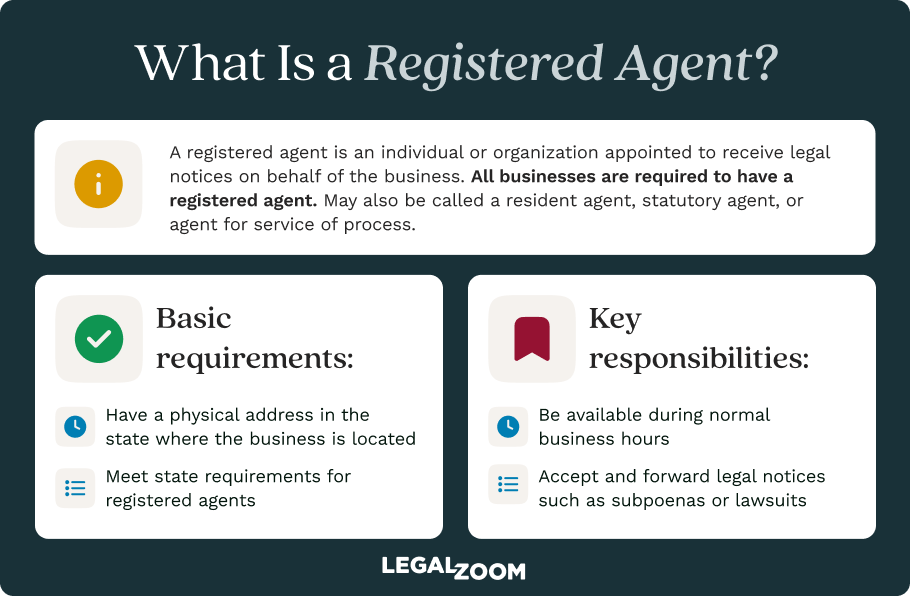
Most states require that LLCs and corporations keep a registered agent on file. A registered agent is a person or business with a valid in-state address that accepts legal documents and official correspondence on the entity's behalf. If your registered agent resigns and you don't appoint a replacement, the state loses its formal channel for reaching your business and may opt to administratively dissolve the entity.
Other compliance failures
Some states also dissolve business entities for failing to keep a current principal office address on file, not responding to official correspondence, or missing other jurisdiction-specific requirements. Make sure to check your Secretary of State or equivalent office's business records directly if the reason for your dissolution isn't clear.
Administrative dissolution vs. voluntary dissolution vs. involuntary (judicial) dissolution
There are generally three types of business dissolution, and the difference matters for what you need to do next. For example, administrative dissolution is typically the only dissolution type that is fixable through a standard reinstatement filing.
| Type | Who initiates it | Common reasons | Can it be reversed? |
|---|---|---|---|
| Administrative dissolution | State business regulating agency (e.g., Secretary of State) | Missed annual reports, unpaid franchise taxes, no registered agent | Yes—if filed within the reinstatement window |
| Voluntary dissolution | Business owners, members, or shareholders | Business is closing by choice | Generally, no—some states have a brief window but this is generally permanent |
| Involuntary (judicial) dissolution | A court, at the request of the state attorney general, creditors, or shareholders | Fraud, ownership deadlock, serious legal violations | Rarely—requires legal proceedings |
What happens when an LLC or corporation is administratively dissolved?
When your LLC or corporation is administratively dissolved by the state, the ramifications can be serious.
It can no longer operate
An administratively dissolved entity is legally prohibited from operating for any purpose other than winding up the business—a process which generally includes collecting debts, paying creditors, and closing out. Continuing normal operations exposes both the business and its owners to serious legal and financial risk.
Loss of liability protection
The liability shield that an LLC or corporation has depends on the entity maintaining active, good-standing status. Courts in many states have held that members, managers, or officers who continue operating after dissolution can be held personally liable for obligations incurred during that period.
Contracts, bank accounts, and business operations
Contracts signed while dissolved may be unenforceable or voidable. Banks that discover a dissolved status may freeze or close business accounts. Vendors and lenders who run a Secretary of State check routinely refuse to transact with a dissolved entity.
Impact on business assets
The entity's assets don't automatically transfer to owners upon dissolution, and creditors have priority before any distributions reach members or shareholders. If the entity is never reinstated and never formally wound up, transferring or liquidating those assets becomes legally complicated.
Legal restrictions on dissolved entities
In many states, an administratively dissolved entity may lose access to the courts while it remains inactive. This means the business may be unable to prosecute or defend a legal action until it is reinstated and returns to an active, good-standing status. Administrative dissolution does not, however, eliminate the business’s existing debts, obligations, or liabilities. As a result, failing to promptly reinstate the business can create significant legal risk.
Administrative dissolution liability: Can owners be personally liable?
In general, any action taken by directors, officers, or managers that falls outside of winding up could result in personal liability for the person who took that action.
The clearest line courts draw is between obligations that existed before the dissolution date and obligations incurred after it. Pre-dissolution debts remain the entity's responsibility. The danger zone is everything after: new contracts, new clients, or new purchases. Liability exposure continues until the entity is reinstated.
In certain cases, whether or not you were aware of the dissolution can determine whether a court holds you personally liable. However, ignorance is not a guaranteed defense. Once the state sends notice to your registered agent or last known address, courts may treat you as having constructive notice, even if you never saw it.
Reinstatement can eliminate the exposure, but not always
Reinstating your good-standing status is the most direct way to eliminate post-dissolution liability in states that recognize the relation-back doctrine, which treats the dissolution as if it never occurred. However, not all states subscribe to this doctrine, and courts in multiple states have held owners personally liable even after reinstatement when those owners operated with actual knowledge of the dissolution.
The faster you reinstate your LLC or corporation, the stronger your position. The longer you operate while dissolved, especially with knowledge of the status, the higher the risk that a court holds the gap period against you regardless of what happens later.
How to fix an administratively dissolved LLC or corporation: Step-by-step reinstatement
In most states, reinstatement of an administratively dissolved LLC or corporation is available if you act within the state's reinstatement window and resolve outstanding compliance obligations. The steps below apply in the vast majority of states, though specific forms, fees, and deadlines vary.
Step 1: Confirm your entity's dissolved status
Go to your state's Secretary of State (or equivalent regulatory authority) business search portal and look up your entity by name or registration number. Confirm the dissolution date, as it determines which annual reports or taxes are overdue and whether the reinstatement window is still open.
Step 2: Identify all overdue filings and fees
Reinstatement typically requires filing any overdue annual or biennial report, paying all outstanding franchise taxes or state fees, and paying any accrued late penalties. The Secretary of State's office or state revenue agency can usually provide a statement of what you owe. Most states require each missed report to be filed individually. You generally cannot file a single catch-up report covering multiple years.
Step 3: Appoint or confirm a registered agent
If a registered agent failure contributed to the dissolution, your reinstatement application must designate a valid agent with a current in-state address. Update your principal office address if it has changed, as states typically require this as part of reinstatement.
Step 4: File the reinstatement application
Most states require a formal reinstatement application to be filed with the state business regulatory authority, along with a reinstatement fee separate from any overdue report fees.
Step 5: Confirm restored good standing
Once the state processes your reinstatement, verify that your entity's status has returned to "active" or "in good standing" through the Secretary of State's portal. If banking, contracts, or licensing require proof, make sure to request a certificate of good standing at the same time.
How to avoid administrative dissolution
Administrative dissolution is preventable. States often administratively dissolve entities because a deadline slipped, a fee went unpaid, or a registered agent change got forgotten. The following steps can help you stay compliant:
- Track your annual report due date and file early. Most states post due dates on their Secretary of State portals. Set a calendar reminder at least 60 days before the deadline.
- Pay franchise taxes and state fees on time. These run on a separate calendar from your annual report in many states. Identify your state's franchise tax due date and pay when the bill arrives.
- Keep your registered agent current. If your registered agent resigns or moves, make sure to appoint a replacement immediately and update the Secretary of State. Operating without a registered agent can lead to administrative dissolution.
- Update your principal office address with the state. An outdated address means state notices go to the wrong place, and a missed notice becomes a missed deadline. When your address changes, file an amendment with the state.
- Use a compliance service that sends automatic reminders. A registered agent service or compliance platform that tracks filing deadlines removes the risk of an important date falling through the cracks.
- Check your entity's status at least once a year. Pull up your state's Secretary of State portal and confirm your entity shows as active or in good standing. It takes about two minutes and catches problems before they compound.
How LegalZoom can help
Whether you’d like to reinstate your administratively dissolved business or dissolve your business the right way, LegalZoom is built to help. We can help you evaluate your Secretary of State status to identify prerequisites and gaps, determine the correct path, and then coordinate the state filing itself.
FAQs about administrative dissolution
How do I check if my LLC is administratively dissolved?
Go to your state's Secretary of State website and use the business entity search tool. Look up your entity by name or registration number and check the status field. States use different terminology: "administratively dissolved," "inactive," "forfeited," "revoked," or "not in good standing," depending on your state.
If the result is unclear, consider contacting the Secretary of State's business division directly. Some states send notice by mail, but if your address on file is outdated, you may never have received it.
What is the relation-back doctrine?
Many states apply the relation-back doctrine, a legal rule that treats your entity's status as if the dissolution never occurred once you reinstate. Contracts signed and actions taken during the dissolution gap may be retroactively validated.
For example, if your LLC signed a commercial lease while dissolved and then reinstated, the relation-back doctrine may make that lease enforceable as though the LLC had been in good standing all along.
Not every state recognizes this doctrine, and reinstatement does not automatically erase personal liability for owners who operated with knowledge of the dissolution.
Does administrative dissolution affect my EIN or federal tax obligations?
No. The IRS does not cancel your EIN when a state administratively dissolves your entity. However, federal tax obligations, including income taxes, payroll taxes, and required information returns, continue until the entity is properly wound up or you file a final return with the IRS. If you plan to close permanently rather than reinstate your business, then notify the IRS by filing the appropriate final return and indicating it's the entity's last filing.
Can my business name be taken by someone else after administrative dissolution?
In many states, the answer is yes. Once administratively dissolved, your exclusive right to the business name can lapse after a certain amount of time, meaning another business may register it before you reinstate the business. Some states protect the name for a long window; others make it available almost immediately. Make sure to check your state's name availability rules promptly if name retention is a concern.
What happens if I never reinstate my administratively dissolved LLC?
If you never reinstate and the reinstatement window closes, the entity remains inactive, and you would not be able to operate your business. Outstanding debts and liabilities do not disappear. Creditors can still pursue claims against the business, and depending on your state and conduct, against you personally. Any assets the entity holds become legally complicated to transfer without a formal winding-up process.
What is the difference between administrative dissolution and judicial dissolution?
Administrative dissolution is initiated by the Secretary of State for compliance failures, such as missed filings, unpaid fees, or a lapsed registered agent. Judicial dissolution is ordered by a court, typically at the request of the state attorney general, a creditor, or the business' own shareholders, and usually involves serious legal violations, fraud, or an irresolvable ownership dispute. Administrative dissolution is generally fixable through reinstatement; judicial dissolution requires court involvement to reverse and is rarely undone.
What happens to an LLC's contracts when it is administratively dissolved?
Contracts signed before the dissolution date remain in effect. However, contracts signed after the dissolution date may be unenforceable or voidable, because the entity lacked legal capacity to contract at the time of signing. In states that recognize the relation-back doctrine, reinstatement can retroactively validate those post-dissolution contracts.
In states that do not, the other party may have grounds to void the agreement. If your entity signed significant contracts while dissolved, talk with an attorney before assuming those agreements are enforceable.
'%20/%3e%3c/svg%3e)

'%3e%3cpath%20fill-rule='evenodd'%20clip-rule='evenodd'%20d='M9.31239%2025.5316H13.0679V14.1032H9.31239V25.5316ZM11.1913%208.46875C9.93945%208.46875%209%209.25086%209%2010.505C9%2011.5995%209.78211%2012.5389%2011.1913%2012.5389C12.6005%2012.5389%2013.3826%2011.5995%2013.3826%2010.505C13.3826%209.4082%2012.6005%208.46875%2011.1913%208.46875ZM27%2018.9577V25.5316H23.2445V19.4275C23.2445%2017.8609%2022.6174%2016.7664%2021.3679%2016.7664C20.2711%2016.7664%2019.644%2017.5463%2019.3316%2018.1756C19.1743%2018.488%2019.1743%2018.8004%2019.1743%2019.1128V25.5316H15.4165V13.9458H19.1743V15.5123C19.644%2014.7302%2020.5835%2013.6357%2022.6174%2013.6357C25.1234%2013.7908%2027%2015.3573%2027%2018.9577Z'%20fill='white'/%3e%3c/g%3e%3cdefs%3e%3cclipPath%20id='clip0_952_9489'%3e%3crect%20width='18'%20height='18'%20fill='white'%20transform='translate(9%208)'/%3e%3c/clipPath%3e%3c/defs%3e%3c/svg%3e)

